

You're probably staring at a deal that feels both exciting and fragile.
Maybe you've found a retiring owner with a solid client base, trained staff, and a hospital that fits the kind of medicine you want to practice. Maybe you're tired of building someone else's equity as an associate and you're ready to own the next chapter of your career. Then the financing questions hit all at once. Can you borrow enough to cover goodwill? How much cash do you need to keep in reserve? Will the seller wait for you to close?
That's where most veterinarians discover a hard truth. Buying or building a clinic isn't just about getting approved. It's about getting approved on a timeline that keeps the transaction alive.
For most buyers, SBA loans for veterinary practice ownership are the primary path because they can finance acquisitions, equipment, build-out, and working capital under one broad structure. But the terms that make SBA financing attractive also come with process friction. If you ignore the timeline, you can lose a good practice before underwriting is even halfway done.
This is the part generic guides miss. They tell you SBA financing is affordable. They don't spend enough time on what happens when a seller wants certainty faster than your lender can deliver it.
From Associate DVM to Practice Owner
You find a clinic that fits. The medicine is solid, the client base is stable, and the seller says they want to retire by the end of the quarter. Then the pressure intensifies. You are not just deciding whether the practice is worth buying. You are deciding whether you can get financing lined up fast enough to keep the deal from slipping away.
That is the shift from associate to owner.
As an associate, you can spot weak scheduling, soft pricing, underused exam rooms, or a surgery schedule that should be fuller. As a buyer, you have to translate those observations into lender-ready logic. Will revenue hold after the seller leaves? Will staff stay through the transition? Is the asking price supported by cash flow, or is it anchored to what the owner hoped the practice was worth?
Those questions matter more than enthusiasm. A good practice can still become a bad purchase if debt service is too tight or if the closing drags past the seller's patience.
The first surprise for many DVM buyers is that financing risk is usually operational risk in disguise. If receivables are stretched, inventory is sloppy, or one doctor produces too much of the revenue, the lender sees a repayment issue. You should see the same thing.
Ownership changes the math on day one:
- Cash flow becomes immediate. Payroll, lab bills, rent, and loan payments stop being background numbers and start driving weekly decisions.
- Valuation gets real. If the deal is priced above what the clinic can support, you will feel it in your personal income and your margin for error.
- Speed has a cost. A lender that can move quickly may ask for a stronger file, more liquidity, or a slightly less favorable structure. A cheaper loan is not always the better loan if the seller will not wait 90 days.
That last point gets ignored too often. Buyers focus on rate and term because those are easy to compare. Sellers focus on certainty and timing. In veterinary acquisitions, the winner is often the buyer who can show a credible path to closing, not the buyer who found the lowest quoted interest rate.
For buyers sorting through their options, veterinary acquisition loans are usually the practical starting point because the underwriting is built around ownership transfers, goodwill, and working capital needs specific to clinic deals.
I tell buyers to treat the first pass on a deal like a lender will. Start with three tests. Is the practice priced in line with normalized earnings? Will post-close cash flow cover debt, owner pay, and a reserve for surprises? Can the transaction survive a 60 to 90 day loan process without the seller, landlord, or staff losing confidence?
If the answer to any of those is shaky, fix that early. It is much easier to adjust price, structure, or expectations before underwriting starts than after the file is in committee.
Decoding the Main SBA Loan Programs for Vets
A buyer under contract on a clinic usually does not need more theory. They need to know which SBA structure fits the deal, what it will and will not pay for, and whether that choice will slow closing.
For most veterinary acquisitions, the first program to review is the SBA 7(a). The reason is practical. It can finance the parts of a clinic purchase that matter most in this field: goodwill, equipment, tenant improvements, and a working capital cushion for the first months after closing. That matters because many veterinary deals are not just asset purchases. They are transfers of cash flow, team stability, client relationships, and a handoff that has to keep the hospital operating while the loan is still in process.

Why the 7(a) is usually the first choice
The 7(a) is the flexible SBA option. In a veterinary transaction, that flexibility often matters more than getting the lowest possible rate. A 7(a) loan can usually combine the purchase price, equipment, limited build-out, and working capital into one structure. That keeps the file cleaner and gives the lender a clearer repayment story.
Terms and structure vary by lender, but the program generally works well for acquisitions because it can support both tangible assets and intangible value. That is a major point in veterinary lending, where goodwill is often a large part of the purchase price. If you are comparing lenders, review current veterinary practice loan rates alongside expected closing speed, equity injection, and documentation standards. Rate matters. So does whether the lender can get from signed LOI to funded loan before the seller loses patience.
I tell buyers to ask one blunt question early: can this lender close my type of veterinary deal inside the contract window? A lower-cost 7(a) offer can still be the wrong choice if the process drags, landlord consent sits unresolved, or the seller wants certainty more than a slightly better payment.
When the 504 is the better fit
The CDC/504 program is usually a better fit when the project is driven by real estate or major equipment, not by goodwill. If you are buying a building, constructing a facility, or financing large fixed assets for an owner-occupied hospital, 504 deserves a hard look.
The trade-off is straightforward. A 504 structure is less flexible for a practice acquisition that includes a large intangible component or a meaningful working capital need. It is often stronger for premises and long-lived equipment, but less useful if the transaction depends on financing the full operating business under one umbrella.
That difference affects timing too. A 504 loan can be attractive on cost and fixed-asset alignment, but it may add complexity to a deal that already has enough moving parts. In a competitive acquisition, simplicity sometimes wins.
SBA 7(a) vs. CDC 504 Loans for Veterinary Practices
| Feature | SBA 7(a) Loan | SBA CDC/504 Loan |
|---|---|---|
| Best fit | Practice acquisition, working capital, equipment, build-out | Real estate and major equipment |
| Maximum size | Up to SBA program limits, subject to lender structure | Up to SBA program limits, with larger real estate projects possible in some structures |
| Equity injection | Often starts around 10%, depending on deal strength and structure | Typically includes a borrower contribution |
| Structure | One primary loan structure | Three-part structure with lender, CDC, and borrower |
| Goodwill financing | Yes, commonly relevant in acquisitions | Limited fit for goodwill-heavy transactions |
| Working capital fit | Strong | Limited compared with 7(a) |
Decision shortcut: If the deal is mostly a clinic purchase with goodwill, staff transition, and a need for operating cash on day one, start with 7(a). If the project is mostly land, building, or fixed equipment, review 504 early and compare the time-to-close against the contract deadline.
Getting to Yes How Lenders Underwrite Vet Practices
You can agree on price Friday and still lose the deal by Tuesday if the lender sees a cash flow gap, a documentation problem, or too much transition risk. That is the part many first-time buyers miss. In veterinary acquisitions, approval is not just about getting a yes. It is about getting a yes fast enough to survive a contract timeline that often closes in 60 to 90 days.
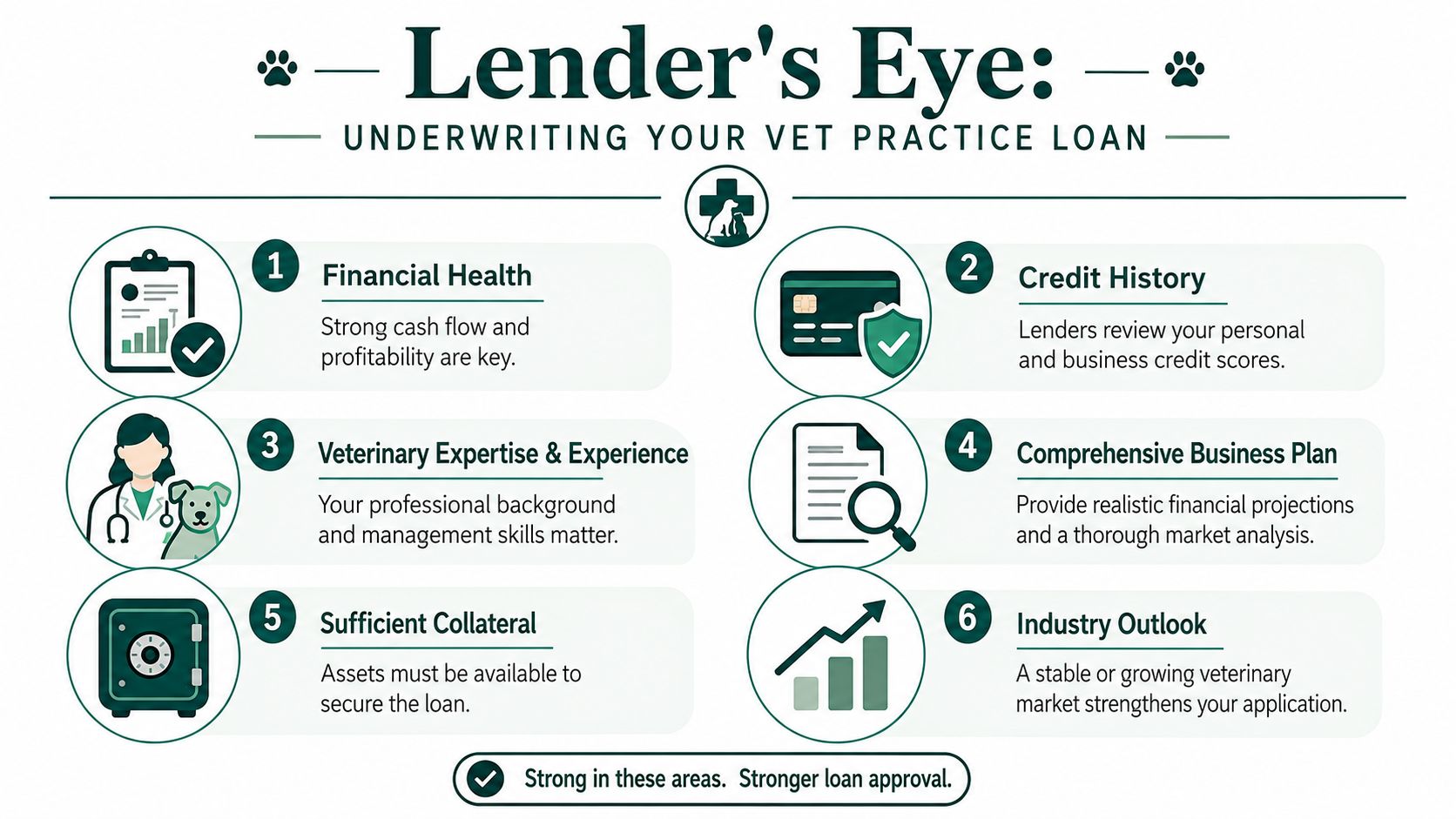
Lenders approve veterinary practice loans when the numbers support repayment after real operating costs, not optimistic projections. They want to see a clinic that can pay staff, cover inventory, handle rent or occupancy costs, pay the doctor appropriately, and still service debt without running tight every month.
The three questions underwriters are really asking
Underwriting usually comes down to three practical questions.
Can you repay the loan from clinic cash flow?
Can you run the practice without a messy transition hurting revenue?
Can this file get through underwriting and close before the deal goes stale?
That third question gets ignored in generic SBA guides. It should not. A lower-rate structure can look attractive on paper, but if it adds weeks of back-and-forth, it may cost you the acquisition.
Cash flow decides more than purchase price
The lender is less focused on what you want to pay and more focused on what the practice can support. A buyer may look at gross revenue and feel comfortable. An underwriter looks at tax returns, seller add-backs, doctor compensation, existing debt, and whether the post-closing business still has room for error.
Debt service coverage ratio sits at the center of that review. In plain terms, lenders want to see that the clinic produces enough cash to make the loan payment with margin left over. If the numbers only work in a perfect month, the file gets weaker fast.
In veterinary practices, that analysis goes beyond formulas. Underwriters look at client concentration, provider concentration, and margin consistency. If one doctor produces too much of the revenue, or if earnings dipped when staffing got tight, expect questions.
Practice quality matters as much as borrower quality
A strong borrower can still struggle to finance a weak clinic.
Lenders look closely at the target practice itself. They want to know whether revenue is recurring, whether active clients return on a normal care cycle, whether the seller is central to retention, and whether support staff are likely to stay. A hospital with stable wellness traffic, reliable preventive care revenue, and multiple providers usually underwrites better than a clinic where the owner does nearly everything and plans to leave abruptly.
This is also where valuation and underwriting start to overlap. If the purchase price assumes future growth that has not shown up in the financials, the lender may trim proceeds, ask for more equity, or question whether the deal can close on time.
Goodwill is financeable, but it still has to make sense
Veterinary acquisitions often include more intangible value than hard assets. The medical equipment matters, but the larger value is often the client base, location, trained staff, medical records, and referral relationships. SBA financing can work well here because it can support goodwill-heavy transactions that many asset-based structures cannot.
Still, goodwill does not get a free pass. Lenders want support for the valuation and confidence that patients will stay after the handoff. If the seller has unusually strong personal ties to clients, or if there is no clear transition plan, underwriting gets tougher even when the historical earnings look solid.
For a buyer comparing payment pressure across structures, current veterinary practice loan rates help frame the monthly debt load. Rate matters. Cash flow quality, transition risk, and speed to close usually matter more.
What helps a file move faster
The files that close on time are usually not the flashiest. They are the cleanest.
A lender can work through a fair amount of complexity if the documentation is organized early. Complete tax returns, current interim financials, a clear breakdown of add-backs, a realistic salary for the incoming owner, and a transition plan from the seller all help. Missing financial statements, unclear personal liquidity, or a purchase agreement that leaves major issues unresolved can burn two weeks before underwriting even gets traction.
That is the trade-off buyers need to understand. The cheapest path is not always the safest path if the seller expects a quick close. In a competitive deal, certainty and speed have real value.
What an SBA Loan Can Build Buy or Bolster
A veterinarian signs a purchase agreement for a clinic, then realizes the seller expects a fast handoff, the X-ray unit needs replacement, and the practice will run tight on cash for the first few months. That is where SBA financing can help, but only if the loan structure matches what the practice needs.
An SBA loan can fund more than a straight acquisition. It can support the purchase itself, equipment, leasehold improvements, startup costs, and working capital. The hard part is deciding what belongs in the SBA request and what is better handled with a separate structure, especially if speed matters.
Buying an existing clinic
This is the most common use. The loan covers more than furniture and equipment. It often covers goodwill, which is why SBA financing is so useful for veterinary transactions where the value sits in the client base, the medical team, and the earnings history.
The buyer still has to pressure-test the deal. A practice can look strong on paper and still feel strained after closing if doctor production drops, staff turnover picks up, or the facility needs near-term capital work that was not built into the loan request. I tell buyers to focus on post-close cash behavior, not just the appraised value. If the clinic cannot comfortably support debt service, owner pay, and a margin for mistakes, the structure is too tight.
Funding major equipment without draining cash
Equipment is often where owners make an expensive timing mistake. They use the SBA loan for every need because it offers long amortization and a lower payment, then lose weeks in underwriting on items that could have been handled faster another way.
That does not mean SBA is wrong for equipment. It means the use of proceeds should fit the situation.
For owners weighing that choice, equipment financing for veterinary practices is worth reviewing separately from a full SBA request. A new ultrasound, dental suite, or lab setup may justify its own structure if the practice needs faster approval or if the acquisition timeline is already under pressure.
Build-out and expansion
Expansion loans usually look sensible in a floor plan and feel harder in the first six months of operations. Added exam rooms, a remodel, or a larger footprint can improve throughput, but the payment starts before the added revenue is fully established.
That gap matters.
Lenders want to see whether the practice can carry current operations, debt service, and a slower ramp than the owner hopes for. If construction delays push opening dates, if hiring takes longer than expected, or if client demand grows more slowly than projected, the loan still has to perform. The DVM who plans for that delay usually has better options than the one who assumes revenue will rise on schedule.
Working capital is part of the project
Working capital should be treated as part of the financing plan, not as leftover room in the budget. In veterinary practice lending, cash gets consumed by ordinary operations long before a project proves itself. Payroll hits every cycle. Inventory has to be purchased. Receivables can lag. A seller transition or expansion phase can soften revenue right when obligations increase.
A safer loan request usually accounts for:
- Payroll continuity: team retention gets harder if the practice starts ownership under cash pressure
- Inventory purchases: drugs, supplies, and preventive products often require cash before collections catch up
- Transition softness: client retention and doctor scheduling can dip after a sale
- Ramp time: renovations, new service lines, and added capacity rarely produce full revenue on day one
Owners rarely get in trouble because they borrowed for the wrong broad purpose. They get in trouble because they underestimated how long the practice would need breathing room. In SBA lending, that mistake affects more than stress. It can affect approval, structure, and whether the deal closes on the seller's timeline.
The Application Timeline From Document to Deposit
A common scenario looks like this. A buyer signs an LOI on a solid small animal practice, expects financing to follow, and then watches the seller grow anxious while underwriting questions pile up. The problem usually is not the SBA program itself. The problem is treating the closing window like paperwork instead of project management.
For veterinary acquisitions, SBA financing often wins on rate, term, and payment structure. It usually does not win on speed. Industry experience and common lender feedback put many deals in a long enough closing window that buyers need to plan for seller fatigue, expiring lease items, and diligence requests that keep expanding as new facts surface.
That trade-off matters. Lower-cost capital often requires more documentation, more review, and more patience from everyone at the table.
Why it takes longer than buyers expect
Veterinary deals have several moving parts, even when the clinic looks straightforward. The lender is reviewing your personal financial profile, the practice's historical performance, the purchase structure, and whether post-closing cash flow still covers debt service with room for error. If real estate is included, the file gets heavier. If the seller's books need cleanup, it slows down again.
Seller-side delays are common. Missing tax returns, unclear add-backs, unsigned corporate records, weak lease language, and vague transition terms can all stop momentum. I see buyers prepare their own package well and still lose weeks because the seller cannot answer basic underwriting questions cleanly.
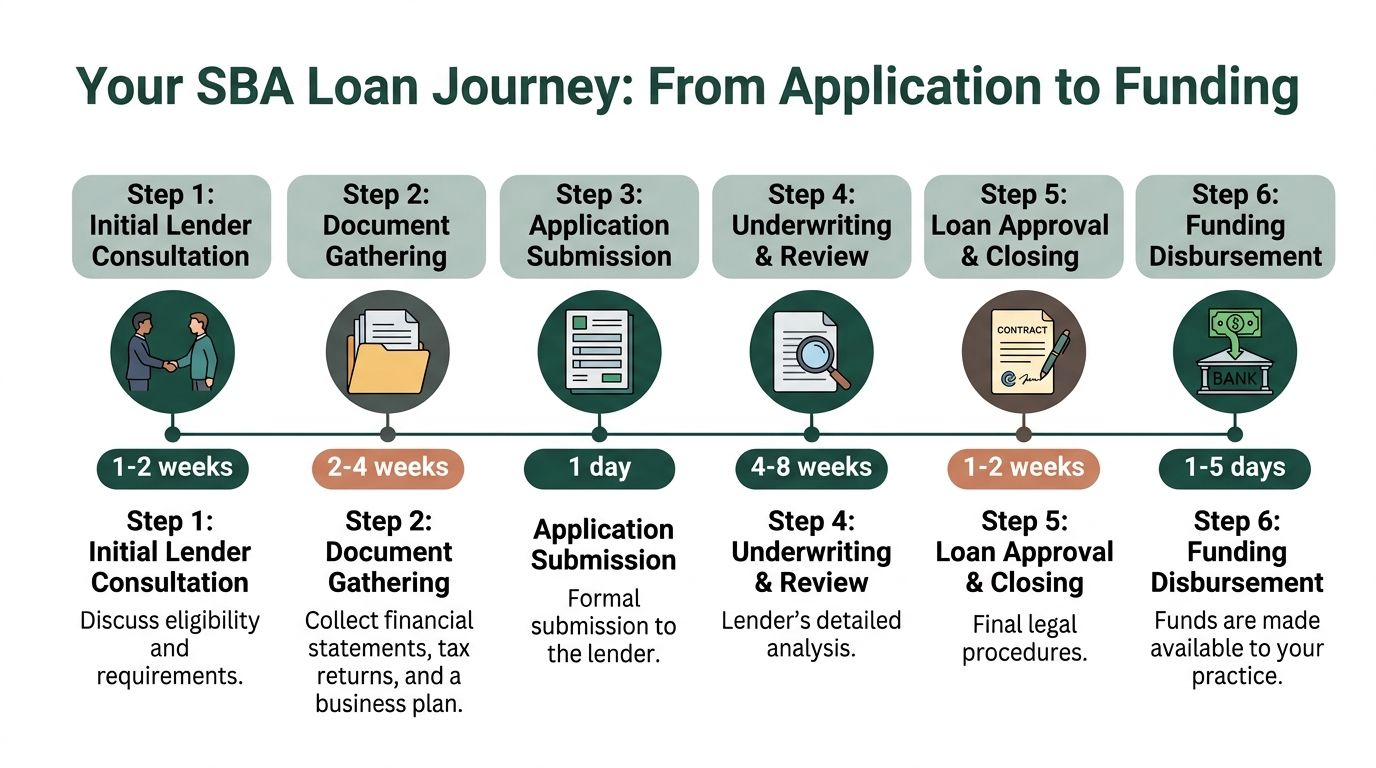
A practical timeline you can manage
The process moves better when you treat it as four parallel workstreams rather than one long wait.
Initial lender fit
Start lender conversations before the LOI is fully baked if possible. That is when you find out whether your liquidity, credit profile, guarantor structure, and project size fit the lender's credit box.Document assembly
This stage drags more than borrowers expect. Personal tax returns, business financials, resumes, licenses, debt schedules, organizational documents, and the draft purchase agreement all need to line up. One missing item can hold up three others.Underwriting review
Once the file is submitted, speed depends on response time and clarity. If an underwriter asks how you arrived at projected doctor production, working capital need, or owner compensation, a vague answer creates a second round of questions. In practice financing, that is how a one-week review becomes three.Closing and funding
Approval is not the finish line. Entity setup, insurance, closing counsel, lease assignments, life insurance if required, and final verifications still have to clear before funds are released.
How to keep the deal from stalling
The borrower has to manage more than the bank. The borrower has to manage the transaction.
A few habits make a real difference:
- Set a realistic close date early: Do not promise a fast close just to win the deal if the structure points to an SBA process.
- Keep the seller informed: Silence makes sellers nervous. Short, factual updates keep confidence intact.
- Answer underwriting questions the same day when possible: Good files still slow down when responses sit in an inbox.
- Get ahead of lease and entity issues: These are frequent late-stage blockers.
- Protect cash outside the down payment: Closing costs, deposits, and early operating needs show up before the practice starts paying you back.
One more point matters here. If a seller needs speed above all else, SBA may still work, but the buyer should be honest about the trade-off before signing. A slower, cheaper loan can be the right decision. It is the wrong decision only when the timeline is ignored until the deal is already under strain.
Speed is a financing feature. If you want the lower payment and longer term SBA financing can provide, expect a longer closing process and manage the seller, lender, and documents accordingly.
Common Pitfalls That Can Derail Your Loan
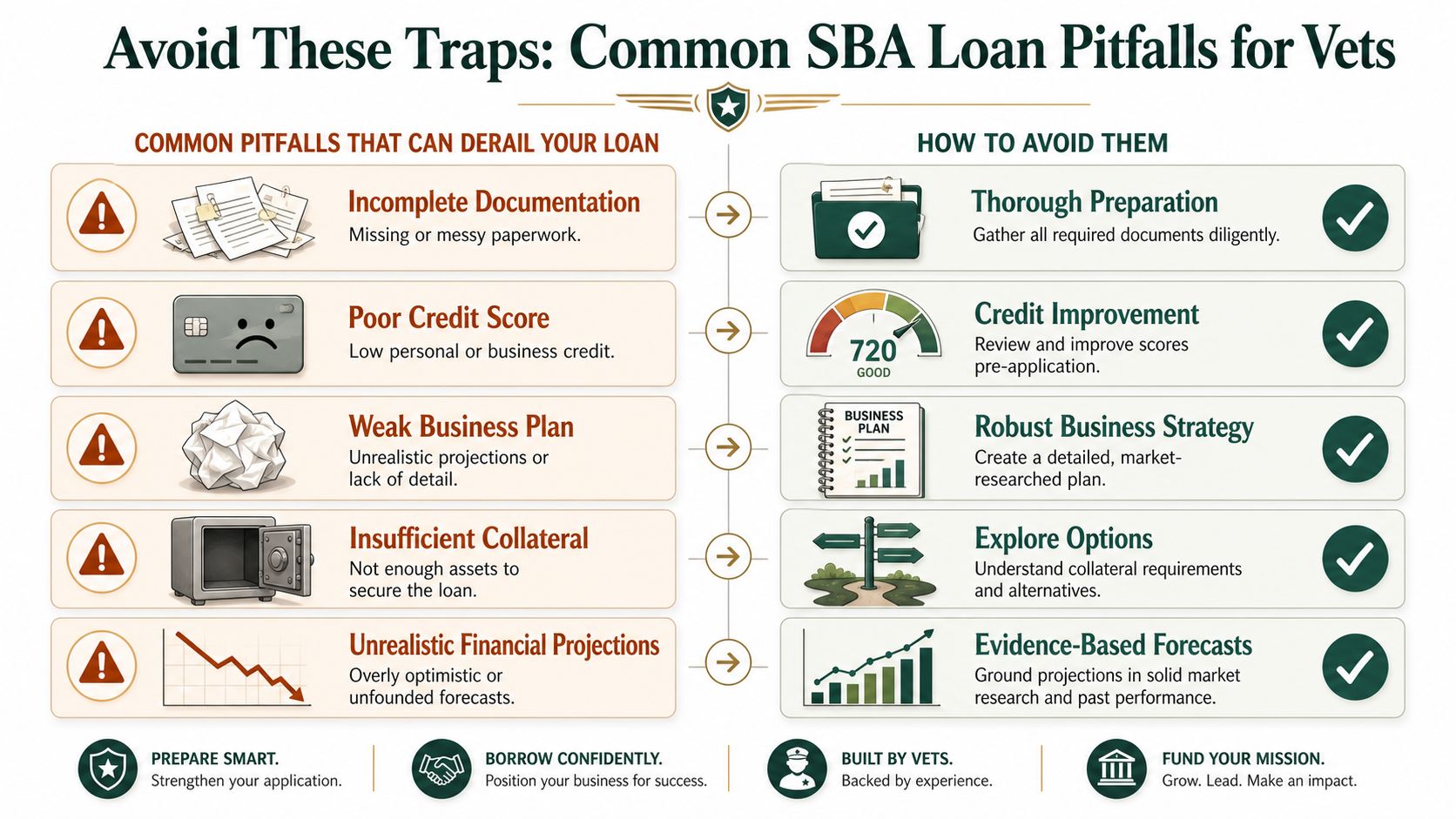
Most problem files don't collapse because of one dramatic issue. They weaken because small preventable problems stack up until the lender loses confidence or the seller loses patience.
For veterinary borrowers, the risk isn't just denial. It's wasted time, damaged credibility, and a transaction that becomes harder to save with every delay.
Mistaking revenue for available cash
A clinic can look busy every day and still be a weak lending file. Owners often focus on top-line production while lenders focus on what survives after payroll, occupancy, inventory, debt, and owner pay.
If you're evaluating a target practice, dig into actual operating cash flow, not just gross collections. A buyer who assumes high revenue means easy debt service can overpay and create immediate stress after closing.
Submitting incomplete or messy documentation
This sounds basic, but it's one of the fastest ways to slow an SBA process. Lenders read disorganization as risk. If tax returns, financial statements, licenses, entity documents, and purchase terms don't align, underwriting starts asking whether the borrower is prepared to run a larger financial obligation.
The fix is boring and effective. Build a transaction file before you need it. Name documents clearly. Reconcile discrepancies before the lender finds them.
Underestimating total project cost
Veterinary buyers often budget for the acquisition and forget the transition. The deal closes, and then they discover they still need cash for software conversion, small repairs, initial staffing overlap, or extra inventory.
Common misses include:
- Opening liquidity: Cash needed to operate after closing, not just to close
- Inventory buildup: Particularly relevant when service mix changes or a clinic has been understocked
- Deferred maintenance: Items the seller lived with that the buyer will need to address quickly
- Transition drag: Temporary softness while clients adapt to a new owner
Using projections that don't match clinic reality
Lenders can spot fantasy projections quickly. If your forecast assumes immediate growth with no operational explanation, it won't carry much weight.
Better projections usually tie back to observable drivers such as active client counts, doctor capacity, appointment availability, pricing strategy, service mix, and staffing constraints. The numbers don't need to be flashy. They need to be believable.
Choosing a lender that doesn't understand veterinary transactions
Veterinary clinics have quirks that generic small-business underwriting can mishandle. Goodwill matters. Doctor transition matters. Patient retention risk matters. A clean file can still struggle if the lender doesn't understand how veterinary cash flow behaves during ownership change.
That doesn't mean every specialized conversation leads to approval. It means the right lender asks the right questions early instead of treating the practice like a generic retail business.
Buyers usually think the loan is the obstacle. More often, poor preparation is the obstacle.
Frequently Asked Questions About Veterinary SBA Loans
Can I use an SBA loan to buy out a partner
Yes, in many cases that's possible. Partner buyouts are one of the more practical uses of SBA financing because the business is already operating and the ownership transition is usually easier to document than a full outside acquisition.
The main underwriting question is whether the post-buyout practice still supports the new debt comfortably. Lenders will look closely at how ownership compensation changes, who remains clinically active, and whether the remaining owner has the management capacity to run the practice after the buyout.
Can an SBA loan finance 100 percent of a veterinary deal
Sometimes, but not in every transaction.
The broad rule is that standard acquisitions often require a borrower injection, but some structures become more flexible when seller participation is present. As noted earlier from the verified data, some deals can work with a lower injection when a seller note is included, and certain partner buyout scenarios may qualify for full financing. Whether that applies depends on deal structure, cash flow strength, and lender appetite.
What if I'm starting a clinic and don't have operating history
That's harder, but not impossible. Startups are tougher because lenders can't rely on a mature operating track record. They'll focus more heavily on your personal profile, your liquidity, your professional experience, your market plan, and whether the startup budget is grounded in actual operational need.
In practical terms, startup borrowers need to think beyond build-out and equipment. A critical consideration is whether the clinic has enough runway to survive the early months without forcing bad decisions on staffing, pricing, or inventory.
Can I refinance existing business debt with an SBA loan
In some situations, yes. Whether it works depends on what the original debt was used for and whether the refinance improves the business in a way the lender and program guidelines support.
The practical reason to explore refinancing is usually cash flow relief. A longer amortization or different structure can reduce monthly pressure. But refinancing doesn't fix weak operations. If the clinic has pricing problems, staffing inefficiency, or inconsistent collections, those issues need to be addressed alongside the debt conversation.
How should I think about valuation before I apply
Start with repayment, not ego.
A practice may be “worth” a certain number in a broker package, but the financing has to work against actual cash flow. Buyers should evaluate seller add-backs carefully, test how the practice performs after replacing the owner-doctor's role, and stress the model for transition softness. If the price only works under perfect assumptions, it probably doesn't work.
Is the slower SBA timeline ever still the right choice
Often, yes.
A slower process can still be the best move when the structure fits the deal and the seller is realistic about timing. Lower monthly pressure and broader eligible use of funds can matter more over the life of ownership than a fast closing. The key is matching the financing method to the urgency of the transaction. If the seller needs immediate certainty, timeline risk has to be part of the decision from the start.
If you're weighing SBA loans for veterinary practice acquisition, equipment, startup costs, or working capital, Veterinary Practice Loans offers veterinary-focused financing guidance built around real clinic operations, clear term comparisons, and practical funding paths for buyers and owners who need more than generic small-business advice.
