

A treatment plan can stall in a matter of minutes. A veterinarian recommends dental work, imaging, surgery, or emergency monitoring, and the conversation suddenly shifts from medical need to cost. The client hesitates at checkout, the team tries to explain payment choices, and the clinic must protect both the patient's care and its own cash flow.
That tension is why veterinary care financing has two connected sides. The practice needs capital for payroll, inventory, equipment, acquisitions, and expansion. The client may need a payment option that makes a necessary treatment manageable without requiring the full amount immediately. A clinic can offer excellent care, but if either side of the financial bridge is weak, treatment may be delayed and the practice may struggle to remain resilient.
This guide translates financing into clinic operations. You'll learn how money moves between the patient, clinic, and lender, how to match borrowing structures to specific needs, how patient payment programs affect collections, and how to recognize overextension before it becomes a crisis. The aim isn't to turn every practice owner into a finance specialist. It's to help you ask better questions, compare structures clearly, and make decisions that support sustainable care.
Introduction to Veterinary Care Financing Today
A wellness visit can change direction quickly. A dog arrives for a routine examination, but the veterinarian finds oral disease that needs treatment. The client understands the health concern, then pauses at the estimate. The clinic has already committed staff time, supplies, and clinical resources, while the owner may not have enough cash available to approve the full plan that day.
The resulting pressure reaches both sides of the care pathway. Delayed treatment can change revenue timing, even as the clinic continues paying employees, ordering supplies, and maintaining equipment. Financing helps separate the timing of care from the timing of payment, but it does not remove risk. The practice may borrow for operations, or the client may spread a bill across scheduled payments.
Two financial systems, one care pathway
Practice-side financing gives the clinic access to capital. Working capital can help cover payroll and inventory between uneven deposits. Equipment financing can distribute the cost of a major purchase over time. Acquisition or expansion financing can support a change in ownership or a larger facility.
Patient-side financing addresses the owner's ability to accept recommended care. A third-party payment plan may move repayment administration away from the clinic. An in-house arrangement gives the practice more control, while also adding collection work and payment risk. Pet insurance follows a different process. Reimbursement depends on the policy and claim review, rather than on an installment schedule created by the clinic.
These two systems must support each other. Improving case acceptance without reviewing payout timing, fees, and staff workload can create cash-flow pressure. Borrowing for growth without clear affordability options can leave a clinic with more capacity than local demand can reliably support.
A useful rule is simple: financing should address a clearly defined timing or capacity problem. It should not conceal a pricing, staffing, or workflow issue that requires an operating decision.
Household budgets help explain the pressure. The Bureau of Labor Statistics Consumer Expenditure Survey data summarized by Walnut Invest reports average household pet spending of $880.11 in 2024, including $307.52 for veterinary services, or roughly 35% of pet spending. Veterinary care therefore represents a meaningful household expense, while clinics must manage the costs of delivering that care. A resilient financing system connects both needs, practice capital on one side and practical payment access on the other.
How Veterinary Care Financing Works Behind the Scenes
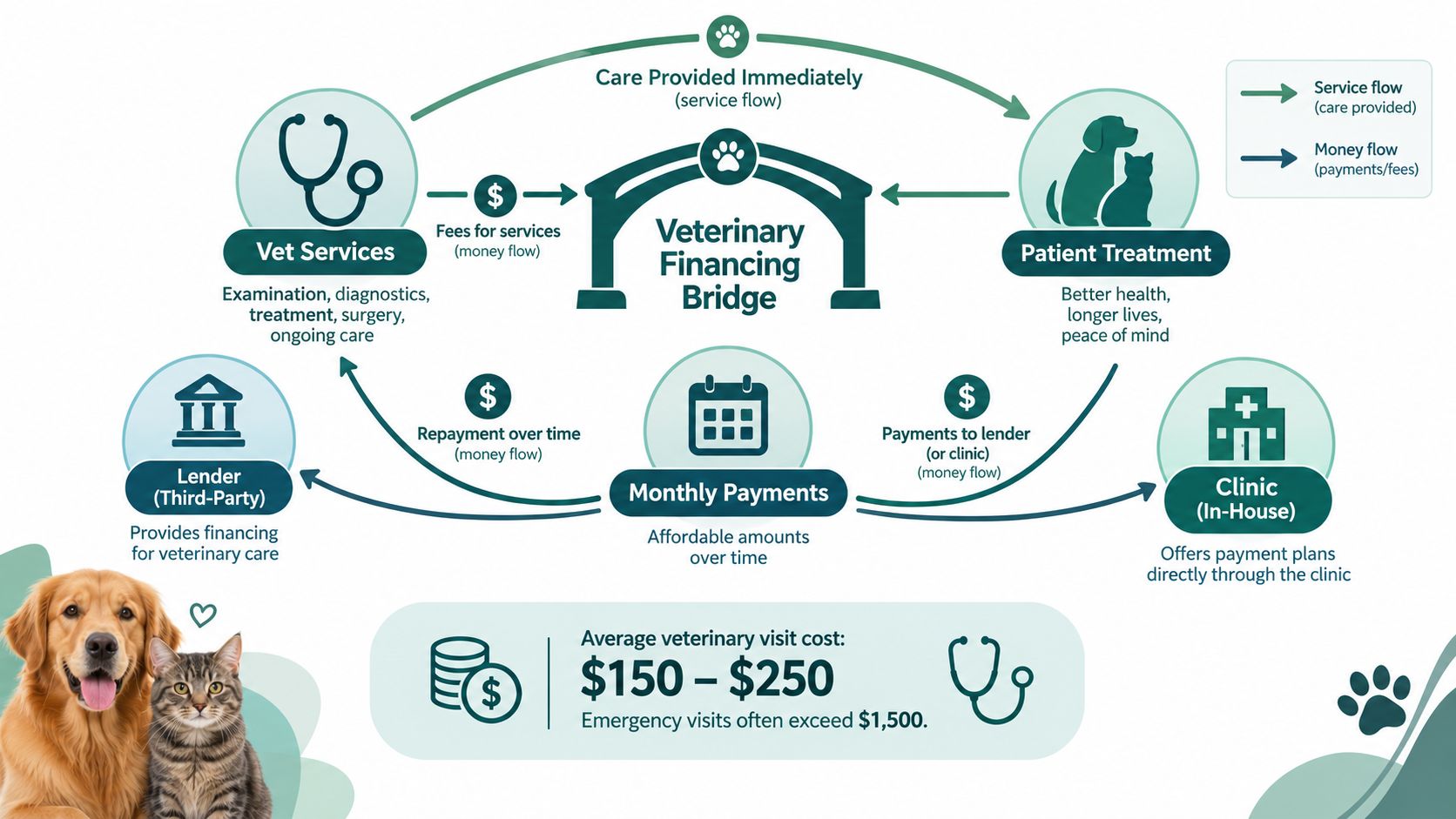
A clinic can complete treatment today while the money supporting that treatment arrives later, from the practice, the client, or a lender. That timing affects both sides of care. Practice financing protects operating capacity, while client payment options help owners accept recommended treatment when an invoice exceeds available cash. The two parts work together when invoice growth is weak and affordability pressure is high.
Step one, identify who needs financing
Start with one question: who is borrowing?
If the clinic is the borrower, financing proceeds may support payroll, inventory, equipment, construction, acquisition goodwill, or another business need. The lender reviews whether the practice can generate enough cash for operating costs and debt payments. That assessment connects the financing decision to daily clinic performance, not just the requested amount.
If the client is the borrower, a payment provider or the clinic may receive funds under the agreement, while the pet owner repays over time. The practice must then review approval experience, payout timing, fees, disclosures, and staff workload. A payment option helps only when it improves access without creating collection tasks the team cannot handle.
Insurance follows a different process. It may help an owner manage eligible expenses, but coverage, exclusions, reimbursement timing, and claim decisions belong to the policy relationship. Staff should explain that insurance does not guarantee payment for a particular treatment.
Step two, match repayment to the revenue cycle
A revolving working capital facility suits repeated short-term needs. The clinic might draw funds during pressure from inventory or payroll, then repay them as deposits arrive. A term loan provides a defined amount and scheduled payments, which can fit equipment, build-out, or an acquisition.
The repayment period should match the purpose and useful life of the financing. Equipment expected to serve the clinic for years should not automatically carry a schedule that creates excessive early pressure. An acquisition also involves more than physical assets. U.S. veterinary practice transactions can be 70% to 90% goodwill, according to the practice valuation discussion from Feasibility Study Company. Lenders therefore often examine going-concern performance, debt-service coverage, and projected cash flow, rather than relying on collateral alone.
Step three, track the flow after approval
Approval starts the operating work. The clinic needs to know when funds arrive, which fees are deducted, how refunds are handled, and who follows up on unpaid balances. Clients need a plain-language explanation of payment amounts, timing, interest or fees where applicable, and the result of a missed payment.
A workable financing system keeps both flows visible. The practice monitors liquidity and workload, while the client understands the obligation before consenting to care. That shared clarity helps financing support treatment access without hiding a cash-flow or workflow problem.
Practice Side Financing Options for Clinics
Clinic financing works best when the structure follows the use of funds. Borrowing for a temporary cash gap is different from borrowing for a surgical system, a new location, or an ownership transfer. Treating every need as one general loan can make repayment harder to manage and obscure whether the financing is producing operating value.
Working capital for timing gaps
A working capital line or term loan can help a clinic handle uneven timing between expenses and collections. Payroll, pharmaceuticals, laboratory supplies, rent, and utilities continue even when deposits fluctuate. A revolving line may fit recurring, short-lived needs because the practice can draw and repay as cash moves through the business.
A term loan may be more appropriate when the clinic needs a defined amount for a known operating requirement. The key question is whether repayment comes from expected recurring cash flow, not from a hopeful jump in production. If the practice already has weak liquidity, adding debt without a repayment plan can turn a temporary gap into a fixed monthly obligation.
Equipment, build-out, and expansion
Equipment financing can align repayment with the period in which imaging, surgical, laboratory, or information technology equipment is expected to support production. The clinic should evaluate utilization, maintenance, staffing, and integration costs alongside the purchase price. A machine that isn't used consistently may create debt without generating enough incremental cash flow.
Startup and expansion projects need a separate liquidity discussion. A public veterinary clinic feasibility study modeled total project cost at Rs. 10.94 million, including Rs. 10.25 million in capital cost and Rs. 0.69 million in working capital, with 50% debt and 50% equity. The same model reported an IRR of 27% and a payback period of 4.77 years. These figures describe that specific model, not a promise for every clinic, but they illustrate why operating liquidity should be identified separately from construction and equipment funding. See financing options for veterinary practices when comparing structures for a specific project.
| Financing Need | Best Fit Structure | Repayment Alignment |
|---|---|---|
| Payroll, inventory, and recurring cash gaps | Revolving working capital line | Repay as operating cash arrives |
| A defined operating requirement | Working capital term loan | Fixed payments supported by recurring cash flow |
| Imaging, surgical, or laboratory equipment | Equipment financing | Match payments to expected useful life and utilization |
| Practice acquisition or partner buy-in | Acquisition financing | Base repayment on projected post-close cash flow |
| New clinic, renovation, or added capacity | Startup or expansion financing | Separate build-out debt from early operating liquidity |
Acquisition underwriting follows earnings power
Goodwill-heavy transactions require careful forecasting. The buyer isn't purchasing furniture and medical devices. The buyer is purchasing an operating practice with staff relationships, client demand, systems, and recurring production. Lenders therefore examine historical performance, normalized expenses, owner compensation, debt-service coverage, and the cash flow expected after closing.
A practical funding plan may combine longer repayment for goodwill-heavy acquisition debt with separate terms for equipment and a liquidity reserve. That approach can reduce the risk that the clinic spends all available cash on the transaction and begins ownership without enough room for ordinary operating surprises.
Patient Facing Payment Options and Pet Insurance
A client may agree that a treatment is needed and still struggle to pay the full invoice today. At the same time, a clinic with weak invoice growth cannot treat every unpaid balance as a form of assistance. Patient financing works best as one side of a resilience system. Practice-side capital protects operating cash, while patient-side options help suitable clients manage care costs. Both sides need clear limits.
Client payment choices should be judged by care access, clinic risk, and administrative effort. A plan may help an owner approve treatment, yet create pressure if payment arrives late, fees are unclear, or the front desk must manage a complicated process during an emergency.
Third-party payment plans
A third-party plan lets a client apply for financing while the clinic receives payment under the provider's terms. This can reduce direct collection work and give the owner a defined repayment schedule. Approval is never guaranteed, so the client should review the agreement before accepting it.
The trade-offs may include fees, system-integration work, and an approval process outside the clinic's control. Staff should present the option without pressure, explain the client's financial obligation, and keep the medical recommendation separate from the financing choice. The clinic is offering a payment path, not directing the owner to borrow.
In-house plans
An in-house arrangement gives the practice control over terms and communication. It may suit an established client with predictable follow-up care, but the clinic becomes the creditor. Staff then must maintain agreements, issue invoices, send reminders, handle disputes, follow up on missed payments, and account for balances that may never be collected.
For an expensive emergency, an outside financing arrangement may limit practice exposure when the clinic's policy and payout terms are clear. For routine care, direct payment or an established insurance arrangement may require less administration. The choice should reflect the treatment, the client's circumstances, and the clinic's ability to manage the account without weakening cash flow.
Pet insurance
Insurance can help with planned or unexpected care when the policy covers the condition and the owner can complete the claim process. It differs from point-of-service financing because reimbursement may come after the client pays and submits documentation. Coverage varies, and the clinic cannot guarantee reimbursement.
A peer-reviewed analysis of veterinary payment-plan data reported $3,634,777 in financed amounts across active accounts and $13,026,943 across closed accounts. The published veterinary payment-plan analysis shows that installment financing can support substantial care costs over time, while clear account policies remain necessary.
Use plain language: “Here's the treatment recommended, here's what it costs, and here are the payment methods available. The financing agreement has its own terms, so please review them before you accept.”
Implementing Financing Programs in Your Clinic
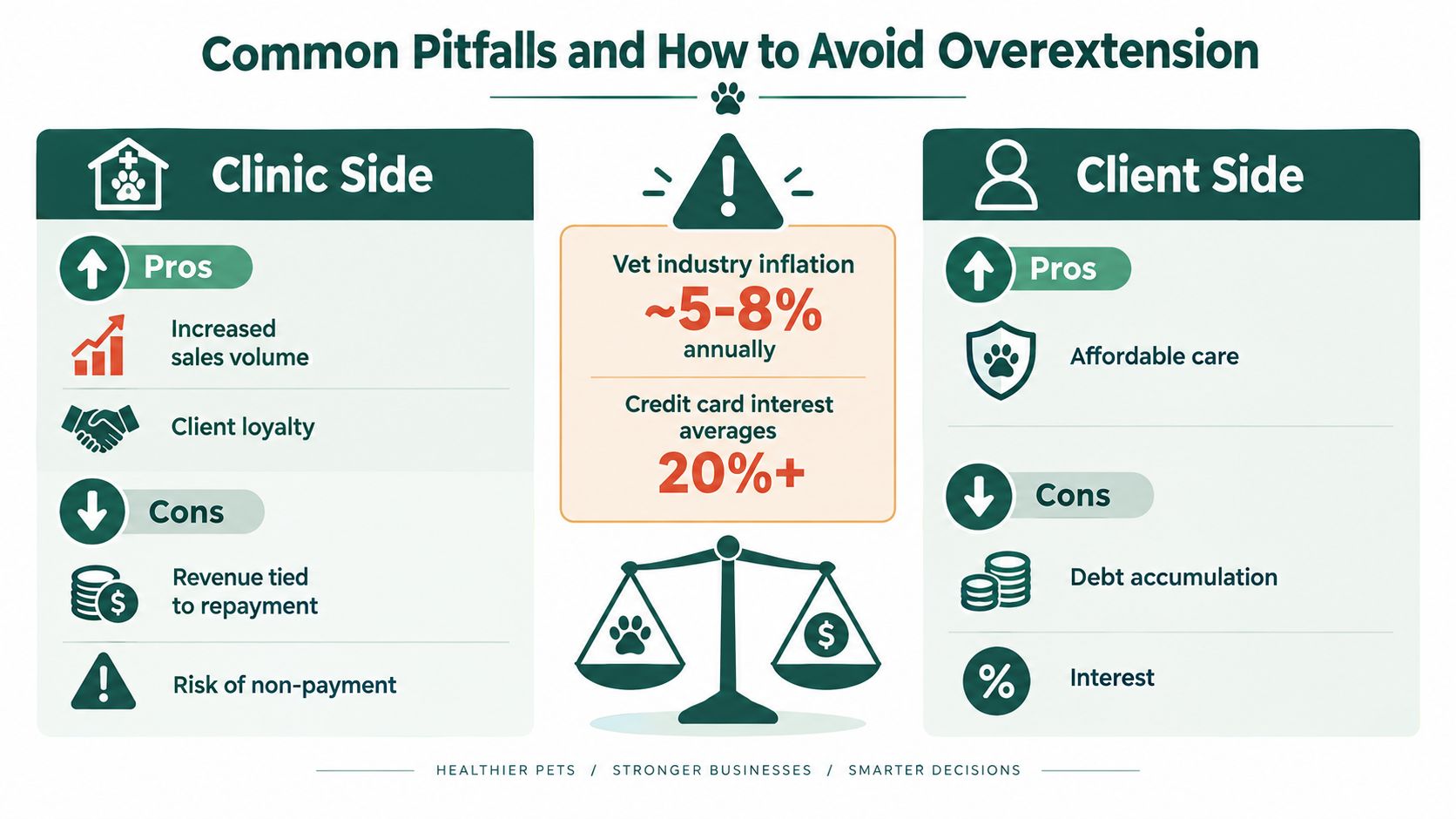
A financing program becomes useful only when it fits the clinic's daily workflow. The front desk shouldn't have to invent an explanation during a stressful emergency, and clinicians shouldn't be expected to answer detailed lending questions while treating a patient. Write the process before promoting it.
Build the policy first
Start by deciding which treatments qualify for discussion, who introduces the option, and what disclosures staff must provide. Create a short approved explanation that covers payment timing, client responsibility, application requirements, fees, and what happens if the application isn't approved.
The clinic also needs boundaries. Don't let staff promise approval, guarantee insurance reimbursement, or describe borrowing as free unless the written agreement supports that description. A consistent process protects clients and keeps conversations respectful.
Connect the program to the care journey
The workflow should begin when the team presents an estimate, not only when a client reaches checkout. Add financing information to estimates and treatment-plan materials where appropriate. Train staff to ask an open question such as, “Would you like to review the payment options available for this estimate?”
Then assign ownership:
- Clinical team: Explain the medical recommendation and urgency.
- Client-care team: Present payment methods neutrally and direct clients to the applicable application or policy information.
- Manager or bookkeeper: Reconcile payouts, fees, refunds, and account balances.
- Practice owner: Review whether the program supports care access without creating unacceptable financial exposure.
Reconcile every transaction
At close of business, staff should compare completed financing transactions with the practice-management record and settlement report. Investigate mismatches promptly. Track fees separately from clinical revenue, document refunds, and confirm that deposits match the agreement.
If the clinic is considering receivables-based liquidity, accounts receivable financing for veterinary practices can provide a framework for discussing how outstanding invoices relate to available capital. It shouldn't replace a review of collection quality, aging, client concentration, and repayment capacity.
Train for empathy and consistency
Financial conversations can feel embarrassing for clients and uncomfortable for staff. Role-play a routine estimate, an emergency estimate, and a declined application. The team should know how to pause, offer alternatives, and return the conversation to the patient's needs without judgment.
Review the program regularly. Ask whether clients understand the terms, whether staff follow the same process, and whether the clinic's fees and reconciliation effort remain reasonable.
Common Pitfalls and How to Avoid Overextension
A clinic can face pressure from both directions at once. Invoice growth may remain weak while clients struggle to afford treatment, so practice-side capital and patient-side payment options must be coordinated. Financing can strengthen resilience during a temporary cash-timing problem, but it cannot create demand. The 2025 veterinary industry market update describes 15 consecutive quarters of negative invoice growth in veterinary practices and identifies financial pressure as a leading challenge for veterinarians. A loan may bridge a short gap, yet make a structural revenue problem harder to carry.
Warning signs on the practice side
Review the pattern, not one unusual month:
- Debt payments depend on optimistic growth: The budget works only if production rises quickly, prices meet little resistance, or staffing costs stay unusually low.
- Working capital funds recurring losses: A facility intended for timing gaps is repeatedly drawn and never meaningfully repaid.
- The reserve disappears at closing: An acquisition or build-out uses nearly all available cash, leaving little room for payroll variation, repairs, or slower collections.
- The use of funds is unclear: The practice cannot separate equipment costs, construction costs, startup expenses, and liquidity support.
Stress-test the plan with conservative assumptions. Could the clinic keep making payments if invoice growth stayed weak, hiring took longer than expected, or a key producer reduced hours? The test should match the practice's records and lender requirements. The governing principle is simple: repayment must work without depending on a best-case month.
Decision test: If the clinic needs new borrowing merely to make an existing debt payment, stop and reassess the operating model before taking on additional debt.
Warning signs on the client side
Affordability pressure can affect case acceptance and collections. Survey data in the MetLife Pet Poverty Report reports that 39% of U.S. pet owners have gone into debt for pet medical care, 22% carry more than $2,000 in pet-related debt, and 15% report pet poverty. These figures do not predict an individual client's decision, but they show why financing should be presented as one option rather than a universal answer.
Approval does not mean repayment will be easy. A client may accept treatment and later struggle with the balance. Clear estimates, written terms, realistic follow-up, and respectful discussion of lower-cost alternatives can reduce confusion. Monitor whether payment programs are followed by more delayed balances or repeated financial distress among the same households.
Resilience means expanding access without placing every affordability problem on the clinic's balance sheet. Depending on the patient and the risk, the appropriate response may be financing, staged treatment, a revised estimate, an insurance discussion, or delaying nonurgent work while addressing immediate danger. The clinic's financing plan should protect its own cash flow while giving clients a clear, honest path to care.
Choosing the Right Financing Mix for Your Practice
A sound financing mix starts with sequence. Stabilize daily operations before funding growth, separate one-time asset purchases from recurring cash needs, and make sure client payment options support demand rather than hide weak invoice growth.
Review the plan through three questions:
- What problem needs solving? Define it precisely, whether the need is payroll timing, equipment, ownership transfer, build-out, or client affordability.
- Where will repayment come from? Identify practice cash flow, equipment-supported production, client payments, or another documented source.
- What happens under pressure? Test slower collections, weak invoice growth, unexpected repairs, and staffing changes.
Interest rate is only one part of the comparison. Check fees, amortization, prepayment terms, collateral, covenants, payout timing, administrative work, and total borrowing cost. The total cost of capital guide provides a practical way to compare those terms across the full repayment period.
Households may already direct meaningful spending toward veterinary care, yet that allocation does not guarantee immediate access to cash when an unexpected bill arrives. Build the client side and practice side together: payment options can support case acceptance, while adequate working capital keeps the clinic from carrying every affordability gap.
Prepare a lender package with financial statements, tax returns, production and deposit history, existing debt, a use-of-funds schedule, staffing assumptions, and a cash-flow forecast. Prepare the team with a written client-payment policy, consistent language, and a designated reconciliation owner.
The goal is a two-sided resilience system. Practice capital protects operations; patient payment choices help clients reach care without making the clinic's balance sheet absorb every shortfall.
Veterinary Practice Loans offers financing for acquisitions, equipment, working capital, startup projects, and clinic expansion. Visit Veterinary Practice Loans to discuss funding needs and repayment structures with a veterinary-focused financing provider.
