
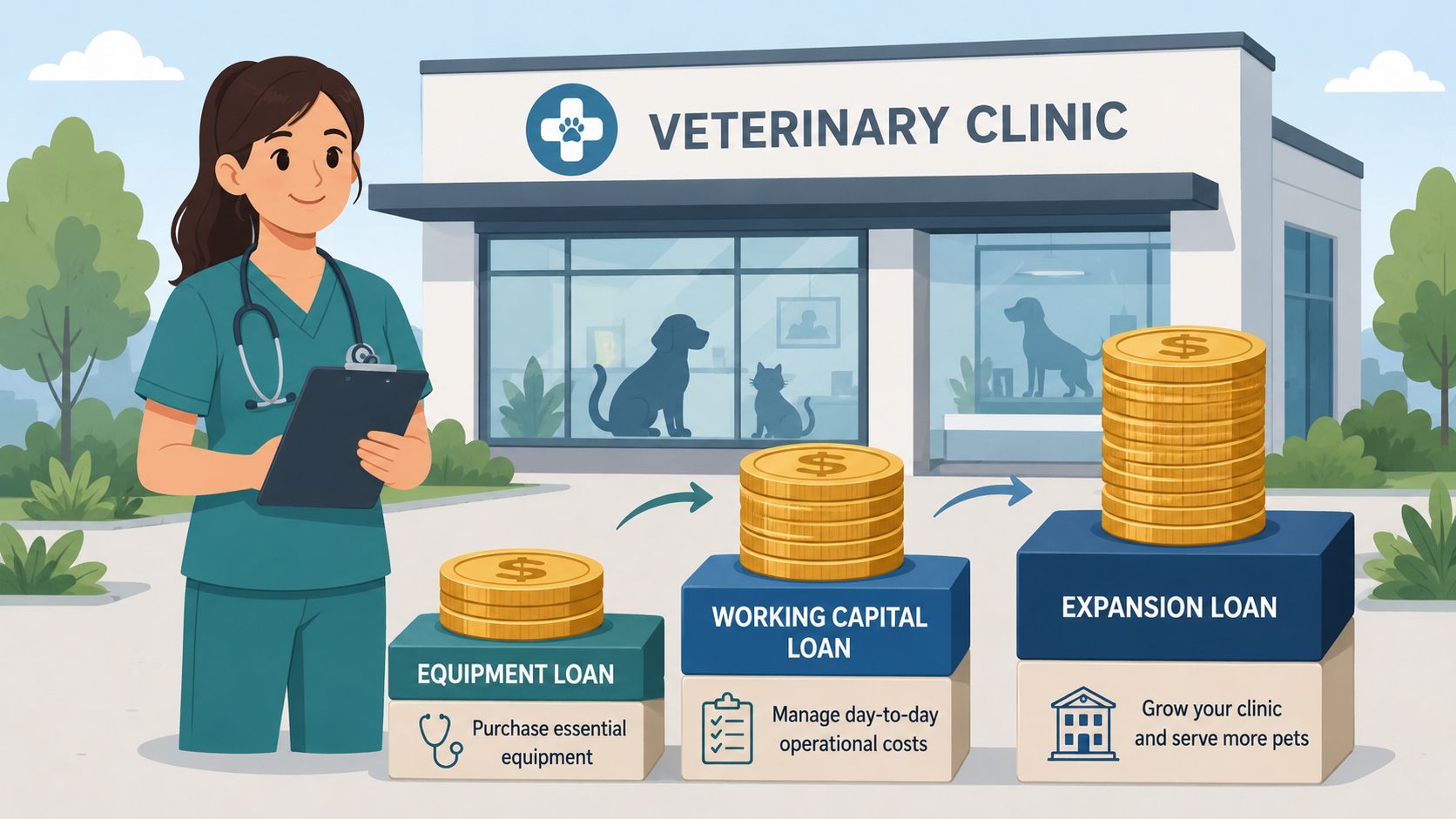
You're sitting in the conference room with three numbers on the table. The practice purchase price, the build-out budget, and the equipment quote all need money, and the wrong loan structure can turn a good clinic into a cash-flow headache. That's why loans for veterinary practices aren't really a product-shopping exercise, they're a capital-structure decision.
The mistake most owners make is asking, “Which loan can I get?” That's the wrong question. The better question is, “What am I funding, how long will that asset produce value, and how much monthly pressure can the clinic carry?” Once you answer that, the financing choice gets a lot clearer.
Why Veterinary Practices Need Specialized Financing
A veterinary clinic does not borrow like a generic retail shop. It carries good collateral, lumpy expenses, and cash flow that can be solid overall but uneven week to week. A lender reviewing a clinic has to separate what is being bought, how long it lasts, and whether the practice can support the payments without starving operations.
That is why I tell owners to stop thinking in terms of one loan and start thinking in terms of a capital stack. One piece may fund the acquisition, another may cover exam room renovations, another may buy imaging equipment, and a reserve may be needed for payroll or inventory. For a closer look at how equipment loans for veterinary practices fit into that stack, see Veterinary Practice Loans' financing options for equipment purchases. Veterinary-specific financing can run from roughly $25,000 to $5 million or more source, and that range tells you how different the funding needs can be from one clinic to the next.
The core problem is matching money to the job
If you finance short-lived working needs with a long, expensive structure, you pay for convenience you do not need. If you finance a building or full practice purchase with short-term money, you squeeze cash flow for no good reason. The right structure matches the repayment period to the thing being funded.
Practical rule: if the asset will keep earning for years, the debt should not disappear in a hurry.
Veterinary lenders also look beyond a personal credit file. They care about practice revenue, deposits, and the clinic's operating pattern, because those numbers show whether the business can service debt. That is a big reason specialized financing exists at all. It is built around how clinics operate, not how a textbook small business looks on paper.
The smartest owners treat financing as an operating decision, not a one-time event. They separate the cost center, assign the right debt to it, and avoid forcing every expense into the same bucket.
The Main Loan Products Explained
Veterinary owners get into trouble when they treat every loan as the same tool. It is a financing-structure problem first. The right debt matches the job it is paying for, and the wrong debt forces the clinic to carry costs that should have been spread out differently.
Acquisition loans, startup funding, and expansion capital
An acquisition loan is for buying an existing practice, buying out a partner, or adding a location. It funds ownership transfer and the value already built into the clinic, which is a different job than covering day-to-day expenses.
A startup loan fits a de novo hospital or first-time ownership. That money has to carry build-out, staffing, equipment, inventory, and the long stretch before revenue settles down. A practical structure may include strong financing for the launch phase and even a period of interest-only payments, because early cash flow is usually the weakest point in the deal.
An expansion loan pays for renovations, relocations, extra exam rooms, or a satellite clinic. That is a capital project, so the repayment schedule should reflect the time it takes for the added space to generate revenue. Use short debt for short jobs, and longer debt for projects that will earn for years.
Working capital and equipment financing
Working capital covers payroll, inventory, and the timing gap between billing and cash in the bank. Owners often underestimate how much pressure that gap creates. It is the buffer that keeps the clinic operating when collections lag or expenses hit early in the month.
Equipment financing is for imaging, surgical, lab, and IT gear. Match the debt to the useful life of the asset, and do not stretch a short-lived item into a long repayment plan. For a closer look at those structures, see this veterinary equipment loan guide.
The cleanest equipment debt is the debt that disappears around the same time the asset stops pulling its weight.
What each product is really for
- Acquisition loan: Buying the clinic or ownership stake that produces the revenue.
- Startup funding: Covering build-out, hiring, and opening inventory before cash flow matures.
- Expansion loan: Funding space, layout, and growth that should pay back over time.
- Working capital: Smoothing payroll, supplies, and seasonal swings.
- Equipment financing: Matching payment life to the asset's economic life.
A loan only makes sense when the payment rhythm fits the cash rhythm of the asset.
If you are deciding how to layer debt across a project, review the lender's page on SBA loans for veterinary practice. The key question is not which product name sounds best. It is which structure belongs to each part of the deal.
SBA vs Conventional vs Alternative Structures
A vet clinic deal rarely fits one box. You may be buying the practice, improving the building, adding imaging, and keeping cash available for the messy first months after closing. That is why structure matters more than label. The right question is which mix of debt fits each piece of the project, because a single loan rarely handles every use cleanly.

The right structure depends on what the deal includes
SBA 7(a) is the flexible workhorse. It fits acquisitions, working capital, equipment, and refinancing, which makes it useful when the financing stack has more than one job to do. For a closer look at how that structure is used in practice, see SBA loans for veterinary practice. In the veterinary lending market, SBA 7(a) loans can reach $5 million, with repayment terms of up to 10 years for working capital and equipment and up to 25 years for real estate, with pricing often described as prime plus 2.25% to 4.75% depending on loan size and maturity source.
SBA 504 makes sense when owner-occupied real estate is the anchor. If the project is a hospital build, a major renovation, or a property-heavy expansion, this structure usually fits better than forcing the whole project into a general-purpose loan. It is a real estate tool first, and owners should treat it that way.
Conventional debt works when the borrower is strong and the purpose is straightforward. It can move faster and feel cleaner, but a short term can punish a project that needs time to produce cash. Faster does not mean better if the payment is mismatched to the asset.
Alternative or specialty lending fills the gap when timing, documentation, or credit history blocks the standard path. That does not automatically make it bad or overpriced. It means the lender is solving a different financing problem, often with a more customized structure.
Loan Structure Comparison for Veterinary Practices
| Structure | Max Size | Typical Term | Best Fit For |
|---|---|---|---|
| SBA 7(a) | Up to $5 million | Up to 10 years for operating assets, up to 25 years for real estate | Mixed-use deals, acquisitions, working capital, refinancing |
| SBA 504 | Project-based | Long-term fixed-rate real estate structure | Owner-occupied property, new builds, major renovations |
| Conventional debt | Varies by lender and borrower strength | Often shorter and more customized | Strong borrowers needing speed and simplicity |
| Equipment financing | Asset-based | Usually tied to the equipment's useful life | Imaging, surgical, lab, and IT purchases |
| Working capital line | Smaller, revolving | Revolving | Payroll, inventory, and cash-flow smoothing |
The biggest mistake is chasing the lowest headline rate without checking whether the repayment shape fits the project. That is backward. A structure with a slightly higher rate can cost less overall if it keeps the clinic liquid and avoids a forced refinance later.
For the rate side of the decision, review veterinary practice loan rates. Rate matters. Structure matters more.
How Underwriting Works for Vet Clinics
A clinic owner walks into underwriting with a simple question, but the lender is testing a financing structure. Can this borrower support the debt, can the practice absorb the payment, and does the collateral line up with the asset being financed? If you miss that structure test, the deal gets expensive or stalls.
The five things lenders look at
Personal credit still matters because the borrower sits behind the business. A strong score helps, but it does not fix weak cash flow or sloppy paperwork.
Time in business matters because lenders want evidence that the clinic can survive normal volatility. A track record gives them less room to worry about the first slow month, the first staffing issue, or the first bad quarter.
Revenue and cash flow matter more than polished growth stories. Underwriters want deposits, recurring collections, and operating performance that can carry the payment without squeezing payroll or inventory.
Collateral matters because it gives the lender a recovery path if the deal turns. That is especially true when the financing is tied to equipment or real estate, since the asset should support the debt.
Documentation quality matters because clean files move. Tax returns, statements, bank activity, and a clear debt schedule make the decision easier. A messy file makes even a good borrower look risky.
What a working capital line usually demands
Working capital lines of credit for veterinary clinics often require at least 620 FICO, 12 or more months of operating history, and $15,000 or more in average monthly net deposits, with line sizes commonly ranging from $25,000 to $500,000 source. Use those figures as a screening tool. They show that lenders want proof of an operating clinic, not a story about future growth.
A borrower with strong deposits but imperfect credit can still be financeable. A borrower with excellent credit and a disorganized file often is not.
What the timeline usually looks like
Smaller equipment or working capital facilities can move quickly when the paperwork is clean. SBA-backed deals take longer because more documents get reviewed and the debt structure has to be justified from several angles. Owners who want speed should prepare for that reality before they apply.
The best way to help underwriting is straightforward. Give the lender clean tax returns, current financial statements, bank statements, equipment quotes, a debt schedule, and a short explanation of how the money will be used. If the file reads like a decision-ready financing package, approvals get easier.
For a rate check that fits this larger structure discussion, review veterinary practice loan rates. Rate matters, but the repayment structure matters more.
Sample Amortization and Cost Scenarios
Numbers are where bad assumptions get exposed. Owners often say they want “affordable payments,” but that phrase is useless until you test it against an actual project. The right question is whether the debt fits the revenue the clinic can reasonably produce.
Acquisition, equipment, and cash-flow bridge
Take a $1.2 million practice acquisition financed with an SBA 7(a) structure. If you pair a long repayment horizon with a project that produces ongoing clinic revenue, the monthly burden becomes more manageable than a short-term note would allow. That's exactly why SBA-backed financing can extend to 10 years for equipment and 25 years when real estate is included, which reduces monthly debt service pressure on cash-flow-sensitive clinics source.
Now look at a $180,000 digital radiography and ultrasound package on a mid-term equipment loan. This is the cleanest possible use case for asset matching. The equipment will keep producing value over several years, so the debt should live in the same neighborhood.
Finally, consider a $150,000 working capital line used to bridge payroll and pharmaceutical inventory during a slow quarter. That money should stay revolving and flexible, because the point is liquidity, not long-term ownership of debt.
Sample Cost Scenarios for Veterinary Financing
| Scenario | Amount | Term | Est. Monthly Payment |
|---|---|---|---|
| Practice acquisition | $1.2 million | Long-term SBA-style structure | Varies by rate and amortization |
| Imaging and ultrasound package | $180,000 | Equipment term aligned to useful life | Varies by term and pricing |
| Working capital line | $150,000 | Revolving | Interest only on drawn balance |
If you want a very rough financial screen, ask whether the clinic can absorb the payment after normal operating costs and still leave room for payroll, supplies, and debt service. If not, the structure is wrong, even if the rate looks attractive on paper. That's the ultimate test.
Preparing and Applying for a Veterinary Practice Loan
The owners who get funded cleanly usually do the boring work first. They don't wait until the lender asks for documents. They assemble the file, fix the obvious problems, and walk into the process with a clear use case for each dollar.
What to do before you submit anything
Pull your personal and business credit reports and correct obvious errors. Clean up bookkeeping so the profit and loss statement matches reality. Gather equipment quotes, current debt balances, and a simple growth plan that says what the financing will do for the clinic.
Then decide which debt belongs to which cost center. Don't ask one loan to do the job of three. If the project includes equipment, real estate, and working capital, separate those needs before you apply.
What the lender will ask for
Bring the basics in one package:
- Two years of personal and business tax returns: The lender wants history, not guesses.
- Year-to-date profit and loss and balance sheet: These show current performance.
- Three to six months of bank statements: These help verify deposits and cash flow.
- Equipment invoices or quotes: The lender needs to see what's being purchased.
- Current debt schedule: Existing obligations affect repayment capacity.
- Short use-of-funds narrative: Say exactly where the money goes and why.
After submission, the file moves through lender review, underwriting, committee approval, closing, and funding. The process usually slows down where the file is incomplete or where the borrower can't explain the structure clearly. If you want a cleaner route, have a specialist help package the request, including options from a veterinary-focused lender such as Veterinary Practice Loans when the project calls for clinic-specific financing.
Choosing the Right Structure for Your Clinic
The wrong assumption is that the lowest rate wins. It doesn't. The right financing structure is the one whose repayment pattern fits the asset and the clinic's cash flow. Get that wrong, and even a good practice can feel squeezed by debt that matures faster than the money it was used to create.

Match the capital stack to the clinic profile
For a first-time owner opening a de novo hospital, separate the financing by purpose. Real estate or build-out belongs in long-term property financing, equipment belongs in equipment debt, and cash reserve needs belong in a smaller revolving or term facility. That structure gives the startup room to breathe instead of forcing every dollar into one payment schedule.
For a solo practitioner buying into an established practice, the ownership purchase usually fits best in a longer-term loan, while equipment upgrades should sit in a separate asset-backed structure. If the transaction includes real estate, keep that piece on a property schedule rather than burying it in a short note just because it is easier to close.
For a multi-location group adding a satellite, speed matters, but structure matters more. Use long-term financing for the acquisition or property, equipment financing for the clinical build, and a working capital cushion for staffing, inventory, and ramp-up. Groups that blend those needs into one lump of debt usually end up with the wrong payment shape for at least part of the project.
A market summary from a veterinary lending source notes that bank products in this space can support large buyouts, relocations, second clinics, equipment purchases, and building loans with long repayment horizons source. The point is not the headline number. The point is that the market already recognizes blended financing needs, and owners should structure their debt the same way.
Three rules to carry into the lender meeting
- Match term to asset life.
- Match payment timing to cash flow timing.
- Treat the loan as part of a five-year plan, not a one-time event.
If a lender's proposal ignores those three rules, push back. If the structure fits, the clinic can grow without being choked by the debt.
