

You've got the term sheet open, the lender is waiting, and the numbers look like they were written for someone who speaks bank first and veterinary second. That's normal. Most clinic owners don't need more debt, they need the right repayment structure, one that protects payroll, matches the asset being financed, and doesn't bury cash flow in a bad month.
A veterinary practice loan terms and repayment options decision should never be treated like one giant yes or no. Equipment, real estate, and goodwill each have different economic lives, so the debt should be built around that reality, not around whatever the lender happens to offer first. If you get the structure right, the clinic has breathing room. If you get it wrong, you can end up with a strong practice and a strained bank account.
Reading Your Veterinary Practice Term Sheet Without the Jargon
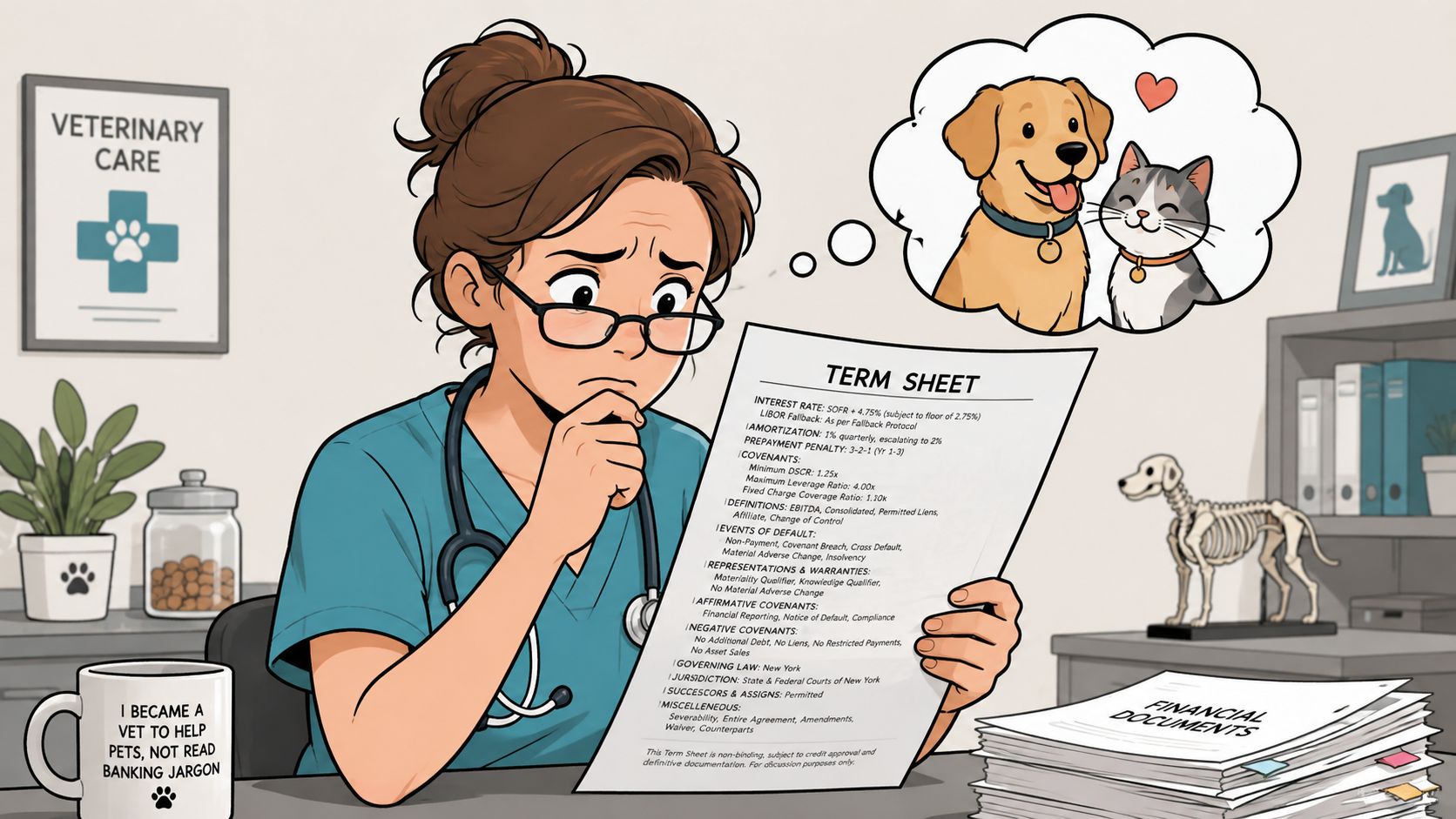
You're at the kitchen table with a stack of loan papers, a cup of cold coffee, and a term sheet that reads like it was written to keep you from asking follow-up questions. That is where lenders gain ground through confusion. Read it as a repayment map, not as a legal puzzle.
The words that actually matter
Amortization is the schedule that shows how the balance gets paid down over time. If a lender gives you up to 10 years for working capital or a practice acquisition, the loan is built so the monthly payment fits a business obligation, not a personal credit card rhythm. If real estate is part of the deal, amortization can stretch up to 25 years, which lowers the monthly payment but keeps the debt on the books longer.
A spread is the lender's markup over a base rate. In veterinary lending, SBA-style pricing is commonly described as prime plus 2.25% to 4.75%, while conventional term loans often sit around 7% to 15% APR depending on credit quality and collateral. A draw period matters when you are borrowing in stages, especially for build-outs or startup spending, because you only pay interest on money you have drawn.
The repayment structure should match the economic life of the asset. Equipment should not be financed like goodwill, and goodwill should not be paid off on the same schedule as a truck or imaging unit. Public-service debt relief programs also need to be part of the planning conversation early, because they can affect how much debt service you can comfortably carry and how you structure any owner compensation that may qualify later.
Practical rule: ask which dollars finance working capital, equipment, goodwill, or real estate. If the lender cannot tell you which part of the term sheet applies to which asset, you are looking at a structure, not a strategy.
What's fixed and what's negotiable
Program rules usually control the big anchors, like SBA term limits and some pricing conventions. The parts you can often push on are collateral requirements, payment flexibility, and how the loan is split across uses. That is what protects cash flow.
The internal guide on common veterinary financing terms is useful because it keeps the conversation in plain English. That is the level you want in the room. If the explanation takes three bankers and a whiteboard to decode, the document is too opaque for a clinic owner to sign without challenge.
Matching Loan Products to Clinic Needs
The fastest way to weaken a veterinary deal is to treat every borrowed dollar the same. A payroll buffer does one job, a building loan does another, and a partner buyout or equipment purchase should never be forced into the same repayment lane. If you lump everything together, the payment schedule stops matching the business, and cash flow takes the hit.
Match the debt to the asset
For acquisitions, the market often starts with an SBA 7(a) structure. That product can reach $5 million and can be written with up to 10 years for the business portion, or up to 25 years when real estate is included (Today's Veterinary Practice, Crestmont Capital). That fit makes sense for a practice purchase or partner buyout, because the debt is tied to long-lived goodwill and ownership transfer, not short-term operating needs.
For working capital, keep it separate. Industry guides say established veterinary practices often use credit lines in the $25,000 to $500,000 range, and another lending guide places revolving lines around $10,000 to $500,000 (Crestmont Capital, veterinary loan types). That is the right structure for payroll smoothing, inventory purchases, and short cash-flow gaps, because you only pay interest on what you draw.
For equipment financing, the useful life of the asset should drive the term. Veterinary equipment loans commonly run 24 to 84 months at roughly 5% to 18% APR. That range fits diagnostic and surgical assets that produce revenue over several years, not over decades. A CT unit, lab analyzer, or dental setup should usually be paid off while it is still earning, not after the equipment has become stale.
For startup and expansion funding, the structure often includes up to 100% financing, plus as much as six months of interest-only payments and loan terms up to 15 years for practice loans, with commercial real estate terms extending to 25 years. That kind of ramp-up helps when the clinic is still building patient volume, hiring staff, or finishing a build-out before revenue fully catches up.
| Loan Type | Typical Term | Rate Range | Best Use Case |
|---|---|---|---|
| Acquisition loan | Up to 10 years, up to 25 years with real estate | SBA-style pricing often prime plus 2.25% to 4.75%, conventional often 7% to 15% APR | Buying a practice, partner buyout, ownership transfer |
| Working capital line | Revolving, usually shorter use cycle | Pricing varies by structure | Payroll, supplies, temporary cash gaps |
| Equipment financing | 24 to 84 months | About 5% to 18% APR | Imaging, surgical, lab, IT equipment |
| Startup funding | Up to 15 years, often with interest-only ramp | Depends on credit and collateral | Build-out, opening inventory, early ramp |
| Expansion loan | Up to 15 years, real estate up to 25 years | Depends on structure | Remodels, relocations, satellite sites |
A revolving line is for survival between receivables and payroll. A term loan is for buying something that lasts.
Public-service debt relief programs belong in this same conversation. If a veterinarian expects to qualify later, that future should shape today's debt service target and owner compensation planning, because a loan that looks manageable on paper can become too tight once every payment hits the operating account. That is one more reason to choose the product by asset class, not by whatever the lender is most eager to sell.
The internal guide on veterinary loan types is worth reading before you call a lender, because it helps you ask for the right product the first time. Ask for the loan that fits the asset, not the loan that is easiest to close.
How Amortization and Rate Structures Shape Monthly Payments
A lender can quote a payment that looks manageable and still hand you a structure that drags on cash flow for years. The better move is to match the repayment schedule to the economic life of the asset, equipment on one track, real estate on another, and goodwill on a third.
Fixed payments versus flexible starts
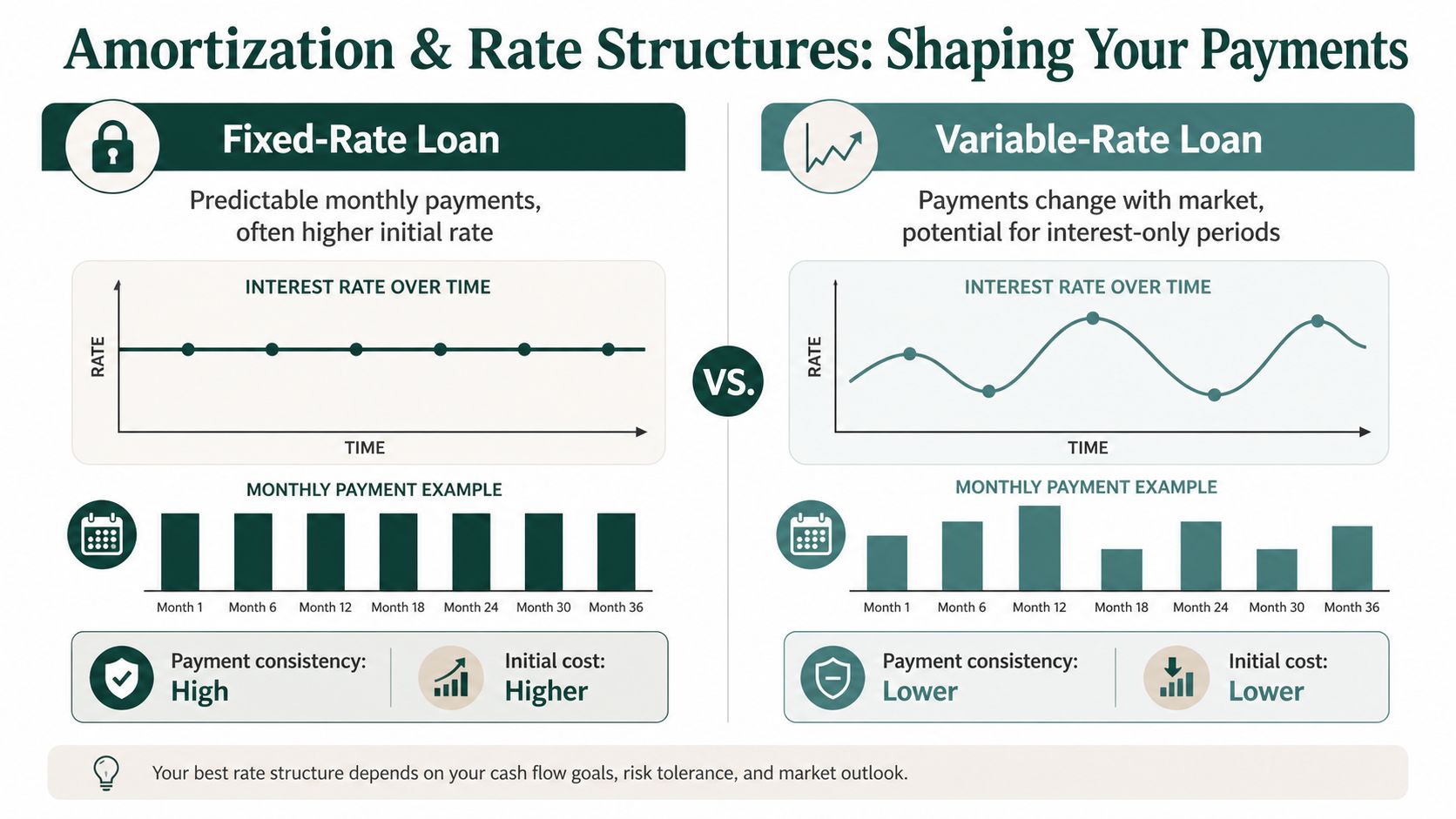
A fixed-rate loan gives you a payment you can plan around. That matters in a clinic, where payroll, rent, inventory, and tax deposits already claim the same cash every month. A variable-rate loan starts lower or higher depending on the market, then moves with it, so the owner has to accept that the payment can change.
Interest-only periods belong in the right deal, not in every deal. They make sense during a build-out, a relocation, or the early ramp after a practice purchase, when the clinic needs breathing room before full collections hit the operating account. They do not erase the debt. They delay principal reduction until the business is better able to carry it.
Why longer amortization changes everything
Longer amortization lowers the required monthly payment, and that is the point when cash flow is tight. It gives the clinic more room to absorb slower collections, higher supply costs, or a transition period after ownership changes. The trade-off is straightforward. The loan stays outstanding longer, and total interest usually rises.
That trade-off is acceptable for assets that produce value over a long period. Goodwill and real estate are the clearest examples, because the economic life of those assets extends well beyond a short equipment cycle. A shorter amortization on a long-lived asset can put unnecessary pressure on monthly cash flow, while a longer schedule on a fast-depreciating asset can leave the owner paying after the asset has already lost its practical usefulness.
Rate structure matters just as much. SBA-style pricing is commonly described as prime plus 2.25% to 4.75%, while conventional veterinary term loans often fall around 7% to 15% APR. Those numbers are not interchangeable. A structure with more flexibility, such as a longer amortization or a temporary interest-only period, can be the better deal even when the headline rate is a little higher, because it protects the clinic from a payment that is too heavy in year one.
Use the veterinary practice loan rates guide if you want a cleaner look at pricing before you sit down with a lender. Then run one simple test. Ask whether the payment still works if collections come in below forecast and expenses run a little hot.
Public-service debt relief programs belong in that same decision. If a veterinarian expects to qualify later, the current loan should leave room for that future payment planning instead of crowding the operating account today. A deal that fits on paper can still fail in practice if it ignores owner compensation, repayment timing, and the actual cash cost of carrying the debt.
The cheapest loan on paper is not always the cheapest loan in the clinic.
Sample Payment Calculations for Real Clinic Scenarios
A monthly payment tells you more than an interest rate ever will. Once the draft term sheet hits your operating account, the real question is whether the debt fits the asset and leaves enough cash for payroll, inventory, and owner compensation.
A practice acquisition that can actually be serviced
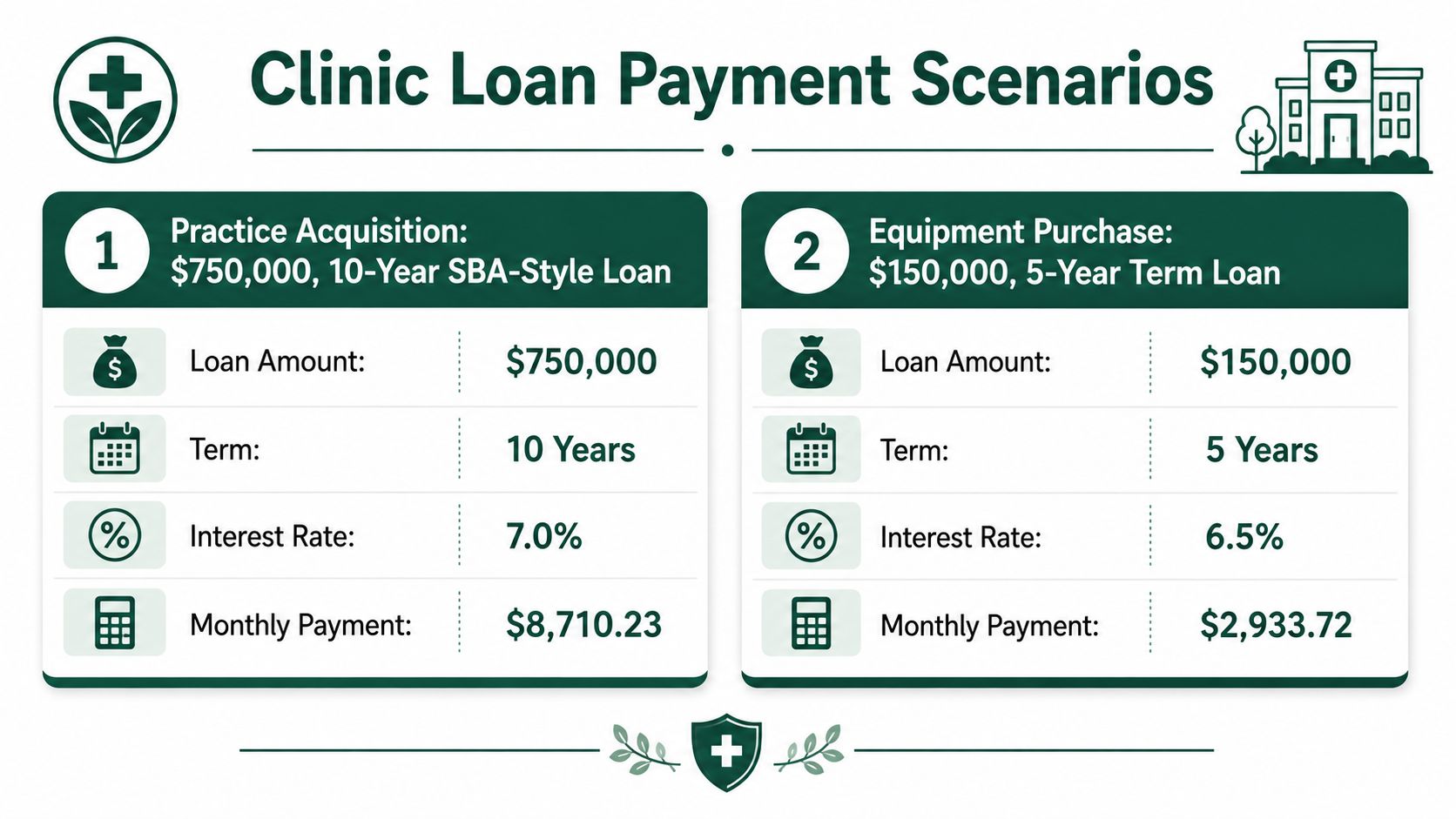
A $750,000 practice acquisition financed with a 10-year SBA-style loan at 7.0% produces the monthly payment shown in the approved visualization, $8,710.23. That is not abstract math. It is a fixed draw on collections every month, so it has to fit a realistic month, not your best month.
Shorter payments can look tidy on paper and still strain the clinic. If the practice has uneven collections, transition costs, or a payroll bump right after closing, a brief interest-only period can keep the first months survivable. The trade-off is straightforward, principal does not come down during that window, so the balance stays high longer and the loan carries more life on the back end.
A strong acquisition structure matches repayment to the cash the practice can produce while you settle in. If the clinic cannot cover debt service in a conservative month, the deal is too tight.
Equipment debt should stay tied to equipment life
A $120,000 digital x-ray system financed over 60 months belongs in a different bucket from goodwill or ownership transfer debt. That kind of asset has a useful life that supports a shorter repayment period, and the loan should track that reality instead of stretching payments just to make the monthly number look easier.
The loan guide says veterinary equipment loans commonly run 24 to 84 months at roughly 5% to 18% APR. That range exists for a reason. Equipment financing should sit close to the economic life of the machine, so you are not still making payments after the equipment has become less useful in daily practice.
The same lender visuals also show a $150,000, 5-year equipment loan at 6.5% with a monthly payment of $2,933.72. That is a clean benchmark for a mid-sized purchase when the term is aligned with the asset. If that payment feels heavy, the answer is not to force the loan into a much longer term without thinking it through. A longer schedule can reduce monthly pressure, but it can also leave you paying for equipment after it is already underperforming.
Seasonal revenue matters as well. Companion-animal clinics often have months that feel tighter than the annual average, so the payment should be judged against your weakest cash months, not your strongest ones. Working capital debt and equipment term debt should stay separate for that reason. One smooths short-term volatility, the other pays for a specific asset on a schedule that matches how long that asset should earn its keep.
Debt relief planning belongs in the same discussion. If a veterinarian expects to qualify for a public-service forgiveness program later, the practice loan still has to work now, before any outside relief arrives. A repayment plan that leaves room for future forgiveness can protect the owner from overcommitting today, but the clinic still needs a structure that stands on its own cash flow.
Negotiating Terms and Navigating Documentation Requirements
A strong term sheet still falls apart if the file is messy. Lenders want evidence, not enthusiasm. If you want a strong negotiating position at the table, hand them a clean package, a repayment plan that makes sense, and financials that show you understand the debt load you are accepting.
What lenders ask for and why it slows deals
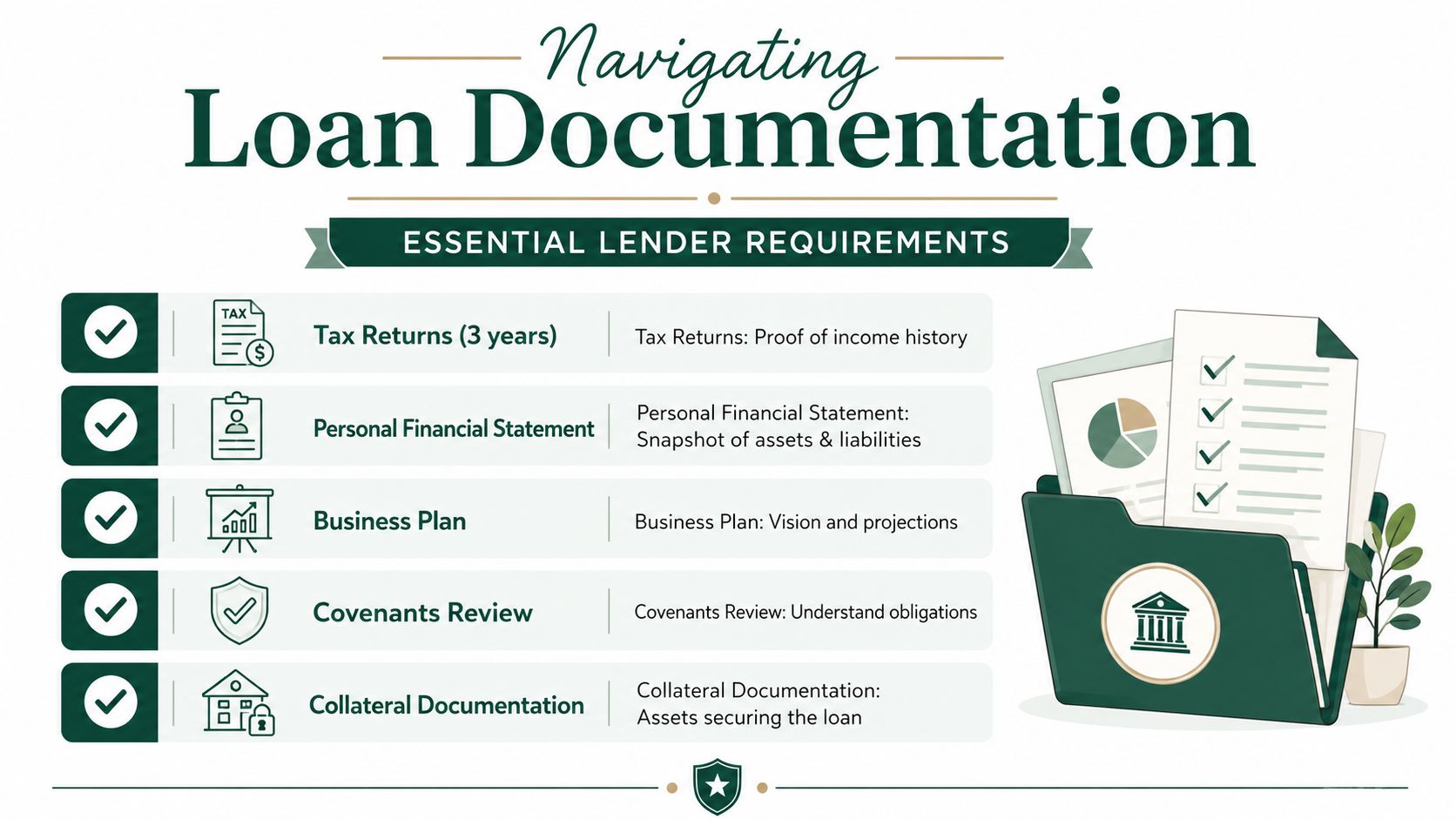
The document list is usually familiar. Tax returns, personal financial statements, business plans, covenant review, and collateral schedules are standard because the lender needs to confirm repayment capacity and protect the downside. If one item is missing, the file can stall and a quick approval turns into back-and-forth that burns time.
Treat the paperwork as part of the negotiation. When your financials are organized, your cash flow is easy to follow, and your assumptions are reasonable, you can push harder on structure. Ask for interest-only time if the clinic needs it, ask how strict the covenants really are, and ask what happens if revenue softens during ramp-up.
What to press on before you sign
Covenants catch borrowers off guard. These loan tests and restrictions can limit how much room the clinic has after closing, so you need the trigger points spelled out before you take the funds. A tight covenant package is not automatically bad, but you should know exactly what would create a problem if the business hits a rough month.
Read the covenant package before you celebrate the approval.
Speed also carries a cost. Some veterinary practice financing programs can move quickly when the borrower already has the right documents ready, but fast funding only helps if the repayment structure fits the clinic's real cash cycle (Veterinary Practice Loans, A professional infographic outlining essential lender requirements for loan documentation, including tax returns, business plans, and financial statements.). The goal is not a fast close for its own sake. It is a clean close, with a structure that does not start squeezing the operating account on day one.
When the Lowest Rate Is Not the Best Deal
A low headline rate feels like a win at closing. In practice, it only matters if the payment schedule fits the clinic's cash cycle and the debt matures in step with the asset it financed. The ultimate test is simple, does the loan protect operating cash while the asset earns its keep?
Flexibility can beat a lower coupon
A loan with a slightly higher rate can be the better deal if it gives you an interest-only start, a longer amortization, or repayment that matches the asset's useful life. That matters most for goodwill, a new location, or a build-out that will not produce full revenue right away. A lower payment in the early months can preserve reserves, and that is often worth more than a small rate cut if the cheaper loan drains cash too fast.
For major U.S. veterinary practice financings, SBA 7(a) terms are a common benchmark because they can reach $5 million and often run up to 10 years for working capital, equipment, or goodwill-heavy acquisitions, with real estate amortized over up to 25 years. That structure works because it aligns long-lived assets with longer repayment. The payment schedule is doing the heavy lifting, not the coupon.
Goodwill should not be paid off on the same pace as exam tables and lab gear. Real estate should not be shoved into a short amortization just because the rate looks attractive on paper. Match each debt block to the economic life of what it funded, or you end up with monthly payments that pressure cash long after the asset has stopped paying for itself.
Public-service debt relief changes the math
This is the part many lenders miss. USDA's Veterinary Medicine Loan Repayment Program repays up to $25,000 per year toward educational debt for veterinarians working in shortage situations (USDA fact sheet.pdf)). That means some owners bring a separate layer of debt support into the decision, and practice financing should reflect it.
Cornell's student-aid guidance also confirms that repayment and forgiveness programs exist for veterinarians, but those programs are usually discussed separately from practice financing. That separation creates bad loan design. If a veterinarian expects outside educational debt relief, the practice loan can be structured with more attention to cash flow in the early years, because part of the personal debt burden is being handled elsewhere.
The right way to compare offers is straightforward. Look at rate, term, payment flexibility, and outside debt relief eligibility together. A cheaper rate that strangles the operating account is the wrong loan. A structure that keeps payments manageable while public-service programs do their work is the one that protects the clinic.
Frequently Asked Questions About Veterinary Practice Financing
Should I combine acquisition debt and equipment debt into one loan?
Usually, no. Acquisition debt and equipment debt serve different purposes and should follow different repayment schedules. Equipment should be financed over the life of the asset it buys, while ownership buy-in or goodwill debt often needs a different term so the monthly payment does not outlast the cash flow it was meant to support. Separate loans keep the structure honest and make it easier to see which part of the balance sheet is pressuring the clinic.
How much do personal finances matter in underwriting?
A lot. Lenders look past the clinic and review your personal debt, liquidity, credit history, and overall financial strength, especially for startups and ownership transfers. If your personal file is disorganized, the credit package gets harder to approve and the terms usually get tighter. Clean statements, complete tax returns, and clear explanations of existing obligations make the underwriting process much easier.
Can I refinance a veterinary practice loan mid-term?
Yes, if the new loan improves cash flow or corrects a mismatch between the debt and the asset it financed. Refinancing only to chase a lower headline rate can be a bad move if it resets the amortization, adds fees, or strips out flexibility you already had. The right refinance should match the remaining economic life of the asset and leave the clinic with a stronger payment profile.
What should I ask about prepayment?
Ask whether there is a prepayment penalty, whether extra principal payments are allowed, and whether early payoff changes the total cost in a meaningful way. If you expect a sale, a refinance, a major expansion, or a change in outside debt relief, prepayment terms matter more than many owners admit. A loan that allows principal reduction without a penalty gives you room to protect cash flow when the business performs better than expected.
What if my income is tied to public-service repayment programs?
Build the practice loan around the debt picture you have. If educational debt may be reduced through public-service repayment or forgiveness programs, that lowers the personal burden and changes how much monthly pressure the practice loan needs to absorb. The loan should reflect that reality at the outset, with repayment terms that fit the clinic's cash flow instead of assuming every dollar of debt has to be handled the same way.
Veterinary Practice Loans helps veterinarians and clinic owners finance acquisitions, equipment, working capital, and build-outs with structures built around practice cash flow. If you are reviewing a term sheet and want a financing conversation that starts with repayment fit, visit Veterinary Practice Loans and compare options before you sign anything.
