

Starting a veterinary clinic typically requires $300,000 to more than $1,000,000, with a standard leased-space general practice landing around $650,000. Many first-time owners struggle not because they lack clinical skill, but because they underestimate the working capital needed to pay people, stock supplies, and keep operating while appointments build.
The clinical vision is usually the easy part. You know the kind of medicine you want to practice, the patient experience you want to create, and perhaps the neighborhood you want to serve. The harder work is building a financial and operational structure that can support that vision before the first client walks through the door.
I learned that a clinic can look nearly ready and still be financially fragile. Equipment may be installed, permits may be moving, and the reception desk may look polished, yet payroll, rent, inventory, insurance, and software bills continue whether the schedule is full or not. Starting a veterinary clinic means financing the ramp-up period, not just the physical clinic.
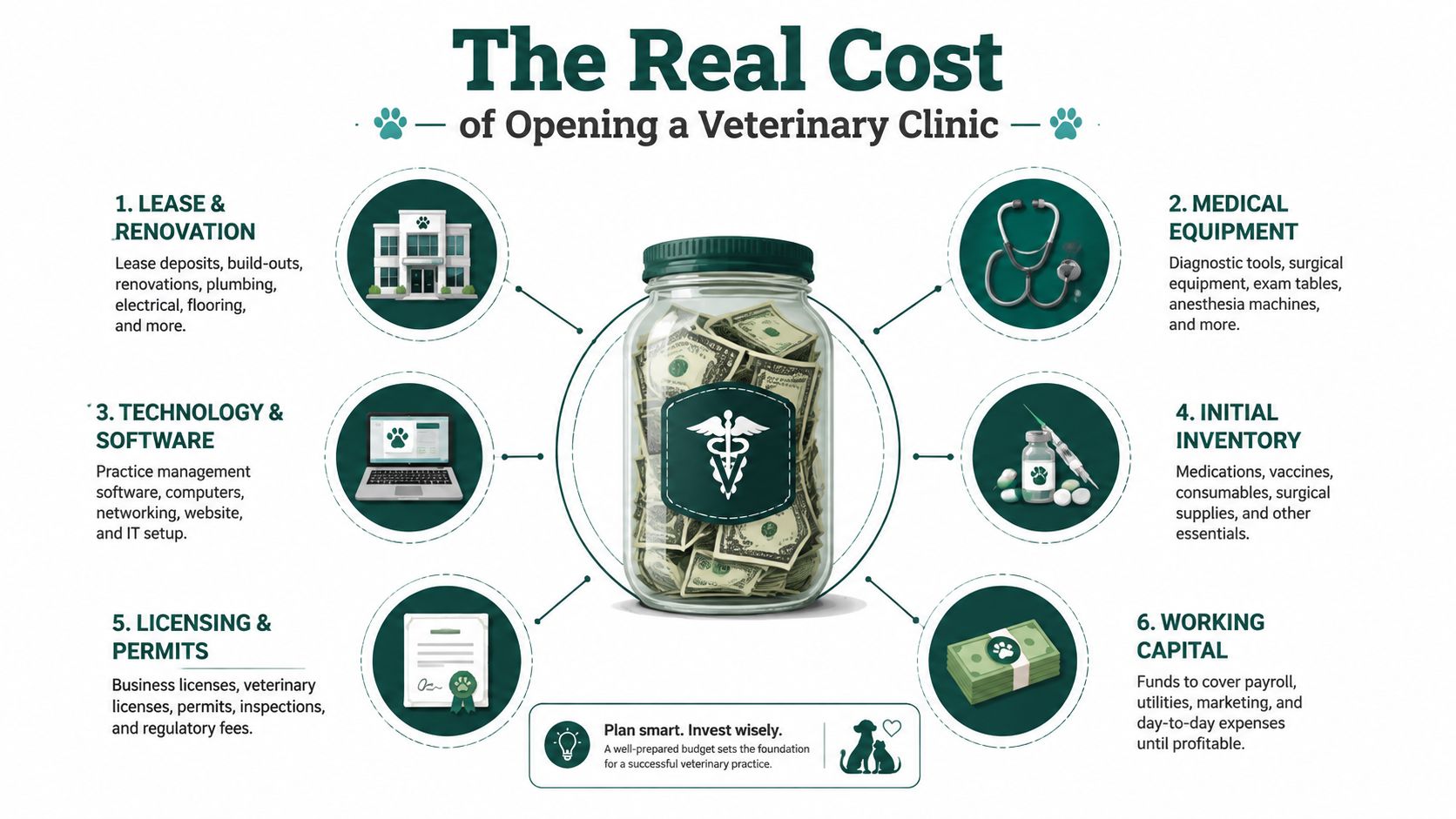
The Real Cost of Opening a Veterinary Clinic
Industry estimates place new veterinary clinic startup costs in the $300,000 to $1,000,000 or more range, depending on the market, build-out, and equipment scope, as outlined in this industry breakdown of veterinary clinic startup costs. A standard leased-space general practice can land around $650,000, combining approximately $433,000 in startup assets with roughly $217,000 in working capital.
That split changes how you should think about financing. The building, medical equipment, software, inventory, and permits are visible expenses. Working capital is less tangible, but it pays the team and keeps the clinic functioning while the client base develops. A founder who spends aggressively on advanced equipment but leaves too little cash for payroll has created a well-equipped problem.
A growing market still demands positioning
The U.S. had about 34,000 veterinary establishments in 2022, compared with 32,634 in 2021, according to the 2025 AVMA Economic State of the Veterinary Profession report. That represents roughly 1,366 additional establishments and about 4.2% year-over-year growth, so the profession is expanding while competition remains real.
A new clinic therefore needs a clear reason to exist. General practice, dentistry, emergency coverage, fear-free handling, exotic pets, and extended hours can all create different positioning choices. The right answer depends on local demand, your clinical strengths, staffing access, and the investment required to deliver the promise consistently.
Practical rule: Treat working capital as part of the clinic itself. The reserve isn't leftover money after construction. It's what allows the construction investment to become a functioning practice.
Before committing to a site, map every funding need in one document. A veterinary practice fit-out loan may address construction-related requirements, but your broader capital plan still needs separate lines for equipment, inventory, and operations.
Planning Your Veterinary Business Before You Sign a Lease
A lease commits you to a location before it commits clients to your schedule. Treat lease planning as a financial stress test, not a formality for a lender. The proposed clinic must support its service mix, staffing plan, workflow, and cash needs before construction begins.
Start with positioning. Define the patient population, services, hours, and client experience you can deliver consistently. A neighborhood general practice focused on preventive care needs a different staffing and equipment profile from a clinic built around dentistry, surgery, emergency coverage, or a specialized species. Serving every possible need from day one usually broadens expenses before demand has been demonstrated.
Build the model around four capital buckets
Separate the capital plan before requesting financing proposals:
- Build-out and leasehold improvements cover construction, plumbing, electrical work, ventilation, flooring, signage, and the physical layout.
- Equipment includes diagnostic, surgical, dental, laboratory, refrigeration, and treatment assets.
- Inventory and opening supplies cover medications, consumables, retail items, cleaning materials, and protective equipment.
- Working capital supports payroll, rent, utilities, insurance, software, replenishment, and other operating costs during the ramp.
This structure exposes funding gaps early. Long-lived assets may suit asset financing, while payroll and routine purchases require liquidity that remains available after opening. A clinic can have a finished treatment area and still struggle if deposits and construction payments consume the cash reserved for its first operating months.
Turn assumptions into a decision worksheet
Your planning file should answer practical questions:
- Which services will produce the first reliable appointments?
- Which services require equipment or staff that could sit underused?
- Which monthly expenses continue if appointment volume falls below plan?
- Which roles must be hired before opening, and which can wait until demand is visible?
- What condition triggers an equipment purchase, new hire, or expanded schedule?
- How much cash remains after the lease deposit, build-out payments, equipment deposits, and opening inventory?
A startup budgeting guidance for veterinary practices resource emphasizes reserving cash for payroll, rent, insurance, utilities, and supplies while the client base grows. Build the forecast conservatively. Revenue can begin on opening day, but it will not necessarily arrive at the pace your completed facility can handle.
Before signing, have a veterinary-focused lender review the capital buckets and draw schedule. The lender should understand how construction timing, equipment deposits, hiring dates, inventory cycles, and the revenue ramp affect one another. That review can expose a cash shortfall while changing the plan is still affordable.
The best business plan I've seen makes uncomfortable assumptions visible early, while changing them is still cheap.
Understanding Veterinary Clinic Financing Options
The right financing product follows the use of funds. Borrowing for a radiography system with a short-term operating line can put pressure on cash flow, while using long-term equipment debt for payroll can leave you with an asset repayment schedule that doesn't match the need.
| Financing type | Best fit | What to examine |
|---|---|---|
| Acquisition loan | Buying an established practice, purchasing a partner's share, or adding a location | Existing revenue, deposits, cash flow, valuation, and transition risk |
| Startup funding | Building a first clinic, including construction, initial staffing, inventory, and launch costs | Draw timing, reserve size, payment structure, and projected ramp |
| Equipment financing | Imaging, surgical, laboratory, and information technology equipment | Useful life, utilization, maintenance, and repayment alignment |
| Working capital line or term loan | Payroll, pharmaceuticals, supplies, rent, and recurring operating expenses | Availability, repayment expectations, interest cost, and cash-flow flexibility |
| Expansion or growth loan | Renovations, relocation, additional exam rooms, or satellite clinics | Demand evidence, projected utilization, and existing debt capacity |
A lender that understands veterinary operations will ask questions beyond a generic small-business checklist. Expect discussion around appointment flow, deposits, staffing, inventory cycles, service mix, and the timing of revenue. Credit history still matters, but clinic-specific underwriting can place the practice's operating picture alongside it.
Questions to ask before signing
Ask the lender to explain the total cost in plain English. Clarify whether payments begin immediately, whether an interest-only period is available, how draws work, and what happens if construction or opening is delayed. Compare amortization, collateral expectations, covenants, prepayment terms, and the consequences of a slower ramp.
Veterinary Practice Loans provides loans for veterinary practices across acquisition, startup, equipment, working capital, and expansion scenarios. Its stated process can support funding within 24 hours when documentation and lender criteria are met, so confirm the exact requirements and timeline for your situation rather than treating speed as automatic.
Don't choose a product because the initial payment looks comfortable. Choose a structure that preserves enough liquidity to operate and gives long-lived assets a repayment period that reflects how they'll be used.
Choosing a Location and Navigating Licensing Requirements
A suitable veterinary site has to work for patients, clients, staff, regulators, and the financial model. Low rent isn't a bargain if the space requires extensive plumbing, creates difficult animal flows, lacks parking, or sits outside the zoning rules for veterinary use.
Start by defining the catchment area and target clients. Review residential growth, accessibility, parking, visibility, nearby animal-related businesses, and the density of competing practices. The AVMA establishment figures cited earlier show a substantial and expanding national market, but they don't tell you whether a particular intersection is underserved. Local observation and conversations with referral partners still matter.
Evaluate the site before negotiating hard
Check these items before you treat the lease as a formality:
- Zoning compatibility: Confirm that veterinary use, signage, laboratory activity, pharmacy functions, boarding, and waste storage are allowed.
- Physical access: Assess parking, entrances, transport for larger animals if relevant, and safe movement from car to reception.
- Infrastructure: Inspect power, water, drainage, ventilation, sound control, internet access, and space for treatment and storage.
- Expansion capacity: Look for practical options to add rooms or services without rebuilding the entire workflow.
- Competition and referrals: Map nearby practices and identify complementary relationships with shelters, groomers, trainers, and pet retailers.
Do not finalize the lease until a veterinary-experienced architect, contractor, attorney, and lender have reviewed the assumptions that drive the budget. A lease can be difficult to renegotiate after construction costs appear.
Sequence compliance by dependency
The exact requirements vary by state and locality, but the work commonly involves:
- Forming the legal business entity and establishing dedicated financial records.
- Confirming state veterinary medical board requirements and facility obligations.
- Applying for controlled-substance registration where applicable.
- Securing local business permits and any zoning or signage approvals.
- Planning hazardous-waste, environmental, pharmacy, and compounding compliance.
- Completing fire, safety, building, and final facility inspections.
- Establishing written logs, storage controls, and renewal calendars before opening.
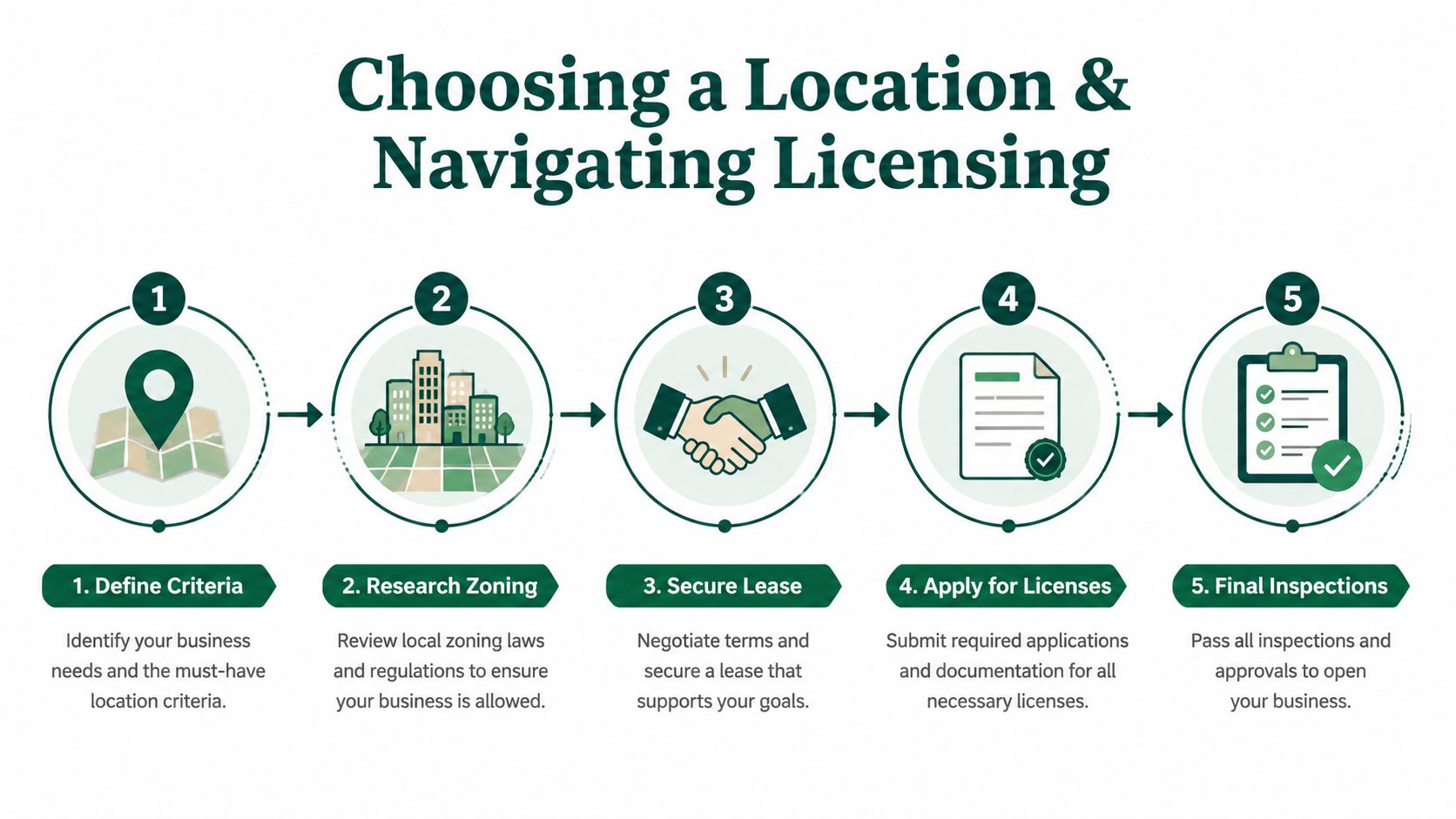
Keep a dependency checklist with an owner and target date for every item. Permits and inspections can block equipment installation, hiring, or opening, so discovering a missing approval late in construction is more expensive than paying for early review.
Selecting Equipment and Technology That Supports Workflow
Equipment must fit the operating model and not fill the treatment area. A diagnostic device can improve care while adding installation, maintenance, training, consumable, scheduling, and staffing costs. Before buying, confirm that the opening team can use it consistently and that the planned service mix can support the investment.
Set day-one purchases around the services you have committed to deliver safely. Delay less certain capabilities until appointment patterns, referral demand, and staff capacity justify them. Preserving liquidity at launch gives you room to respond when actual demand differs from the forecast.

Design the patient journey before buying software
A connected booking-to-billing system can reduce duplicate entry and limit the staff time spent chasing updates. Digital intake, self-serve booking, and simpler payment workflows may also reduce phone pressure during demand spikes. Treat integration as an operating decision, not a software feature checklist.
Map the patient journey from appointment request through follow-up. Mark where information is entered, who owns each next action, and what the client receives. Then verify that scheduling, medical records, inventory, invoicing, and communication systems exchange the required information cleanly.
Ask for demonstrations using real clinic workflows:
- Can staff enter information once and use it in both the patient record and invoice?
- Can the system handle digital forms, reminders, payments, and follow-up?
- What happens if the internet fails or a device becomes unavailable?
- How quickly does support respond during an operational problem?
- What will training, migration, renewals, and integrations cost?
Technology decisions also affect capital structure. Review veterinary practice equipment financing when financing would preserve working capital and the repayment period matches the equipment's useful life. Do not finance every purchase because financing is available. Borrowing should support planned capacity, not cover unclear demand or an underdeveloped service model.
Hiring and Operational Systems for Your New Clinic
A clinic can have capable clinicians and still struggle from day one if responsibilities, staffing, and handoffs are unclear. The first team shapes appointment capacity, client trust, and cash flow. Reliability, communication, client service, and consistent processes matter as much as clinical skill.
A general-practice clinic may need a practicing veterinarian, registered veterinary technicians, client-service staff, and a person accountable for management. The owner may cover several roles initially, but every recurring responsibility needs one named owner. Otherwise, inventory counts, callbacks, controlled-substance logs, and payroll approvals are easily missed.
Hire in the order that drives revenue
Staff the roles that make safe appointments possible before adding positions that depend on established volume. A front-desk lead can set up scheduling, client communication, and daily reception standards. Technical staff can prepare rooms, assist with procedures, and keep treatment moving. The owner or manager needs visibility into staffing, purchasing, compliance, and financial reporting before those decisions become expensive.
Labor and related human-resource costs can consume a substantial share of revenue. Use that planning consideration as a check, not a promise. Build a staffing model around realistic appointment volume, service capacity, opening hours, and the cash reserve required to cover payroll while demand develops. Hiring too late creates bottlenecks. Hiring too early can drain working capital before the clinic has enough appointments to support the team.
Write the operating playbook before opening
Document the repeated workflows and assign ownership:
- Intake and triage: Define the information client-service staff collect and the situations that require clinical escalation.
- Room turnover: Assign cleaning, stocking, and readiness checks.
- Discharge: Standardize medication instructions, warning signs, follow-up, and payment completion.
- Callback management: Set ownership and escalation rules for laboratory results and client questions.
- Inventory control: Establish reorder points, receiving procedures, expiry checks, and approval authority.
Run practice days before the first real appointment. Staff should complete check-in, examination, treatment, discharge, and payment while one person records delays, unclear decisions, and repeated work. Then revise the playbook, retrain the team, and test the workflow again. Fixing a broken handoff in an empty clinic costs far less than correcting it with anxious clients waiting. This operating discipline also protects the capital plan, because staffing and supply decisions can follow measured capacity rather than guesswork.
Marketing Your Clinic and Planning the Launch Timeline
A grand opening doesn't create demand by itself. It gives people a date to notice you, but sustainable appointment flow comes from clear positioning, local trust, accessible booking, and consistent follow-up.
A representative first-time owner might sign a lease and then discover that construction, permits, equipment delivery, hiring, and training don't move at the same pace. A 14-month timeline from lease signing to full operations is a useful planning scenario, not a guaranteed schedule. The owner should build milestones with contingency space rather than promise an opening date before dependencies are confirmed.
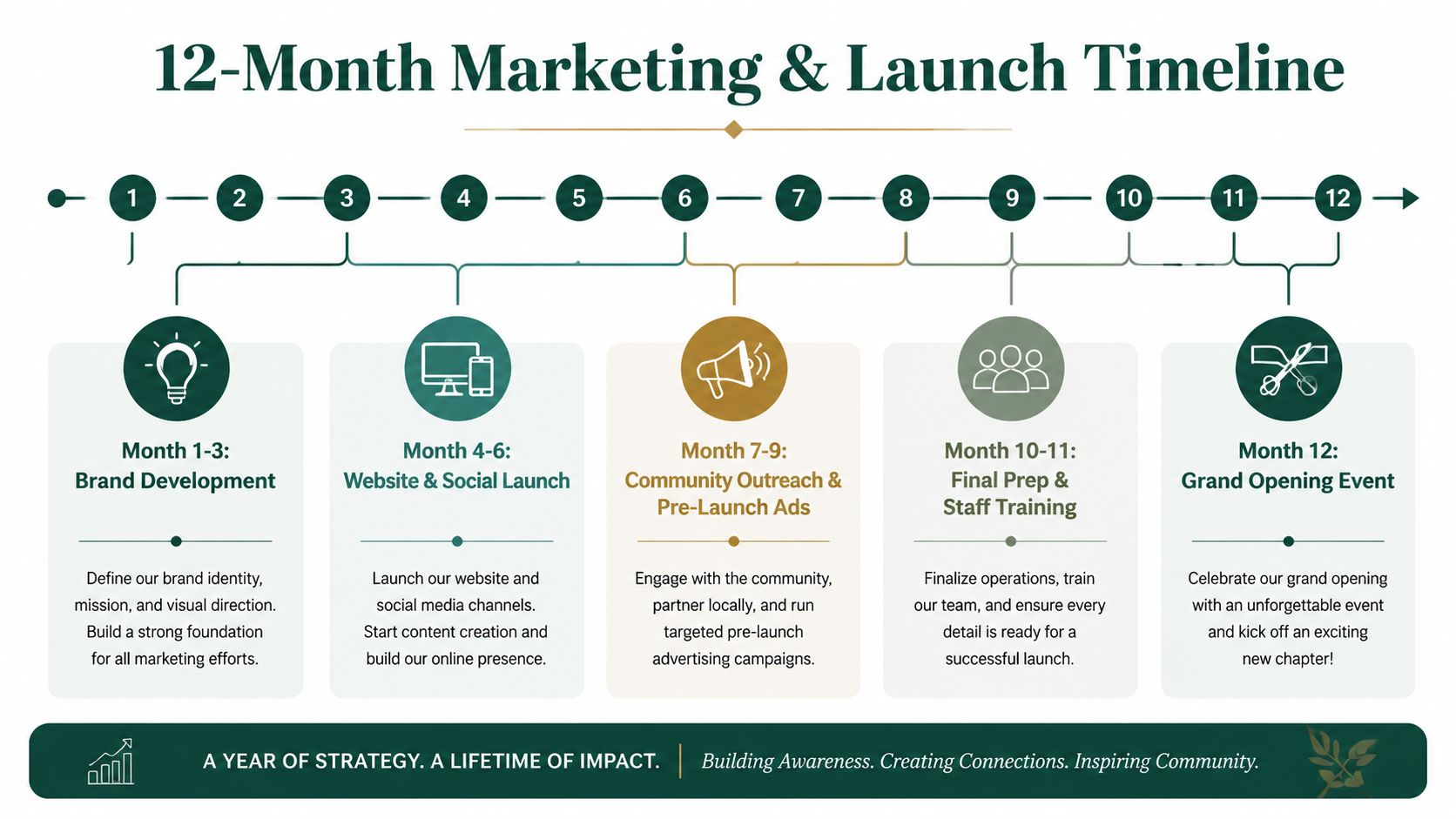
A practical launch sequence
Months 1 to 3, define the business and brand. Finalize the service mix, client promise, name, visual identity, budget, and financial model. Begin conversations with shelters, rescue organizations, trainers, groomers, and other local partners.
Months 4 to 6, build the digital front door. Launch a website with services, location, hours, clinician information, preparation instructions, and appointment access. Create social profiles that show the team, facility progress, and educational approach without suggesting services are available before they are.
Months 7 to 9, make the community familiar with the clinic. Develop referral relationships and run tightly targeted local campaigns. Invite potential clients to learn about preventive care, kitten and puppy visits, senior-pet support, or the clinic's chosen niche.
Months 10 to 11, prepare the operation. Complete staff training, test booking and billing workflows, stock essential inventory, rehearse triage and discharge, and confirm inspection status. Use a soft opening to expose process problems before the public launch.
Month 12 and beyond, open carefully. Hold the opening event only when the team can deliver the promised experience. Keep early scheduling manageable enough to protect care quality and give staff time to correct bottlenecks.
Track the signals that reveal pressure early
During the first month, review appointment volume and no-show rate every week. These measures show whether awareness is converting into visits and whether scheduling policies need adjustment. Also review unfilled hours, callbacks waiting for action, inventory exceptions, payroll commitments, and cash on hand.
Activate a working-capital line based on a defined trigger, such as a reserve threshold or a sustained mismatch between scheduled work and fixed expenses. Don't draw equipment financing for operating bills, and don't drain operating reserves to purchase an upgrade that can wait. Funding timing matters because the same amount of debt can either protect a launch or hide a planning error.
Questions new owners still ask
Should I open with every service I eventually want to offer?
No. Open with the services your team can deliver safely, efficiently, and profitably within the available facility and staffing model. Document the conditions that would justify adding a new service, such as consistent demand, trained staff, available room capacity, and a financing plan that doesn't weaken reserves.
How early should I start marketing?
Start once your positioning and opening assumptions are stable enough to communicate accurately. Early marketing should build recognition and relationships, not create appointment demand that the clinic can't fulfill. Keep the public informed about progress, but don't advertise a launch date that depends on unresolved construction or regulatory approvals.
What should I review with a lender before signing a lease?
Share the full project budget, lease terms, construction assumptions, equipment list, opening inventory, hiring plan, and cash-flow forecast. Ask how funds will be released, which costs qualify, when payments begin, and how the structure handles delays or a slower ramp.
What deserves attention after opening each week?
Review appointment volume, no-shows, available capacity, cash position, payroll commitments, inventory movement, client follow-up, and unresolved operational issues. A short weekly meeting with named owners turns these observations into decisions instead of letting problems accumulate.
The owners who succeed in starting a veterinary clinic don't rely on optimism as a financial strategy. They separate capital categories, protect operating liquidity, select systems that reduce staff friction, and open only when the team can deliver the promised standard of care.
Veterinary Practice Loans offers financing options for veterinary startup costs, equipment, working capital, build-outs, acquisitions, and expansion. Visit Veterinary Practice Loans to discuss your project with a lender focused on veterinary practice financing and map the funding structure before you sign a lease.
