

If you're trying to buy into a clinic, buy out a partner, or figure out whether a corporate-affiliated path can work for you, the financing question usually lands at the worst possible moment, right after a long day of appointments and before a pile of documents you haven't sorted yet. Banfield veterinary practice ownership loans get searched like they're a single product, but lenders don't see a single product. They see an ownership path, a cash-flow story, and a transition risk that either supports the deal or breaks it.
That's why the rate quote is only one piece of the conversation. The core issue is whether you're pursuing a full acquisition, a partial buy-in, a partner buyout, or a growth expansion, because each one changes how much control you get, how much cash you need up front, and how the lender sizes the loan. Banfield's scale makes that easier to see. A platform with more than 1,050 hospitals across 42 states, Washington, D.C., and Puerto Rico is a reminder that veterinary ownership can move far beyond a single-clinic purchase and into multi-site capital structure decisions state veterinary corporatization data.
Ownership path matters more than headline rate.
Buy-in usually means shared control and a negotiated valuation.
Partner buyout means buying certainty, but often with tighter cash demands.
Exit from a corporate group puts transition risk at the center of the file.
Full acquisition is the cleanest to explain, but not always the easiest to fund.
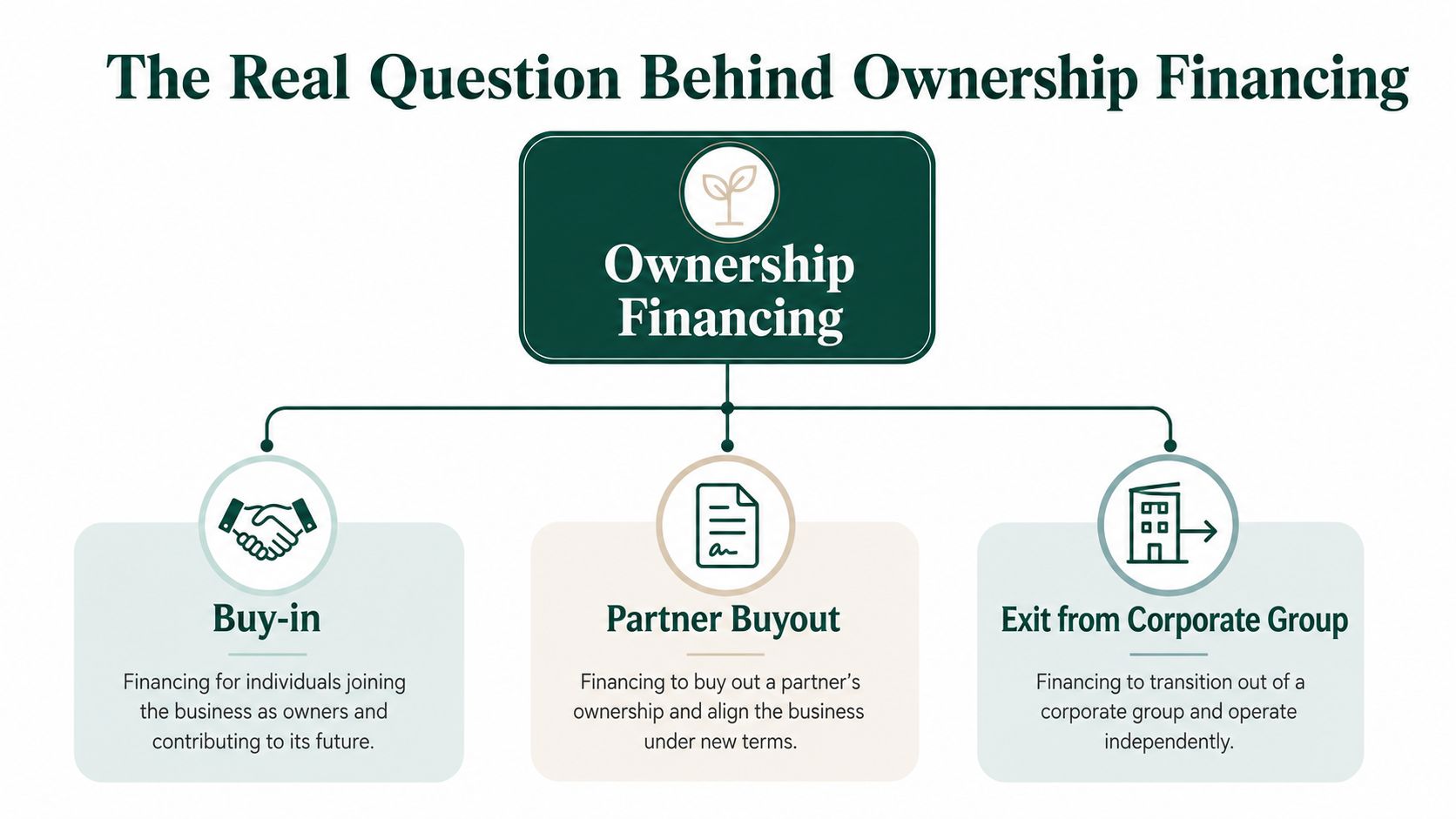
The Real Question Behind Ownership Financing
A lot of veterinarians start with the wrong framing. They ask, “Can I get financed?” when the more useful question is, “What kind of ownership am I taking on?” A clean acquisition of an independent clinic is one thing. A partial stake inside a larger group, or a buyout where the remaining partner stays in the building and keeps operating, is a different risk profile entirely.
That distinction matters because lenders underwrite the transaction you're really doing, not the one you wish you were doing. When the deal involves a buy-in or a partner transition, control rights, seller cooperation, and the timing of distributions become as important as the purchase price. In a corporate-affiliated environment, those issues can get even more layered because the buyer may be stepping into an existing system with tighter operating rules and a more structured handoff.
Four ownership paths create four different loan conversations
The practical test is simple. If you're buying the whole practice, the lender cares about cash flow, collateral, and whether the seller can support a clean handoff. If you're buying a minority stake, the lender cares just as much about governance, veto rights, and what happens if the relationship sours. If you're buying out a partner, the lender wants to know whether the practice can support the debt while still paying the remaining owner and the team.
For a de novo clinic, the issue isn't transition. It's whether the borrower has enough equity, operating runway, and discipline to survive the start-up ramp. For an expansion loan, the lender is testing whether the existing operation can absorb another location without straining payroll or working capital. That's why Banfield veterinary practice ownership loans are best understood as a financing umbrella, not a single product line.
The question isn't, “Can this practice be financed?”
The question is, “Which ownership structure creates a loan the business can actually carry?”
Banfield's long history helps explain why this question is so important now. Founded in 1955 and now owned by Mars, Inc., it reflects the move from a single practice to a national platform, and industry reporting places its footprint at roughly 1,050 to 1,100 hospitals in major U.S. markets Banfield Pet Hospital overview. That kind of scale is why financing conversations increasingly involve structure, transition, and governance, not just a monthly payment.
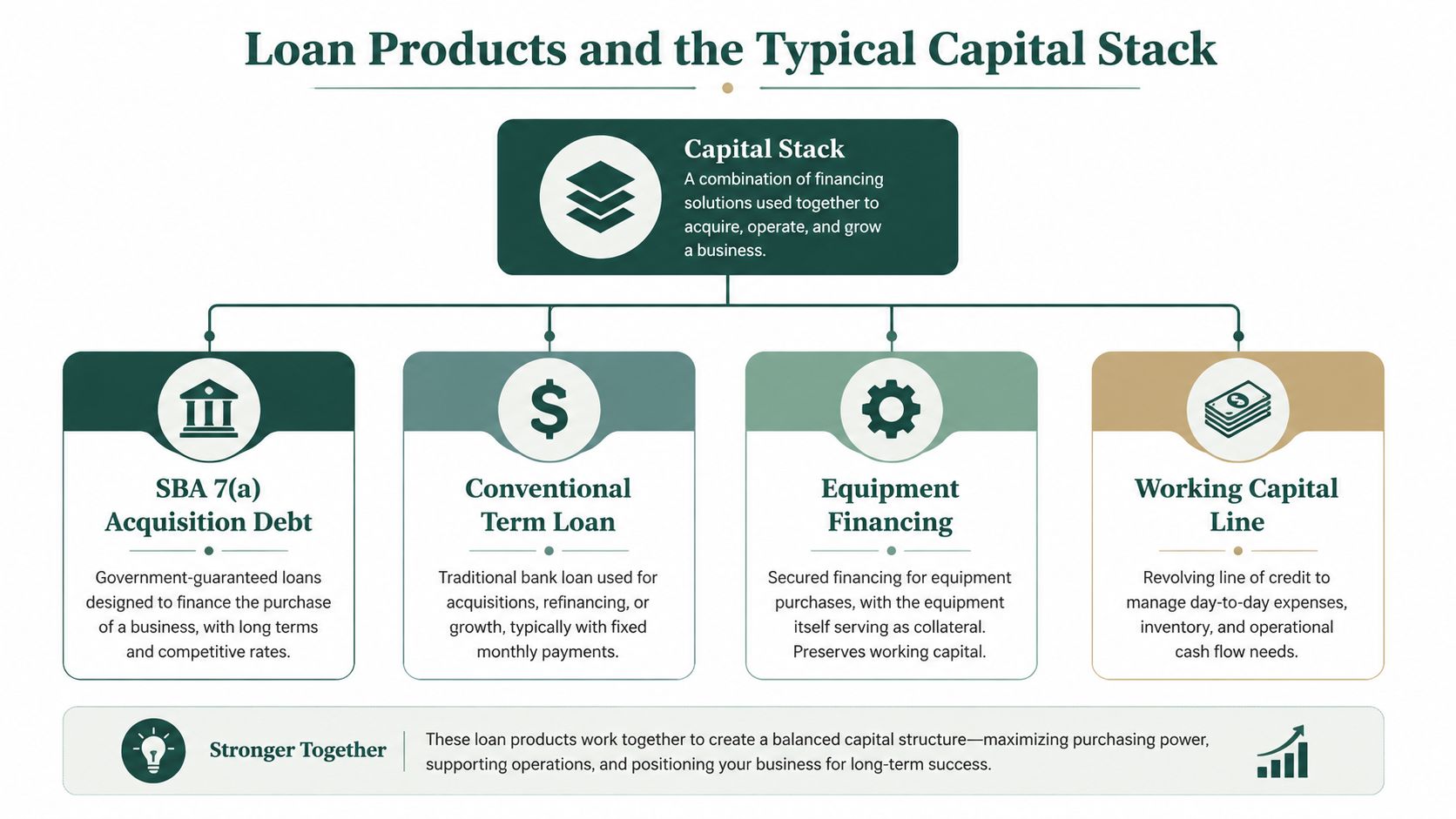
Loan Products and the Typical Capital Stack
A Banfield buy-in rarely closes with one clean check. The deal usually needs a capital stack, because partial ownership, seller rollover, and the operating ramp all create different funding needs. One layer handles the purchase, another handles equipment, and another sits behind the closing so payroll, supplies, and rent do not become a personal scramble in the first month after the handoff.
What each layer does in the deal file
SBA 7(a) acquisition debt is usually the main term debt when the buyer is purchasing an existing practice. In this market, a common benchmark is 80 to 90% of the price through SBA 7(a), paired with 10 to 15% seller financing and 0 to 5% buyer cash practice financing guidance. That structure matters because it spreads risk across the buyer, seller, and lender instead of putting the whole burden on one party, which is often the reality in a partial-ownership or buy-in deal.
Conventional term loans can work when the financials are clean and the buyer brings meaningful equity. Some conventional lenders can close in under 60 days when the buyer contributes 10 to 20% down and the file is straightforward practice financing guidance. Equipment financing should sit on its own schedule and match the useful life of the asset, so the repayment does not outlast the value being used. Working capital is the buffer that keeps the practice steady when the post-close transition gets messy.
A buyer can also run into rate differences across the stack. A shorter, cleaner loan with more equity usually prices better than a stretched structure with thinner cash in the deal. If you want a practical reference point while you compare terms, use the current veterinary practice loan rates page as a starting point, then line those rates up against the actual purpose of each piece of debt.
Canonical capital stack: acquisition debt for the purchase, seller financing for alignment, equipment financing for assets, and working capital for the ramp.
Deal discipline matters. A good lender does not just ask what you want to borrow. It asks what the debt is supposed to accomplish, what asset or cash-flow stream supports each piece, and whether the repayment plan matches the operating life of the clinic. That is the difference between a financing package that supports ownership and one that adds a larger fixed obligation.
How Lenders Underwrite a Veterinary Deal
The first thing lenders look at is whether the practice produces durable cash flow and whether the transition threatens that cash flow. They care less about the buyer's excitement and more about whether the clinic has steady deposits, an active patient base, and a seller who will stay involved long enough to smooth the handoff. If the business is operationally steady, the file starts in a stronger place. If the clinic is chaotic, dependent on one doctor, or already showing signs of drift, the same purchase price becomes harder to support.
The numbers on paper have to match the operating reality
A lender can usually tell when a deal is priced like a premium asset but runs like a fragile one. A higher goodwill multiple can still work if trailing deposits are stable and the buyer shows a realistic transition plan. A lower purchase price does not save a deal if revenue is uneven or the handoff is likely to trigger patient and staff attrition.
That is why revenue-based underwriting matters. The lender sizes debt against historical deposits, continuity of operations, and the active patient base, not just the buyer's personal income. That point matters even more in a corporate-affiliated transition, because the buyer may face a cash-flow gap from credentialing, payer changes, or staff turnover. If the deal cannot absorb that gap, the loan may be approved on paper and still be fragile in practice.
What strengthens the file, and what weakens it
The strongest files usually have three things in common. The deposit history is consistent instead of lumpy. The seller transition is real, not symbolic. The price fits the cash flow instead of being defended with optimism.
Weak files usually miss one of those marks.
Practical rule: a stable practice with predictable deposits can support more debt than a chaotic practice with the same top-line revenue.
Partial ownership is harder to finance than many buyers expect. A lender can underwrite a whole practice sale by looking at the enterprise. A minority buy-in forces the lender to think about ownership rights, distributions, and control. If those are not clear, the loan looks less like a straightforward acquisition and more like a bet on an unresolved relationship.
For buyers comparing financing paths, the overview of SBA loans for veterinary practice financing is useful because it reflects the way lenders frame repayment capacity, transition risk, and cash flow.
Building the Documentation Package Lenders Expect
A good package doesn't start with the loan application. It starts with the transaction file, assembled in the order an underwriter will read it. The goal is to make every piece answer the next question before the lender has to ask it. If the file is assembled out of order, the process slows down, and the slowdowns usually happen at the exact points where seller cooperation is hardest to get back.
The sequence matters more than most borrowers realize
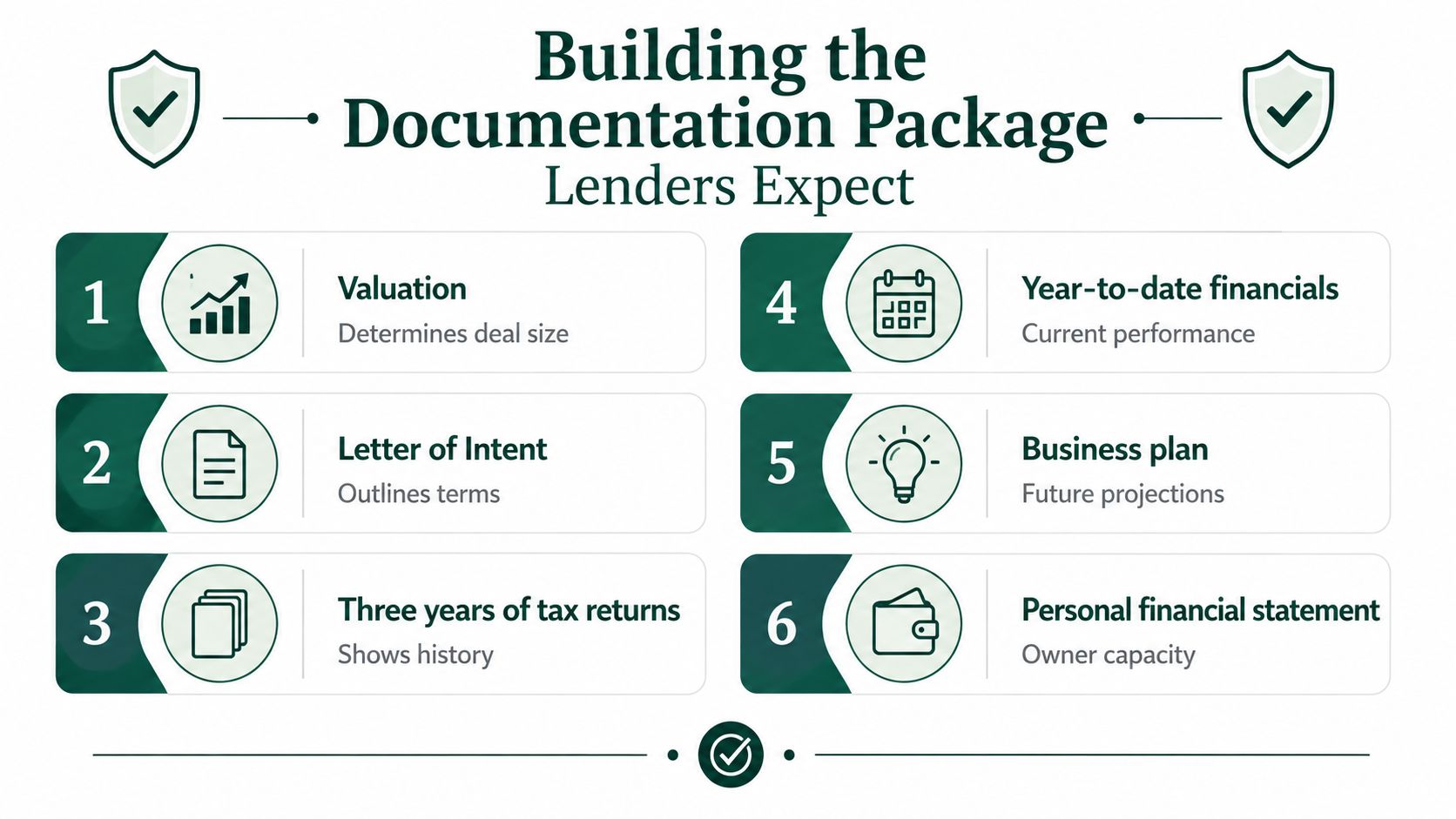
Start with the valuation. That establishes whether the price is defensible before anyone wastes time arguing about structure. Then add the letter of intent or signed purchase agreement, because the lender needs to see the deal terms that both sides accepted. After that come the three years of practice tax returns, which show historical performance and help the lender reconcile reported income with what the business produced.
Next, submit year-to-date profit and loss statements and a balance sheet so the lender can test whether the practice is holding its pattern in the current year. Follow with a current debt schedule, which tells the lender what existing obligations already sit on the business. Then include aged accounts receivable, because receivables can hide collection problems or, just as often, reveal an orderly billing process.
The last pieces are the 24-month projections and the transition plan. Those two documents explain how the buyer expects to hold the business together after closing, especially if the seller is staying only briefly or the ownership change is layered into a broader transition. If the deal is a buy-in or buyout, the transition plan should be concrete enough to show who signs what, who manages what, and how long the seller's support lasts.
A practical shortcut is to ask the seller's CPA for a tax-return summary before underwriting starts. Clean tax returns can shorten the closing clock by weeks because they reduce the time spent reconciling add-backs, owner expenses, and historical irregularities. Messy tax records do the opposite, and they tend to push the entire transaction back while everyone waits for clarification.
Comparing Lender Types for Veterinary Ownership Deals
A Banfield-associated associate who wants into ownership usually runs into the same fork in the road. A lender can fund the deal quickly, or it can fund it in a way that gives more room for a partial buy-in, seller transition, or staged equity path. Those are different underwriting problems, and lenders do not treat them the same.
| Lender Type | Typical Speed | Equity Required | Best Fit |
|---|---|---|---|
| SBA-preferred lender | Often slower than conventional lending, with a heavier documentation path | Usually moderate, because the structure is designed to reduce upfront strain | Full acquisitions, seller-backed transitions, borrowers who can document the file well |
| Conventional bank lender | Can be faster when financials are clean, and some closings can happen in under 60 days | Often higher cash down than SBA-style structures | Strong financials, cleaner balance sheets, straightforward deals |
| Veterinary-focused alternative lender | Can move quickly when the file is organized and the underwriting matches clinic cash flow | Varies by risk and transaction type | Owners who need speed, bridge capital, or a structure that looks beyond personal income |
| Seller-financing arrangement | Depends on how quickly both sides agree | Can reduce the buyer's cash need if the seller is flexible | Partial buy-ins, partner transitions, and situations where alignment matters as much as pricing |
The biggest mistake is picking a lender before the ownership path is clear. A partial buy-in often needs flexibility around governance, seller support, and how the buyer's equity steps up over time. A clean purchase of a practice with stable numbers often fits a more traditional acquisition structure, even if the buyer still needs help with goodwill financing and working capital. In an affiliated system, speed still matters, but so does whether the lender will fund a structure that is not a simple whole-practice sale.
The core trade-off is control versus simplicity
SBA-style structures usually give the buyer more room to assemble the capital stack, which helps when the deal has several moving parts. The trade-off is a heavier file and more lender discipline around documentation, projections, and seller involvement. Conventional lending can feel cleaner on paper, but the equity ask often lands harder, which matters when the buyer is already funding a buy-in rather than a full purchase.
Seller financing changes the equation again. It can reduce friction and soften the cash requirement, but it also keeps the seller tied to the transition and adds another layer of expectation management. That works only when the relationship is workable and the seller understands how much control stays with the buyer after closing.
For borrowers comparing terms and fit, a practical starting point is best lenders for veterinary practice loans. The point is not to chase the cheapest headline rate. It is to match the lender's structure to the ownership path, the transition plan, and the amount of control the buyer needs.
Structuring the Deal and Timing the Funding
A veterinary ownership deal can close on paper before the business is cash-ready. That gap matters even more in a partial buy-in or Banfield-style affiliation, where the buyer may be stepping into ownership while the clinic is still adjusting to new control, new payroll habits, and a transition that has to hold together in real time. The financing has to be set up around how the business moves cash, not around the neat sequence in the closing packet.
Funding should match the operational sequence
The acquisition loan should fund the ownership transfer itself. Equipment financing belongs with the assets that are being replaced or added, not on a premature draw just because the credit file is approved. The working-capital line needs to be ready before the first real squeeze shows up, because payroll, inventory, rent, and other operating bills do not wait for the lender's internal timing.
That timing matters most during the 60 to 90 day post-close cash-flow gap that can follow credentialing delays, payer changes, or staff turnover practice underwriting guidance. The clinic may be open and treating patients, but collections can lag while the new ownership structure settles. A working-capital line beside term debt gives the buyer room to absorb that lag without draining personal cash at exactly the wrong time.
Cash pressure usually shows up in small pieces first. Payroll still runs, inventory still has to be replenished, and receivables do not always arrive on the timeline the buyer planned for at closing.
A sensible structure also keeps the debt aligned with the asset life. Equipment repayment should end while the equipment is still useful. Term debt should reflect the fact that a practice rarely performs at its steady state in the first month after closing. If the amortization or draw schedule assumes immediate stabilization, the buyer carries too much monthly pressure during the most fragile part of the transition.
Day one liquidity is a planning decision
The cleanest closings treat liquidity as part of the transaction, not as an afterthought. That means the buyer and lender need to agree early on when the acquisition funds disburse, when the equipment line can be drawn, and when the working-capital facility becomes available. If those pieces are not sequenced on purpose, the deal can close legally while the owner is still short on operating cash in practice.
That is the trade-off in ownership financing. A structure that looks simple at closing can create a cash gap after closing, and a structure that gives the buyer enough liquidity may require more coordination up front. The best plan leaves enough room for the clinic to operate while the new owner gets control of the business.
Negotiation Tactics and Post-Closing Stability
The quoted rate matters, but the deal often turns on the terms no one talks about first. Seller financing, transition support, and any earn-out structure can make a difficult deal work or turn a decent deal into a strain. If the seller is willing to stay involved, the buyer should negotiate the role clearly, because vague support is usually the first thing to disappear when the first issue shows up.
Negotiate for flexibility, not just price
A good ownership transition usually includes some combination of seller financing and hands-on transition support. Seller financing aligns the exiting owner with the outcome, and transition support helps the buyer absorb the operational realities the closing documents can't capture. Earn-outs can work, but only when the metrics are simple enough that both sides trust them.
The repayment schedule needs the same honesty. Amortization should fit the business's actual cash flow, not the buyer's optimism. If the clinic sees seasonal swings or a temporary post-close dip, the payment structure should leave enough room for payroll, inventory, and normal operating noise. Owners who overextend on structure usually discover that the loan isn't the problem, the monthly fixed burden is.
A stable first year protects everything else
The first 12 months after closing should be planned, not improvised. That plan should name who handles receivables, who supervises the seller transition, how liquidity is monitored, and what happens if the expected ramp takes longer than hoped. A buyer who protects cash in the first year has options. A buyer who spends every cushion on day one has none.
Three habits separate stable transitions from stressed ones.
Get seller support in writing.
Match repayment to the clinic's cash rhythm.
Protect liquidity for the first operating dip.
If you're evaluating Banfield veterinary practice ownership loans or any other veterinary ownership path, the next step is to get the deal structure mapped before you chase a rate quote. Veterinary Practice Loans helps owners and veterinarians line up acquisition financing, equipment funding, working capital, and expansion capital around the way clinics operate. Visit Veterinary Practice Loans to start a practical financing conversation built around your ownership path, not just your loan amount.
