

You're probably looking at a quote for a new imaging unit, lab analyzer, surgical table, or practice IT upgrade and asking a simple question that turns complicated fast: what will a lender need from me?
In a veterinary clinic, that question matters because equipment purchases rarely happen in a vacuum. The same month you need a diagnostic upgrade, you still have payroll, pharmacy inventory, rent, and vendor bills to cover. Most owners don't want to drain cash reserves for a piece of equipment that's supposed to help the practice produce revenue over time.
That's why equipment financing requirements exist. Lenders aren't asking for documents just to make the process harder. They're trying to answer three practical questions. Will the clinic repay the debt? Is the equipment good collateral? Does the business look stable enough that the deal makes sense?
What Equipment Financing Means for Veterinary Practices
A clinic owner agrees to buy a new digital radiography unit on Monday, then gets surprised on Wednesday when the lender asks different questions than they would for a surgical table or in-house lab analyzer. That happens because equipment financing is tied to the asset itself, not just the practice's credit profile.
A veterinary equipment loan is built around three realities. The equipment has a clinical job to do. It should help produce revenue or improve case flow. It also loses value over time, and some assets hold value better than others.
That asset-level difference shapes the deal more than many owners expect. Imaging equipment often gets longer terms because lenders can understand its market, useful life, and resale path. Surgical equipment may be durable, but some items have a narrower resale market. Lab equipment can be productive and necessary, yet terms may tighten if the system depends on proprietary consumables, frequent software updates, or a fast replacement cycle. Practice IT usually gets the shortest runway because computers, servers, and related systems age out quickly and have weak collateral value.
Why clinics finance equipment instead of paying cash
Clinics usually finance equipment to keep working capital inside the business.
A radiography system, ultrasound, dental unit, or chemistry analyzer can support daily production while the practice repays the cost over time. That structure makes sense when the equipment should earn its keep across several years and the owner wants to preserve cash for payroll, inventory, marketing, and routine repairs.
What does not work is treating every purchase like it deserves the same term and down payment. Lenders price risk partly by asking a simple question: if they had to recover and resell this asset, what would that process look like? A well-known imaging category with stable demand usually gets a better response than a mixed package of older equipment, software-heavy tools, or items with limited secondary-market demand.
Practical rule: Better resale value and a longer useful life usually lead to cleaner terms, lower down payment pressure, and stronger approval odds.
Owners often zero in on the monthly payment. Underwriters look at whether the payment period fits the equipment's earning window. If the asset may become outdated before the loan ends, the lender will often shorten the term, ask for more money down, or both.
That is why financing can be right choice even for a profitable clinic. The goal is not only to buy the equipment. The goal is to buy it without tightening the practice's day-to-day cash position more than necessary. For owners comparing structures, equipment financing and leasing for clinics is usually the starting point because the decision is how ownership, useful life, and cash preservation fit the asset you are buying.
What lenders are really checking
The requirements make more sense once you view them through the equipment itself as well as the clinic.
- Repayment ability means the practice can support the payment from revenue and cash flow.
- Collateral quality means the equipment should have enough useful life and recoverable value to support the term.
- Business stability means the clinic is organized, current on its obligations, and unlikely to create avoidable risk after funding.
In practice, a lender may be more flexible with a strong clinic buying a durable imaging asset than with the same clinic financing equipment that depreciates faster or is harder to resell. That is the core idea behind equipment financing requirements for veterinary practices. They are not a generic checklist. They are a way of matching the clinic, the asset, and the loan structure so the deal holds up on both sides.
Eligibility Criteria Lenders Actually Evaluate
A clinic owner with solid revenue can still get two very different offers on two different purchases. Finance a digital radiography system with an active resale market and lenders often get comfortable faster. Finance a mixed package that includes monitors, software, and lower-value accessories, and the same lender may shorten the term, lower the approval amount, or ask for money down because less of that package holds collateral value.
That is how equipment lending works in practice. Underwriters look at the borrower, but they also look closely at the asset and whether its useful life supports the repayment period.
The core filters underwriters use
Lenders usually review four things together:
- Repayment capacity. The clinic has to show enough revenue and cash flow to carry the payment without putting normal operations under strain.
- Credit profile. Personal and sometimes business credit still matter because they show payment history, existing obligations, and whether there are unresolved problems that increase risk.
- Time in business and operating stability. An established clinic with steady deposits, clean licensing, and consistent operations is easier to approve than a practice with recent ownership changes, uneven banking activity, or incomplete records.
- Collateral quality. The equipment needs enough remaining useful life and resale support to justify the requested term.
Collateral quality is where veterinary deals often separate. A lender will usually view ultrasound, digital X-ray, dental imaging, and some analyzers more favorably than furniture, general IT bundles, or specialty equipment with a thin resale market. The more predictable the resale path, the easier it is to support longer terms and lower borrower contribution.
How lender type affects the review
Different lenders apply those filters with different levels of flexibility. Some programs can work with newer clinics, lighter documentation, or mixed equipment packages. Others want a longer operating history, cleaner financials, and assets that fit standard collateral boxes.
That does not mean one category is better. It means the structure has to match the file. A bank-style credit request for a newer practice buying fast-changing technology can stall even when the clinic itself is healthy. A more flexible program may approve that same deal, but with a shorter term or a larger down payment to offset asset risk.
If you want a plain-English view of how lenders sort those variables, these underwriting guidelines for veterinary loans explain how repayment strength, collateral, and file quality affect approval.
What changes for veterinary equipment
Veterinary equipment does not age the same way, and lenders price that reality into the deal.
Imaging equipment often supports stronger terms because lenders can estimate useful life and resale value with more confidence. Surgical equipment can go either way. A well-known laser or anesthesia setup may underwrite cleanly, while a niche surgical system with limited resale demand may not. In-house lab equipment brings another layer because analyzer value can depend on service status, software support, reagent relationships, and how quickly the model becomes dated.
That difference shows up in real approval terms:
- Longer-lived, easier-to-resell assets are more likely to qualify for longer repayment periods.
- Assets with faster obsolescence or weaker resale support are more likely to trigger shorter terms.
- Mixed packages often receive more scrutiny because some line items finance well and others do not hold value once installed.
- Used equipment can work well if the age, condition, and marketability still support the request.
A clinic can have acceptable credit and still get revised terms because the equipment does not support the original structure.
The trade-offs underwriters actually make
Underwriting is usually a balancing exercise, not a single-pass test.
Strong credit can offset a thinner operating history. Strong practice cash flow can help when owner credit has an older blemish. A high-quality asset can improve approval odds because the lender has a cleaner collateral exit if the loan goes bad. On the other hand, weaker collateral often leads to a shorter amortization, more documentation, or a larger borrower injection even when the clinic looks good on paper.
The cleanest approvals usually share the same traits:
- Steady operating performance rather than sharp swings in monthly revenue
- Reasonable global debt load for the owner and the practice
- A quote that clearly identifies the equipment and separates hard assets from soft costs
- A term request that fits the asset's practical life, not just the payment the borrower wants
Owners usually focus on the rate first. Underwriters often focus on the exit first. For veterinary equipment financing, those are connected. The stronger the clinic and the more durable the asset, the more room there is to structure a workable deal.
Documentation You Will Need to Prepare
A lender can like the clinic, like the owners, and still pause the file if the paperwork does not clearly support the equipment being financed.
That happens often with veterinary deals. A digital radiography unit, ultrasound, in-house lab system, dental package, or surgical laser each creates a different collateral story. The underwriter needs documents that show exactly what the asset is, what condition it is in if used, what soft costs are bundled in, and whether the financing term makes sense for that equipment's useful life and resale value.
The basic file most lenders want
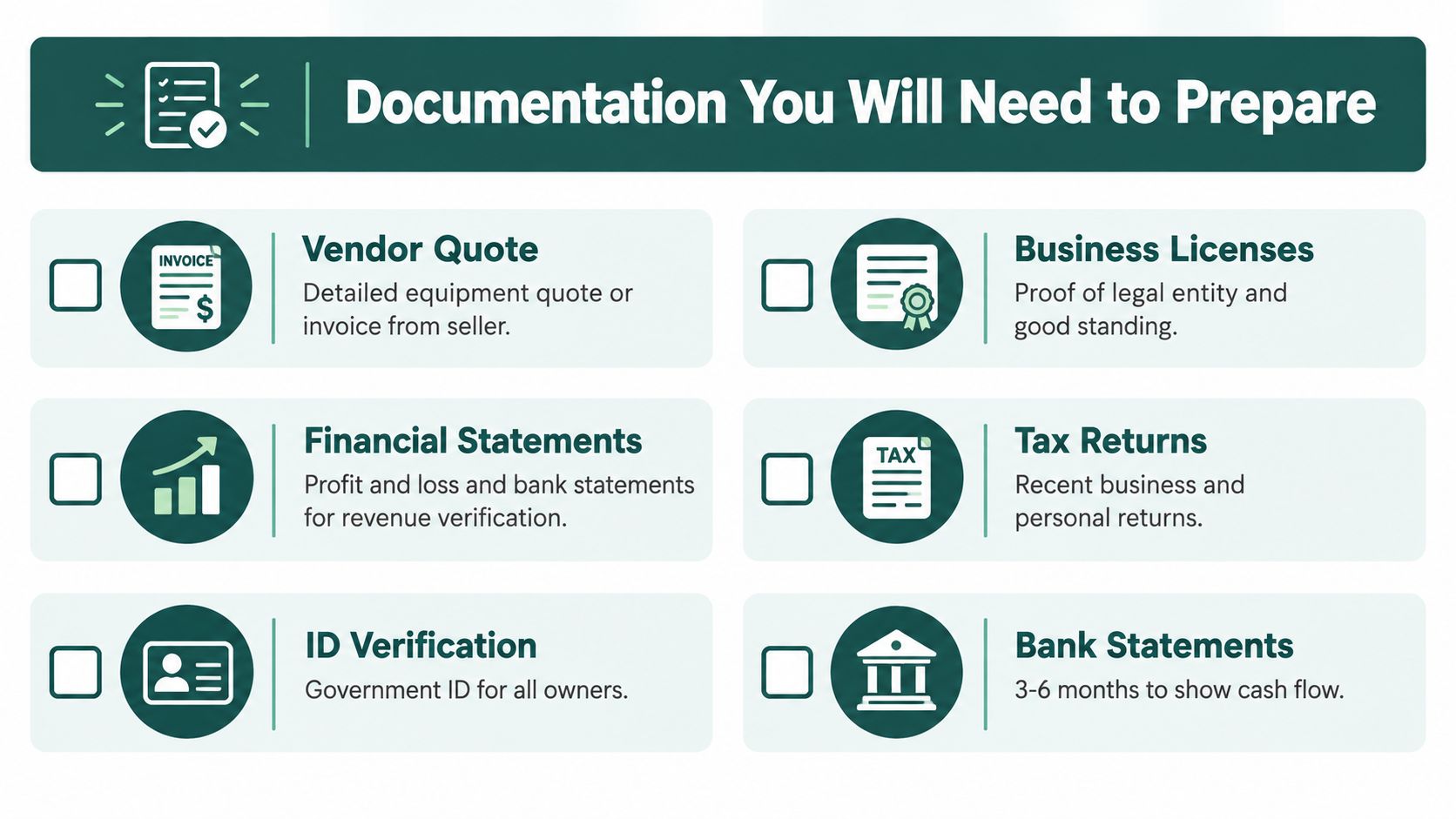
Start with the quote. For veterinary equipment financing, that document does more than confirm price. It tells the lender whether the request is built around hard assets that hold value, or around a package with software, training, warranty, install, and other items that may finance differently.
Most lenders will ask for:
- Vendor quote or invoice with model numbers, serial numbers if available, condition, and a clear breakout of equipment, accessories, shipping, installation, training, software, and tax
- Business formation records showing the exact legal entity name
- Business license or good standing documents if required for the state or lender
- Owner identification for anyone signing or guaranteeing
- Credit authorization for personal credit, and sometimes business credit
- Recent financial statements for the practice
- Recent business bank statements
- Business tax returns if the lender is doing a fuller review
If the equipment is used, imported, or rebuilt, expect more support. Lenders often want age, condition, service history, and sometimes photos. They ask because resale risk is different on a five-year-old ultrasound than on a customized imaging room buildout.
What the lender is checking in each document
The quote is usually the first underwriting document I review with owners because it drives so much of the structure.
If the quote is for a new digital imaging system with identifiable hardware and an active resale market, lenders are often more flexible on term and down payment. If the same quote bundles software subscriptions, training, room modifications, and consumables into one total, the lender may carve those costs out, shorten the term, or ask for more cash in. Lab analyzers create a similar issue. The machine may finance cleanly, while reagent commitments or service items do not.
Entity documents solve another common problem. The borrower name on the application, quote, bank statements, and tax returns has to match. If the practice operates under a DBA but the financing is in the LLC or corporation, the file needs to show that cleanly. Otherwise the lender stops to reconcile ownership and signing authority.
Financial statements and bank statements answer a more practical question. Can this clinic carry the payment without strain, and do the deposits support the revenue story on the application? For veterinary practices, underwriters also look at whether the requested equipment fits the clinic's case mix and revenue base. A referral hospital financing advanced imaging is reviewed differently from a small general practice adding a basic analyzer.
Tax returns usually come into play when the request is larger, the file has a credit issue, or the asset itself does not give the lender a strong collateral exit. Surgical and diagnostic equipment with stable secondary-market demand can reduce friction. Highly specialized systems, older used units, or heavy soft-cost packages usually increase it.
Documents that matter more for certain equipment types
Some files need more than the standard checklist.
For imaging equipment, include the full equipment description and any component list. A lender wants to know whether the value sits in the generator, detector, software, table, workstation, or a bundled package. For ultrasound, model and age matter because values can vary sharply by platform and clinical use.
For surgical equipment, clarify what is movable equipment versus built-in improvement. A movable anesthesia machine or laser is easier collateral than installed millwork, gas-line work, or room modifications.
For lab equipment, separate the analyzer from consumables, service plans, and reagent agreements. That one step prevents a lot of avoidable back-and-forth.
How to keep the file clean
A few habits save time:
- Match the legal name exactly across the application, quote, tax returns, and bank statements
- Use current statements so the lender is not filling gaps with assumptions
- Break out hard costs from soft costs on the vendor quote
- Include specs or equipment detail sheets for specialized assets
- Flag any unusual item early, such as a recent acquisition, ownership change, relocation, or temporary revenue drop
- Label files clearly so underwriting can review them quickly
Owners tend to focus on rate and payment. Documentation usually decides how fast the approval moves and whether the lender keeps the original structure. Before signing, it also helps to review the terms in an equipment financing agreement so the documents you submit match what the lender will paper.
A simple lab analyzer request can be documented in a fairly straightforward way. A multi-part imaging or surgical package needs more precision. The more the transaction depends on the equipment holding value over time, the more the paperwork around that asset matters.
How to Prepare and Submit a Strong Application
The strongest application is not the longest one. It's the one that makes underwriting easy.
Owners often lose time by applying before they know whether the request matches the asset, the term, and the clinic's current profile. A better approach is to move in sequence. Confirm the file is financeable, tighten the quote, gather the support, then submit once.
Near the start of your process, this simple workflow helps keep the file clean.
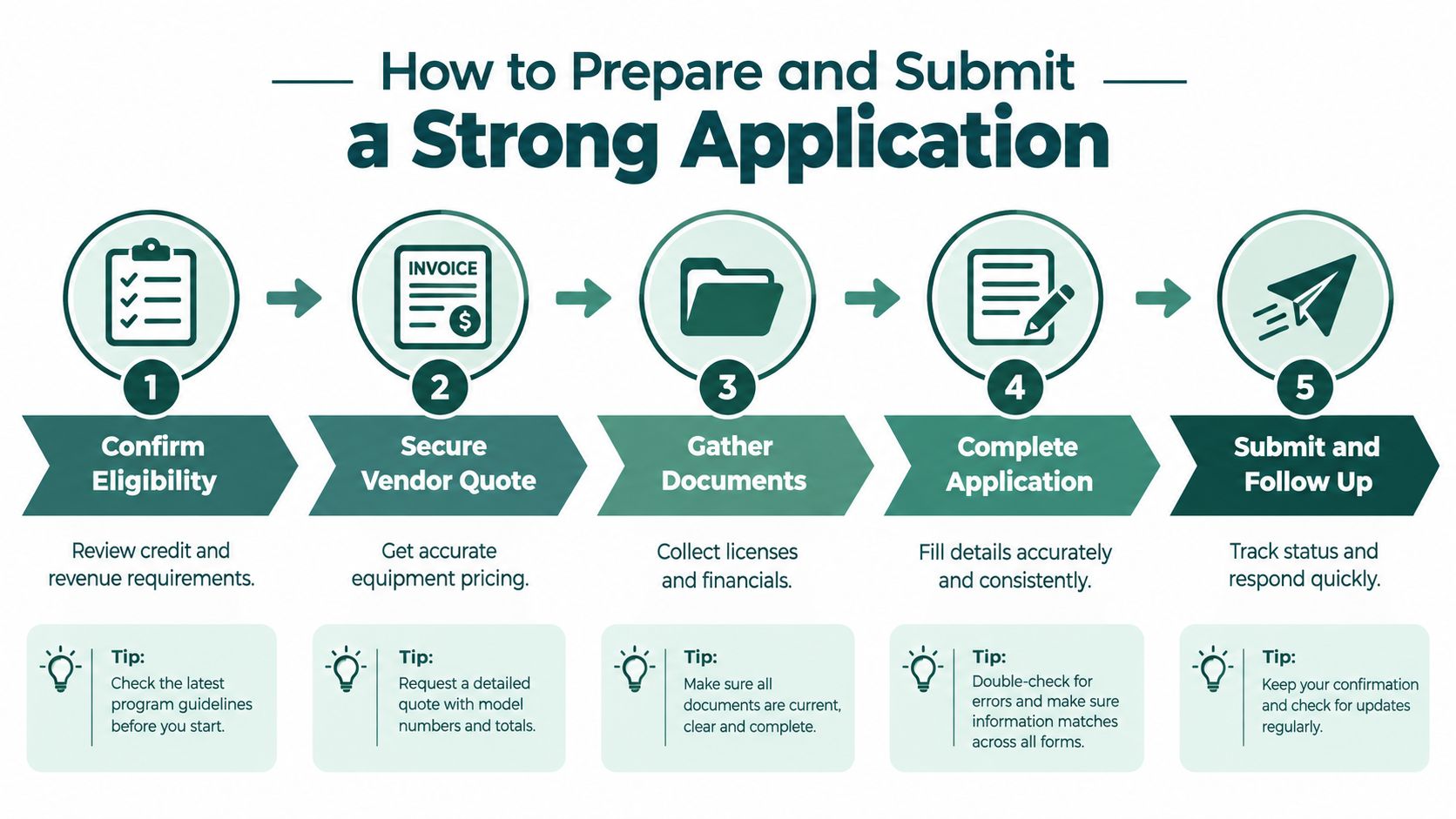
Step one is self-screening
Before you send anything, check the basics against your own file. Are your personal credit and business performance likely to fit the kind of lender you're approaching? Is the clinic old enough, stable enough, and documented well enough for the request?
If there's an obvious weakness, address it before submission when possible. That might mean waiting until cleaner statements are available, reducing the request to the most financeable equipment first, or preparing to put more money down.
Step two is getting the quote right
A weak quote creates avoidable friction. The underwriter needs to know exactly what the practice is buying and whether the amount requested matches the equipment package.
A useful quote usually includes:
- Specific equipment identification rather than a broad category label
- Line-item pricing for primary equipment and related components
- Installation or delivery details if they are part of the financed amount
- Seller information that can be verified quickly
If the quote bundles hard assets with soft costs, expect questions. Some lenders finance the package cleanly. Others may separate financeable equipment from service items or non-equipment charges.
Step three is choosing a realistic structure
Owners can improve approval odds without changing lenders at all. Ask for a term that fits the asset. Don't push a repayment schedule beyond the period where the equipment is likely to hold practical value for the clinic and collateral value for the lender.
That matters because lenders are balancing two clocks at once. One is your cash flow. The other is the equipment's decline in value. When those clocks drift too far apart, the file gets harder.
Here's a good working rule for veterinary equipment financing requirements:
- Start with the asset's likely useful life
- Compare that life to the payment you can support
- Use down payment strategically if you need to reduce risk
- Avoid stretching the term just to force a lower monthly number
A larger down payment can help in several situations. It can offset weaker credit, reduce the lender's exposure on equipment with less predictable resale value, and lower the monthly burden on a clinic that is still ramping.
Step four is submitting a consistent story
The application should match the documents. That sounds obvious, but many files stall because the written application tells one story and the supporting records tell another.
Before you submit, verify:
- Ownership percentages match entity records
- Legal names match tax and bank records
- Revenue representations line up with statements
- Equipment cost matches the vendor quote exactly
For owners who want a veterinary-specific lending path, Veterinary Practice Loans is one option that works with clinic acquisitions, equipment purchases, working capital, and growth financing, with structures tied to veterinary operations rather than general retail borrowing.
After your documents are ready, this walkthrough gives a useful visual reset before submission.
Step five is responding quickly after submission
A lot of approvals are delayed, not denied. The lender asks one clarifying question. The clinic takes days to respond. The vendor quote expires or the review goes cold.
Once you submit, stay available. If the underwriter asks for a revised quote, extra statements, or clarification on ownership, answer directly and in one package. Speed matters because equipment files often move faster when the collateral and business records are straightforward.
Common Reasons Applications Stall and How to Fix Them
A clinic applies for a digital radiography system, asks for a long term to keep the payment low, and expects a quick approval because the practice is profitable. Then the file sits. In underwriting, the problem is often not the clinic. It is the fit between the asset, the structure, and how the request is documented.
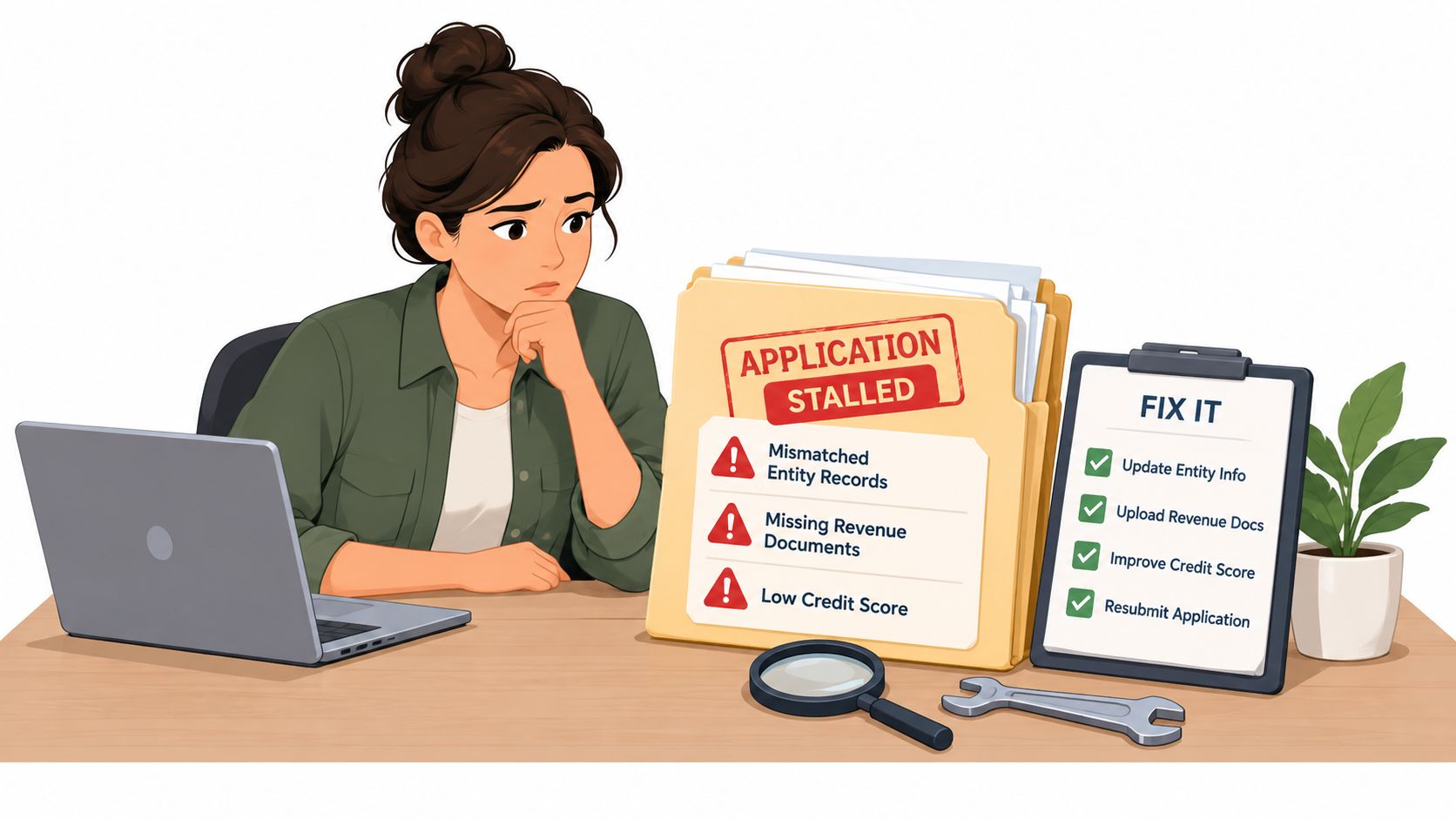
Entity details still do not reconcile
As noted in Documentation, mismatched legal names remain one of the top reasons a file stops for clarification. Veterinary practices run under DBAs all the time, and that by itself is not the issue. The issue is making the lender guess which entity owns the equipment, receives revenue, and signs the obligation.
Fix it with a one-page entity reconciliation. List the borrowing entity, any DBA, ownership percentages, and which account receives practice deposits. Attach the corrected quote or formation document if needed.
Revenue support does not match the type of equipment being financed
Lenders do not just ask whether the clinic has revenue. They ask whether the clinic can support this payment for this asset. A chemistry analyzer with recurring in-house use reads differently from a large imaging purchase that adds a much higher fixed cost.
Files slow down when deposits are spread across multiple accounts, recent production shifted after an associate left, or the practice is buying equipment before the revenue benefit is visible. The fix is to connect the request to actual clinic operations. Show where deposits land, explain any recent change in one or two plain sentences, and tie the equipment to current service volume if that context helps the file make sense.
Credit profile supports a different structure
Credit issues rarely end a deal by themselves. They change the terms.
If personal credit is bruised, or the practice has little borrowing history, the lender usually reduces risk somewhere else. That can mean more money down, a shorter term, or financing only the strongest part of the package first. In veterinary lending, that matters because not all assets carry the same collateral strength. Ultrasound, digital X-ray, and some lab equipment often hold value better than mixed bundles that include training, consumables, or soft costs.
Possible fixes include:
- Increase the down payment so the lender has more equity protection
- Split the request and finance the hard equipment first
- Shorten the term if the asset's resale market is limited
- Add a guarantor when ownership and deal structure allow it
The quote is bundled in a way that weakens the collateral
Underwriters look closely at what they could recover if the loan goes bad. That is why inflated or opaque quotes create friction. A surgical laser, used ultrasound unit, or rebuilt autoclave may be perfectly financeable, but the quote has to show what the lender is really funding.
Problems show up when one total price includes equipment, installation, software, warranties, freight, staff training, and unrelated office items. Some of those costs may be financeable. Some may not. Even when they are allowed, they do not all hold value the same way.
The fix is a cleaner vendor quote. Break out hard equipment, installation, service contracts, software, and any non-equipment charges. Used equipment should also identify age, model, and condition. The clearer the collateral, the easier the approval.
The requested term does not match the asset's useful life
This is the veterinary issue owners run into most often.
Lenders do not size terms by payment preference alone. They look at useful life, obsolescence risk, and resale value. A DR panel or ultrasound machine may support a longer term than a niche lab device with a thinner secondary market. Surgical equipment can be durable, but highly specialized systems can become harder to remarket if the file goes sideways. If the asset will age out before the note does, the structure starts to break.
Fixes are practical:
- Shorten the term to better match the equipment life
- Put more down to offset a weaker collateral position
- Finance only the core asset and pay soft costs separately
- Use a stepped payment structure if cash flow timing is the issue, not asset quality
A lower monthly payment helps only when the asset still supports the term. If it does not, the file stalls because the lender is underwriting future collateral value, not just today's invoice.
Your Final Checklist Before You Apply
By the time you apply, you should already know whether the request is coherent. That's the goal. A lender doesn't need a perfect clinic. They need a file that makes practical sense.
Use this final screen before you send anything:
Borrower readiness
- Check your time in business against the likely lender category you're targeting.
- Review recent revenue support and make sure deposits and statements tell a clean story.
- Look at personal credit before you assume a no-money-down structure will fit.
Equipment readiness
- Confirm the quote is detailed and identifies the exact equipment package.
- Ask whether the asset supports the term requested based on useful life and resale potential.
- Separate equipment from non-equipment charges if the quote is bundled.
Document readiness
- Match the legal entity everywhere including application, quote, statements, and tax records.
- Gather financials in one packet rather than sending pieces over several rounds.
- Prepare a short explanation for any unusual item the lender will notice anyway.
Submission readiness
- Choose the right structure instead of chasing the lowest monthly payment at any cost.
- Plan your down payment as a risk tool, not just an upfront burden.
- Stay available after submission so questions get answered before the file loses momentum.
The practical advantage in veterinary lending is that a good lender won't look only at a credit score. They'll also consider how the clinic operates, how deposits move, what the equipment does in the practice, and whether the debt fits the business without crowding out operations.
If your file is consistent, the quote is solid, and the term fits the asset, equipment financing requirements stop being a hurdle. They become a checklist you can satisfy once and move past quickly.
Veterinary clinic owners use Veterinary Practice Loans for equipment purchases, acquisitions, working capital, and expansion funding built around how practices operate. If you're preparing an equipment file, they can help you sort the structure, documents, and repayment fit before you submit, which usually makes the process cleaner and faster.
