
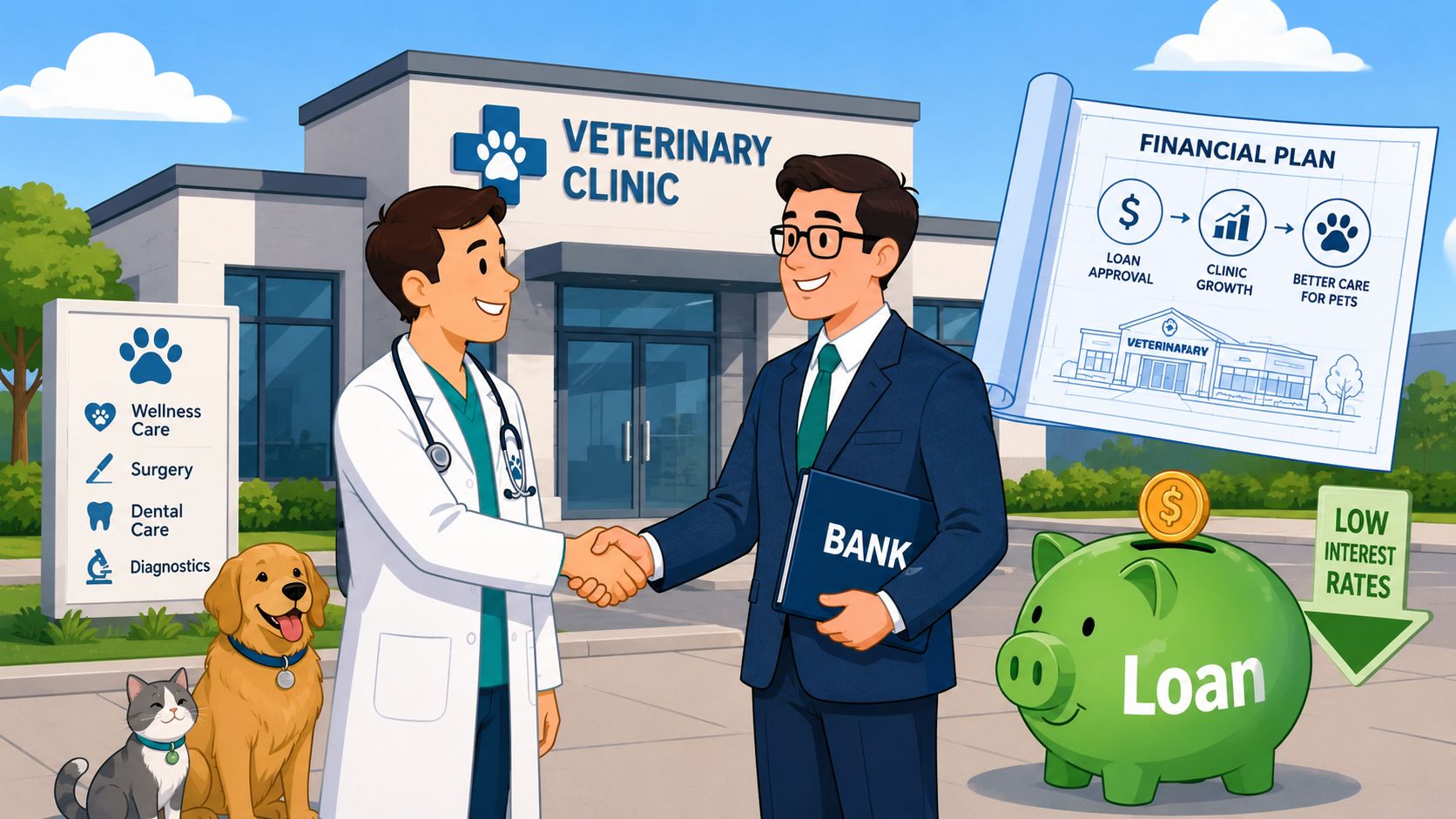
You're probably looking at a clinic purchase that feels close enough to touch, and the financing question is what's keeping it from becoming real. The seller wants certainty. Your accountant wants clean numbers. The lender wants proof that the deal can carry itself without starving the practice after closing. That's where low interest loans for buying a veterinary clinic matter, not as a marketing phrase, but as the difference between a workable acquisition and a monthly payment that crushes cash flow from day one.
A typical veterinary practice changes hands for about $200,000 to $1.5 million according to Biz2Credit's veterinary practice financing guide, and that price range explains why buyers obsess over rate. If you spread a six or seven figure purchase over a long term, monthly debt service becomes manageable in a way short-term borrowing rarely can. That's why serious buyers usually start with government-backed or highly qualified bank debt, not the fastest money on the market.
Why Low Interest Rates Make or Break Clinic Acquisitions
A clinic purchase at $750,000 looks very different once the debt is on paper. At a rate around 9.75%, with terms up to 25 years on an SBA 7(a) veterinary loan, the buyer gets a long repayment runway. At a product with a much higher annualized cost, the same deal turns into a monthly squeeze that can force the new owner to delay hiring, hold off on equipment replacement, or postpone compensation changes the clinic needs. A current veterinary loan roundup shows an SBA option at 9.75% and a separate product with a 35.26% APR.
The spread matters because it changes the deal itself, not just the payment. A gap between roughly 9.5% to 9.75% and 35.26% APR can determine whether the acquisition leaves room for working capital or starts under constant pressure. Fast cash products can close quickly, but they also create refinancing pressure, and that pressure is what pushes otherwise healthy acquisitions into trouble after the first wave of excitement passes.
What the rate is really buying you
Low-rate debt buys time. Time to absorb the seller transition, time to stabilize client retention, and time to normalize post-close expenses. A buyer who locks in longer amortization can usually keep debt service aligned with the practice's real earning power instead of forcing the clinic to produce an unrealistic level of cash flow right away.
Practical rule: if a loan only works when every month looks like your best month, it is not acquisition financing, it is a leveraged position with a hidden downside.
For clinic buyers, rate shopping has to be tied to debt structure, not just APR. If you want a practical reference point for how lenders frame pricing, review current veterinary practice loan rate structures and compare the repayment shape, not just the headline number. The cheap loan that fits the asset and the revenue cycle is the one worth taking.
Comparing SBA, Conventional Bank, and Alternative Loan Structures
The right structure depends on what the clinic can support after closing, not just who says yes first. SBA acquisition loans are the cleanest fit for many buyers because they can run long and can support larger purchase prices. Conventional bank acquisition loans can be even more flexible for qualified buyers, especially when a lender is willing to look at the practice's stability and the buyer's operating experience. Alternative loans are the speed option, but speed costs money.
| Veterinary Clinic Loan Comparison | Typical APR Range | Term Length | Funding Timeline | Best For |
|---|---|---|---|---|
| SBA 7(a) acquisition loan | 9.75% on the cited veterinary option | Up to 25 years | Longer underwriting cycle | Buyers who want long amortization and lower monthly pressure |
| Conventional bank acquisition loan | Often lower than fast capital when the borrower is strong | Varies by lender | Typically slower than alternative funding | Qualified buyers with solid collateral and clear cash flow |
| Alternative lender working capital or acquisition product | Can range from about 6% to 18% APR for acquisition loans, and 8% to 35% APR for working capital loans, based on market data cited in the brief | Often shorter for fast capital, sometimes up to 300 months on certain veterinary products | 24 to 72 hours for working capital, 7 to 30 days for acquisition loans | Buyers who need speed, bridge capital, or flexible underwriting |
The best acquisitions often use two layers of capital. The purchase itself gets funded with a term structure built for long-life assets, then an operating line of credit handles payroll, inventory, and timing gaps after closing. That pairing matters because working capital facilities are meant to absorb short-term volatility, not finance a clinic purchase.
Pick the structure that matches the job
SBA debt fits buyers who need patience. Conventional bank debt fits buyers who can present a stronger file and want a more customized result. Alternative funding fits narrow situations where speed matters more than cost, but if you use it to buy a clinic, you're paying for convenience and taking refinancing risk with it.
Buy the practice with long-term money. Use short-term money for short-term gaps. Mixing those two is how owners create avoidable stress.
If you want to see how SBA acquisition lending is commonly framed for veterinary buyers, the internal overview at SBA loans for veterinary practice is the right place to start. The reason this matters is simple, the loan with the longest useful life for the asset usually puts the least pressure on the clinic once you own it.
Documentation and Financial Metrics Lenders Actually Scrutinize
Lenders don't fund a veterinary acquisition because the buyer sounds confident. They fund when the file shows that the clinic can service debt after the seller leaves and the buyer steps in. That means your package has to do more than show good intent. It has to prove the clinic's earnings quality, your own capacity to run it, and the post-close cash flow cushion.
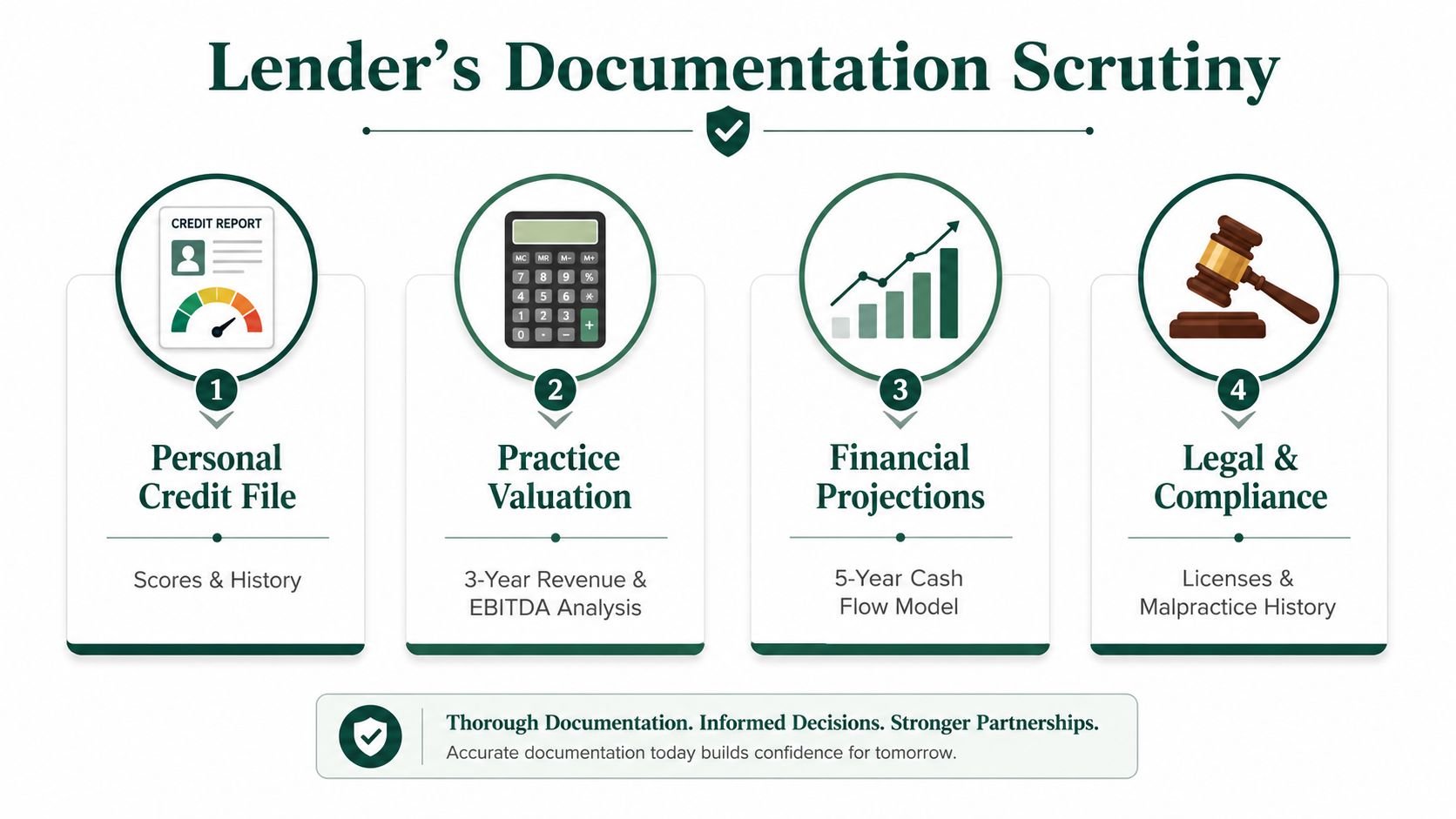
The file should answer four questions fast
The strongest applications are organized around four buckets. First, your personal credit file, which tells the lender how you handle obligations. Second, the practice valuation, which has to show the logic behind the asking price and the revenue base. Third, your financial projections, which need to reflect the post-close clinic, not the seller's old rhythm. Fourth, the legal and compliance record, because licenses, malpractice history, and contract issues can delay or derail funding.
A serious buyer should expect to submit three years of practice tax returns, personal financial statements, and detailed cash flow projections. The lender is trying to see whether debt service still works after owner compensation changes, staffing changes, and any near-term capital spending. If your projections ignore those items, the lender will treat the file as incomplete even if the top-line revenue looks fine.
Underwriting gets easier when your numbers tell the same story as the seller's books, your tax returns, and your post-close plan.
The practical benchmark many lenders use is debt service coverage ratio, or DSCR. If the clinic can't comfortably cover debt from operating cash flow after you replace the seller's salary and absorb transition costs, the file is weak. That's why the internal purchase checklist at veterinary practice purchase loan matters, it forces buyers to line up the valuation, the debt, and the operational assumptions before they ask for a commitment.
Rate Reduction Tactics and Eligibility Levers
A lower rate comes from a stronger file, not luck. Lenders price veterinary acquisitions more favorably when the buyer is easy to underwrite. That means a clean credit profile, a credible plan for the clinic, enough equity in the deal to show commitment, and proof that you understand the business side of veterinary work, not just the medicine.
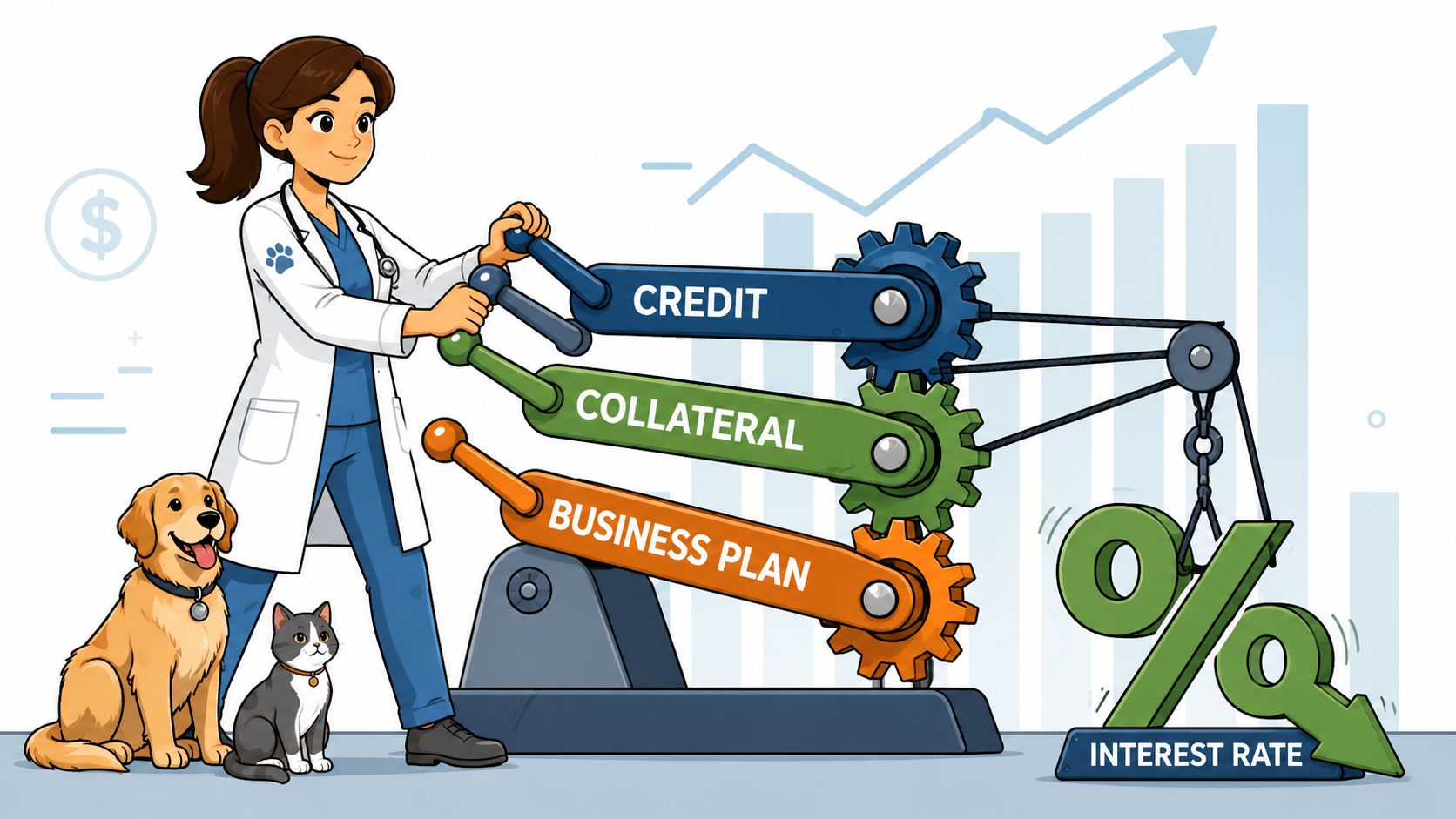
The levers lenders notice first
Credit quality still matters. Recent stumbles on a personal file put you on the back foot, and lenders respond to that by tightening terms or slowing the process. Collateral matters too, because visible downside protection usually makes the risk easier to price. Business plan quality matters more than many buyers expect, especially when it shows how the clinic will run after closing instead of recycling the seller's old operating pattern.
Relevant experience can move a file forward before ownership ever changes hands. A buyer who has worked as an associate, managed case flow, or handled parts of clinic operations looks more credible than someone with a strong résumé but no operating context. Lenders want confidence that revenue will stay stable while the transition settles.
Here's the blunt truth. A larger down payment usually improves approval odds and can help pricing, because it reduces the lender's exposure and shows real commitment from the buyer. A co-signer can help when the rest of the file is solid but one piece is weak, yet it should be a calculated support, not a substitute for a strong deal. If another person has to carry the file, the transaction is not ready.
Practical rule: do not ask for the lowest rate first. Ask what the lender needs to see to justify it, then build the file around those items.
A veterinary-focused lender, Veterinary Practice Loans, fits this kind of transaction because the review is tied to clinic economics, not just broad small-business lending. The point is not the name. The point is whether the file shows enough cash flow, equity, and operating discipline to support the debt after closing.
Stress Testing Post Close Affordability Under Real Operating Pressures
The cheapest rate on paper can still be the wrong loan if the clinic can't absorb the actual cost of ownership. Buying a practice means you inherit payroll timing, supply ordering, equipment upkeep, and the need to keep client service level steady during the transition. If your model only works under smooth, ideal conditions, it isn't a model, it's wishful thinking.
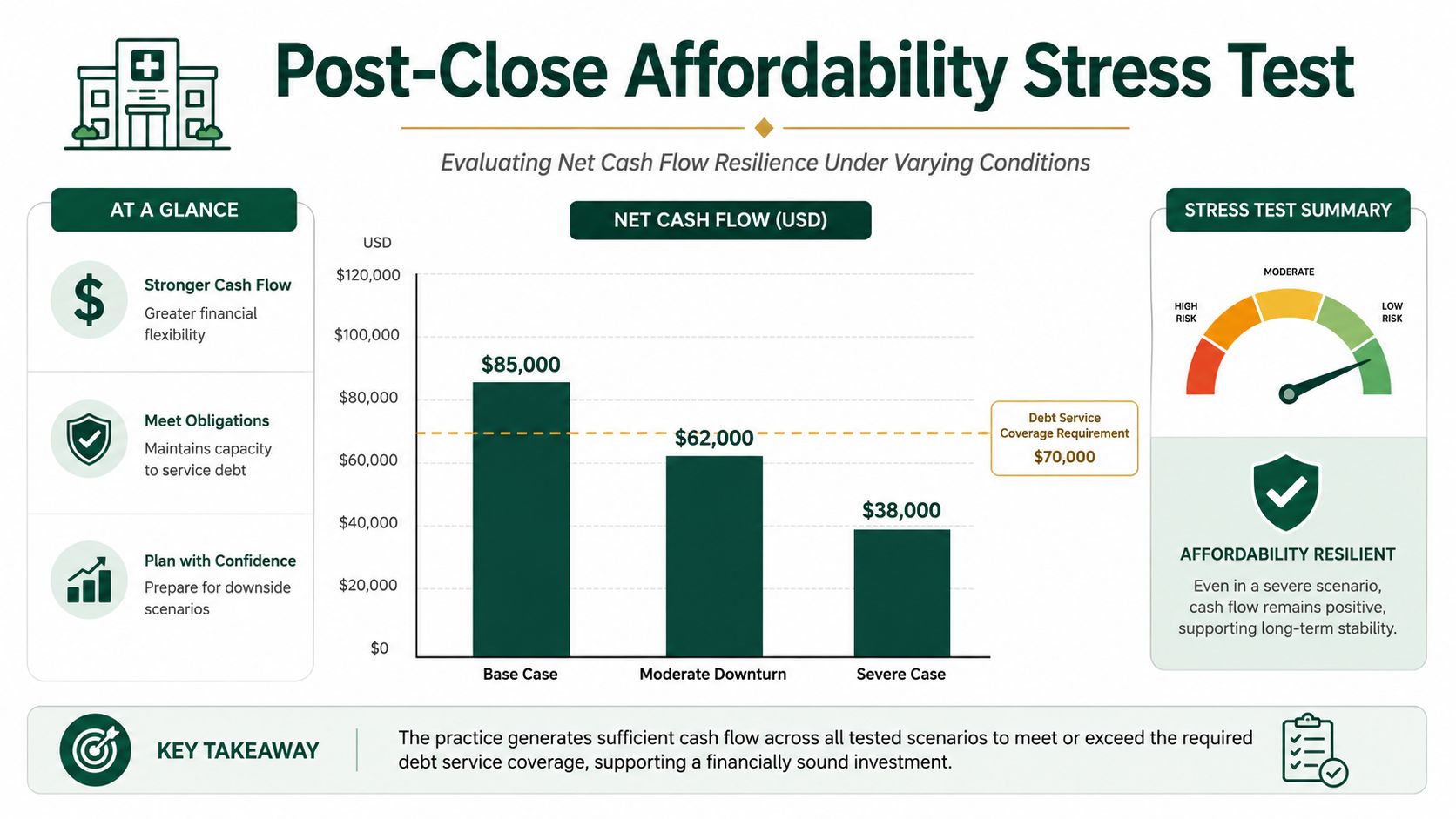
Model the clinic as it will actually operate
Start with the seller's historical revenue, then strip out anything that won't follow the practice after closing. Add your own compensation, the staff you'll need to keep, and the capital spending that can't wait. If the building needs work, the imaging equipment is aging, or the inventory cycle is tighter than expected, those costs belong in the model before you sign.
Working capital pressure is real in veterinary care. Payroll comes due whether collections arrived smoothly or not. Inventory has to be reordered before the margin shows up in the bank. Insurance and rent don't wait for a busy month. That's why lenders and brokers keep coming back to the same practical question, can the clinic still carry debt when collections are soft?
Use stress testing, not optimism. Run the same debt through a steady month, a slower month, and a worst month that still feels plausible. If the loan only survives in the best case, the clinic has too much debt. If it survives the downside and still leaves room for staff, repairs, and owner pay, the structure is probably usable.
A good acquisition model protects the owner from surprises. A bad one assumes surprises won't happen.
That's the hidden difference between a deal that closes and a deal that lasts. The purchase price gets the headlines, but the post-close cash flow is what decides whether the new owner feels in control or cornered.
Your 90 Day Timeline from Application to Funded Closing
The cleanest acquisitions move in phases. Buyers who wait until the last minute to assemble documents usually slow themselves down, and lenders notice. The right move is to prepare early, keep the seller's timeline visible, and schedule third-party work before underwriting turns into a bottleneck.
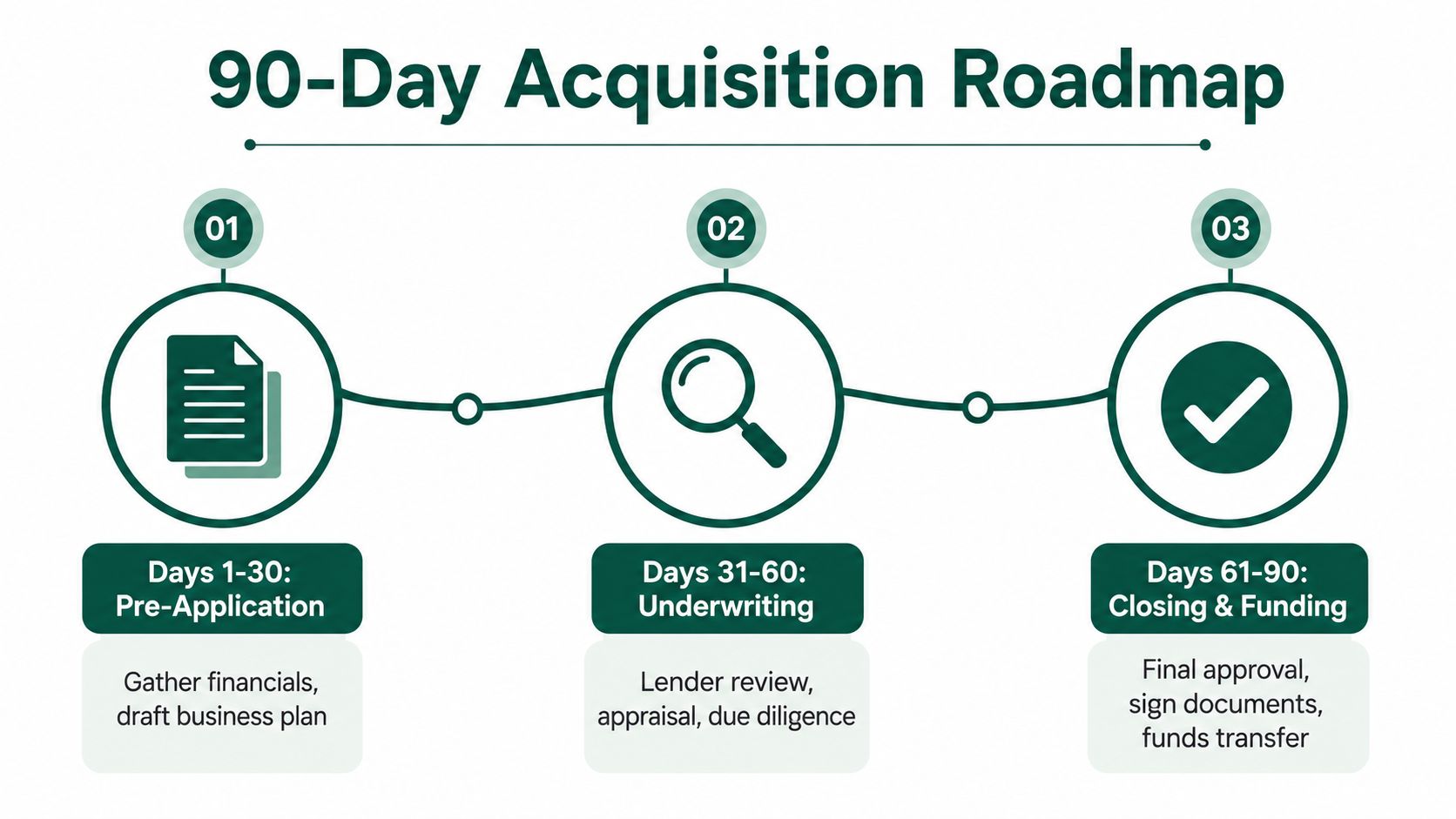
Days 1 to 30
Use this window to gather tax returns, personal financial statements, business bank statements, entity documents, and the purchase narrative. Line up your broker, attorney, accountant, and appraiser if the deal needs them. If there's any facility issue, environmental review or lease review should already be in motion.
Days 31 to 60
This is underwriting and diligence. Expect lender questions about revenue, owner transition, staff retention, and the logic behind your projections. Keep responses short, clean, and documented. Delays here usually come from missing numbers, not from the lender being mysterious.
Days 61 to 90
Closing is a coordination exercise. Insurance binders, entity formation, final legal documents, and wire instructions all need to be ready before funding day. If one item slips, the whole closing can move, so keep every party on the same calendar and answer lender requests the same day they come in.
The sellers who cooperate and the buyers who stay organized get funded faster. The ones who improvise at the end usually pay for it in time, stress, or both.
If you're buying a veterinary clinic and want financing that matches the deal instead of fighting it, Veterinary Practice Loans can help you compare acquisition structures, working capital support, and documentation needs in one place. Start at Veterinary Practice Loans and use the acquisition process to pressure-test your numbers before you commit to a closing date.
