

You're staring at a floor plan, a contractor estimate, and a clinic schedule that can't pause for a remodel. The new exam rooms, better workflow, and upgraded treatment area all make sense on paper, but the financing has to work in practice, while patients still walk through the door and payroll still clears. That's where a veterinary practice fitout loan stops being a generic business loan and becomes a project-specific financing decision.
A good fitout deal doesn't just answer, “How much can I borrow?” It answers, “How do I fund construction, equipment install, and the ramp-up period without choking cash flow?” That's the right lens for a practice owner planning a first expansion, a relocation, or a serious renovation. If you're comparing options right now, this guide is a practical blueprint, and the expansion finance overview at Veterinary Practice Loans is a useful starting point for understanding how lenders think about clinic growth.
From Vision to Reality Your Clinic Expansion Blueprint
A common scenario starts with a veterinarian standing in an older clinic and seeing exactly what's missing. There's no dedicated imaging room, the treatment area feels cramped, the waiting room is awkward, and staff keep working around the building instead of through it. The vision is clear, but the financing question arrives fast, because the project isn't just a construction job, it's a cash-flow event.
The smartest owners treat the loan as part of the build, not an afterthought. They map the project into phases, then match funding to each phase so the clinic doesn't carry the wrong kind of debt at the wrong time. That means thinking beyond rate and focusing on structure, timing, draw mechanics, and repayment shape.
Practical rule: if the project creates value over years, the repayment should usually stretch over years too.
That's why fitout financing works best when it supports the way a clinic opens, with contractor invoices, equipment delivery, installation, and patient ramp-up all happening on different clocks. The right lender should understand that sequence, not force a one-size-fits-all structure onto it. The rest of the process gets much easier once you stop asking for “a loan” and start asking for a funding plan that matches the renovation timeline.
Scoping Your Fitout and Defining Your Budget
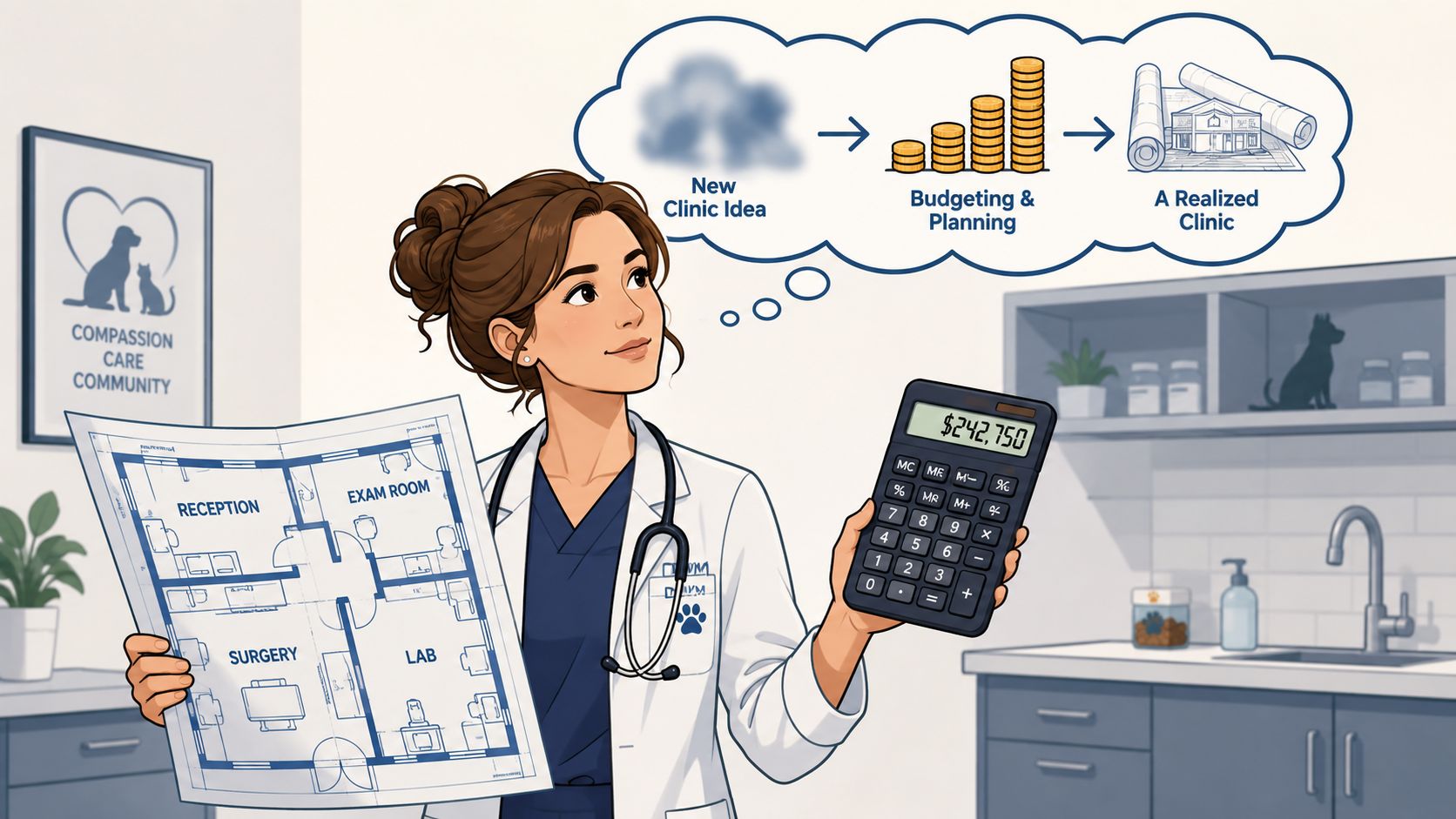
A lender can't support a vague dream. It needs a budget that separates the visible build from the hidden costs, because that's where most fitouts go off track. Start by dividing the project into hard costs, soft costs, and a contingency reserve, then add a separate working capital buffer for the opening period.
Hard costs are the physical items, such as demolition, construction, finishes, plumbing, electrical, cabinetry, and installed equipment. Soft costs cover the professional and administrative side, including design, permits, planning, and any fees tied to getting the build approved and documented. The contingency reserve matters because change orders, delays, and price shifts are common enough that leaving no cushion is a recipe for stress.
The working capital buffer is where many good projects are underfunded. Veterinary clinics still need payroll, inventory, and operating expenses while the new space is being completed and then stabilized, and one industry report says working capital financing accounted for 19.8% of veterinary practice financing revenue, or about $416 million in 2025 Business Capital. That doesn't mean every clinic needs the same reserve, but it does show how often operators need liquidity alongside the build itself.
Lenders get nervous when the budget only covers what's obvious on the construction drawings.
Treat the opening phase as part of the project, not a separate problem to solve later. If your clinic needs help with equipment inside the build, the equipment finance page at Veterinary Practice Loans is worth reviewing because fitouts often blend construction and asset purchases. That blended view usually makes the loan request stronger, not more complicated.
Choosing the Right Veterinary Fitout Loan Product
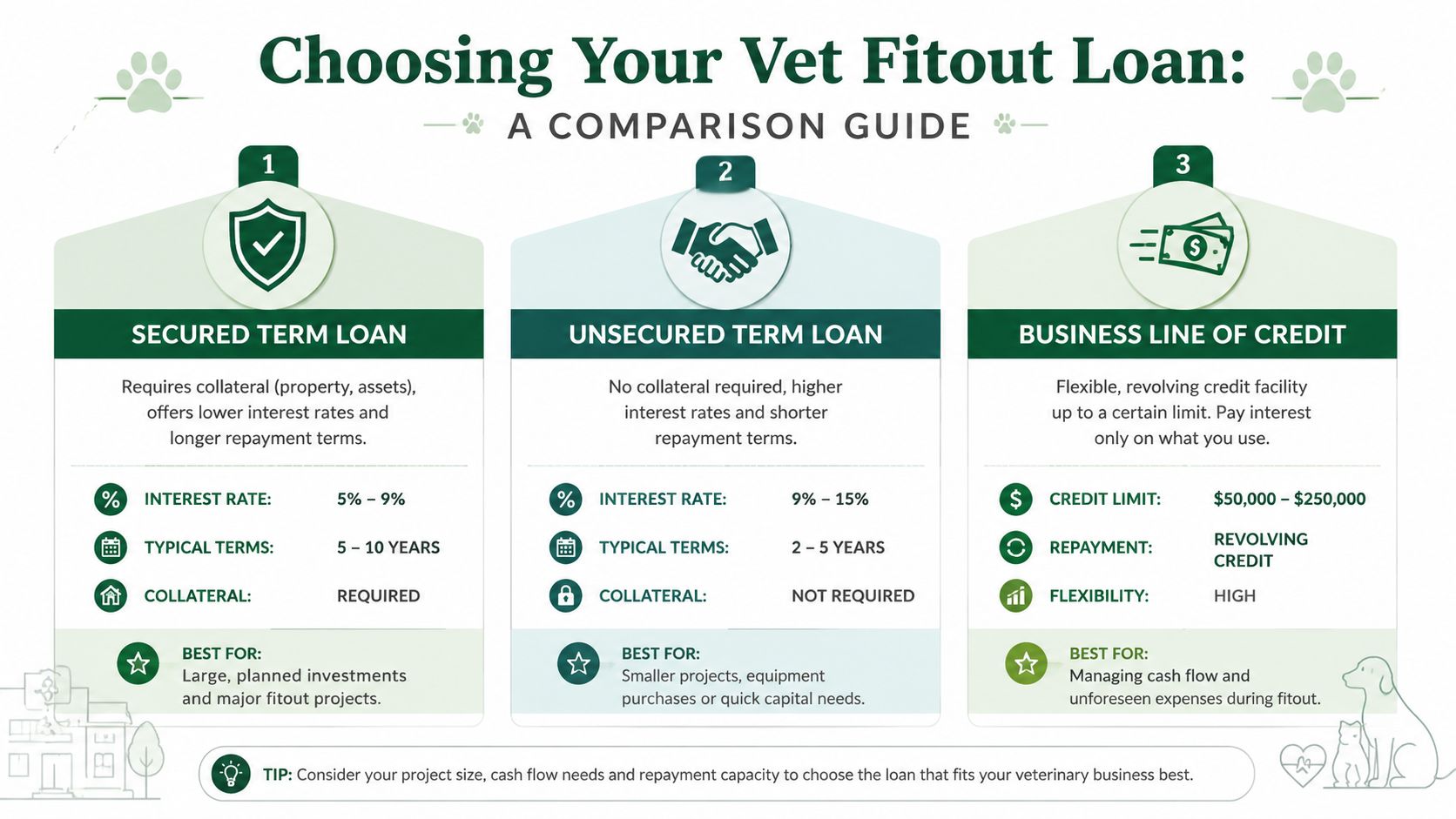
A fitout loan should match the phase of the project it is paying for. Construction costs, fixtures, equipment, and temporary cash support create different demands on your balance sheet, so the repayment structure should reflect how each cost behaves over time.
| Loan type | Best use in a fitout | Strength | Main caution |
|---|---|---|---|
| SBA-style or longer-term practice loan | Core renovation, expansion, or build-out | Longer repayment profile, useful for major projects | Can take more preparation and documentation |
| Equipment financing | Imaging, surgical, lab, and IT assets | Keeps asset repayment tied to the equipment itself | Not ideal for broad construction costs |
| Working capital line or short-term loan | Payroll, supplies, and temporary gaps | Fast access to cash | Too compressed for a multi-year build |
For a larger project, the loan should be aligned with the way the work unfolds. Interest-only payments can help during the construction phase, when cash is going out for contractors and deposits but the renovated space has not yet started producing revenue. Once the clinic is operating, amortization should be set with the useful life of the asset in mind, so the debt does not outlast the benefit of the improvement.
That approach is one reason longer-term practice loans are often used for renovation and expansion. Loan guides for veterinary practices show that SBA 7(a) loans can support equipment, working capital, real estate improvements, and ownership changes, with loan amounts from $50,000 to $5 million and repayment terms up to 25 years for real estate NerdWallet veterinary lending overview. For a fitout, the practical lesson is straightforward, the repayment schedule should track the life of the renovated space, not just the date the invoice arrives.
Term length matters because it changes monthly pressure. Acquisition and expansion loans are often written over 5 to 10 years, while some newer terms stretch to 15 years or more NerdWallet veterinary lending overview. A longer term can protect cash flow during the opening months, but only if the project size and revenue outlook can support the total interest cost.
Use separate funding buckets whenever the project calls for it. A term facility can cover the core fitout, equipment financing can handle the machines, and a working capital reserve can bridge the period between construction spending and stable collections. That structure keeps the debt tied to the asset or phase it supports, which is easier for a lender to assess and easier for you to manage.
The better question is which loan belongs to which cost.
Construction debt should fund the build, equipment debt should fund the equipment, and short-term cash support should cover the opening gap.
If you are already comparing SBA-style structures, the SBA loans for veterinary practice page is a useful reference for how longer-term expansion debt is commonly structured.
Preparing a Lender-Ready Loan Application

A strong application does more than show you need capital. It shows where every dollar will go, why each cost belongs in the fitout, and how the practice will service the debt after the renovation is complete. Lenders look for that level of clarity because it tells them the project is being managed with discipline, not hope.
Start with a business plan built around the renovated clinic, not the current one. Spell out how the new layout improves patient flow, expands capacity, or changes the service mix, then connect those changes to realistic revenue assumptions. The financial projections should leave room for construction delays and opening snags, because an overly optimistic ramp-up can weaken an otherwise solid application.
Your file should include tax returns, financial statements, contractor bids, and equipment quotes. Those documents let the lender separate confirmed pricing from assumptions. A detailed contractor bid reduces uncertainty around build costs. Current equipment quotes show that the budget was checked against actual vendor pricing, not guessed from memory.
The structure of the loan should match the phases of the project. Some lenders offer veterinary practice financing with features like up to 100% financing, up to 15-year terms, and six-month interest-only periods, which can help keep payments lighter while the clinic is still paying for construction and before full revenue is in place U.S. Bank veterinary practice financing. That is the point of a lender-ready package. Construction debt should fund the build, operating cash should cover the opening gap, and repayment should be set so it fits the life of the renovated space and the assets inside it.
Use this simple application checklist:
- Project Scope: Define exactly what is being renovated, added, or relocated so the lender can match the debt to the use.
- Contractor Bids: Include itemized bids to show that build pricing is grounded in market quotes.
- Equipment Quotes: Attach vendor pricing for major assets so equipment and construction are kept separate.
- Financial History: Provide tax returns and statements so the lender can judge stability, not just ambition.
- Opening Budget: Show the cash needed for payroll, inventory, and early operations so the loan covers the full ramp-up.
A tidy file says a lot about how the project will be handled. A scattered file tells the lender to expect problems later.
Navigating Loan Timelines and Negotiation
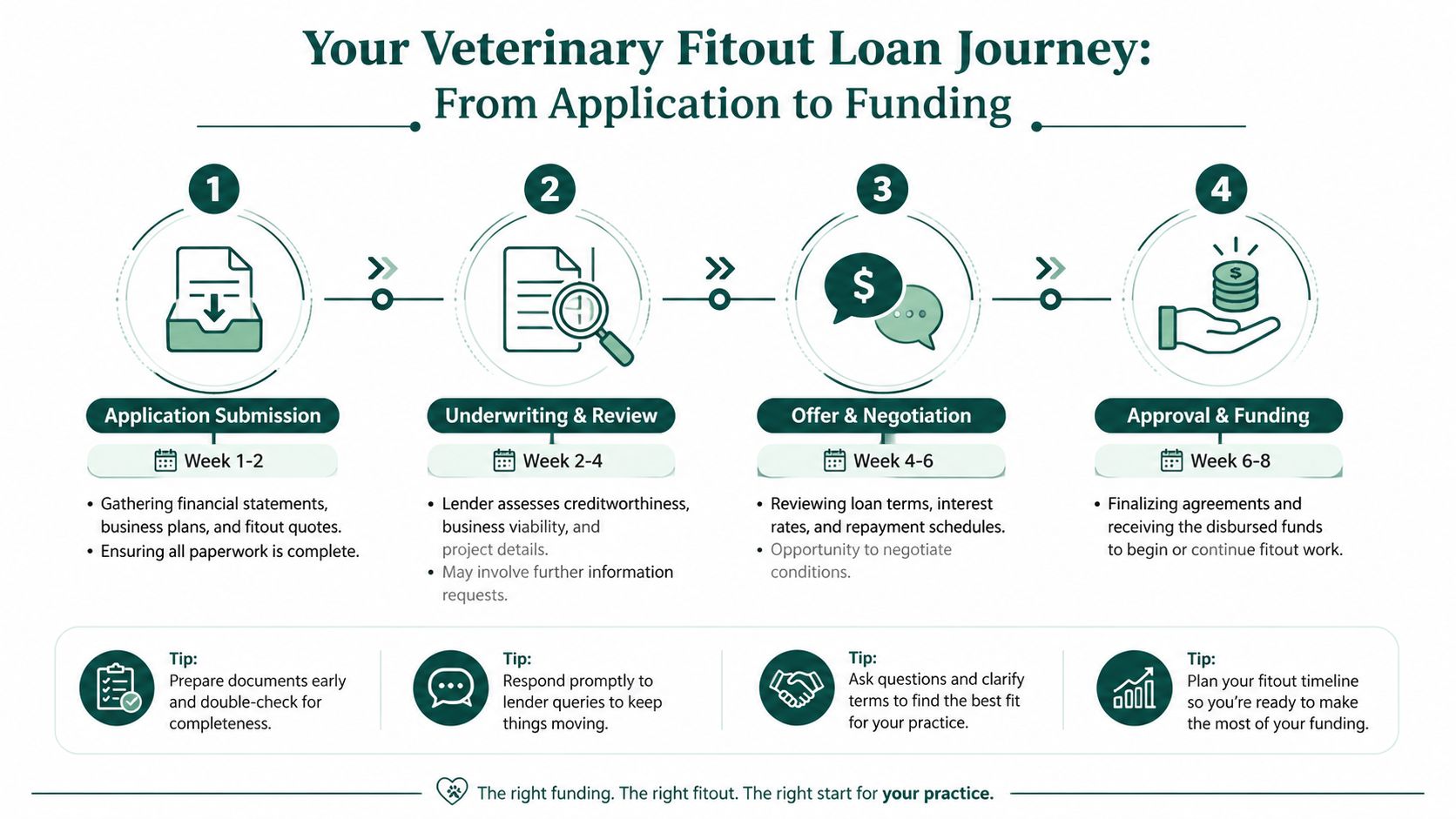
A lender is more likely to work with a borrower who can show how the project will take shape. If you can tie the loan request to the build schedule, the lender can see where the money goes, when it is needed, and why the structure should match the project rather than a generic repayment plan.
A fitout timeline usually moves from application submission to underwriting and review, then to offer and negotiation, and finally to approval and funding. Delays tend to show up in the same places. Lenders ask follow-up questions, contractors revise scope, and closing slows if paperwork is incomplete. Fast responses keep the file moving, and that matters more than trying to force a rushed approval.
Use the timeline to press for terms that fit the build. An interest-only period during construction can protect cash while invoices are still coming in and the clinic is not yet collecting full revenue. An amortization schedule should reflect the useful life of the renovated space and the equipment inside it, so debt service does not feel squeezed into a shorter period than the asset can justify.
Ask for repayment to begin when the clinic can actually support it, not when the first invoice is issued.
Permanent renovation debt should stay separate from temporary bridge money. Short-term capital can cover payroll or supply gaps, but it should not be the main source of funding for a long-lived fitout. Guidance from The Hartford veterinary business loan guide notes that small business loan structures vary widely, with short-term options designed for faster access and larger facilities often requiring longer repayment periods. The point is straightforward, the money source should match the job it is meant to do.
Use that logic in negotiation. If the lender wants a term that is shorter than the project deserves, push back with the opening schedule, the ramp-up plan, and the draw sequence. That is not resistance for its own sake, it is a better fit between repayment and the way the clinic will come online.
Managing Your Fitout Loan After Funding
Once the loan closes, the actual work starts. Construction draws need to line up with actual progress, and the lender should only release funds when milestones are met and documented. That protects everyone, because it keeps the project grounded in reality rather than in optimistic forecasts.
Keep one person responsible for lender communication. If a contractor delay, permit issue, or equipment backorder changes the schedule, the lender should hear it early, not after a missed draw deadline. Clear communication often preserves flexibility that would disappear if the update arrives late.
The transition from interest-only payments to full repayment deserves its own cash-flow plan. Don't wait until the first principal payment to think about it. Build the opening months around conservative patient volume, slower ramp-up, and the operating costs that continue whether the clinic is full or not.
The key is discipline. Use the debt for the scope you approved, track every change order, and resist the urge to patch unrelated expenses into the fitout facility. Short-term borrowing can solve a temporary gap, but it can also create a mismatch if it's left in place too long.
A well-managed fitout loan should feel boring by the time the clinic opens. That's the goal. The build gets finished, the schedule holds, and the repayment structure fits the asset instead of straining the practice.
If you're planning a clinic renovation, relocation, or expansion, talk with Veterinary Practice Loans early, before contractor payments and opening costs start competing for the same cash. A well-structured veterinary practice fitout loan can protect liquidity, keep the build moving, and give your practice room to open on stronger financial footing.
