

Your hospital feels busy all day, yet the building is holding you back. The waiting room is tight, treatment flow is awkward, the dental area was designed for a different era, and every added service seems to require one more workaround. At that point, renovation stops being a cosmetic project. It becomes an operating decision.
That's where many owners make the same mistake. They use acquisition logic to finance a renovation. Those are not the same transaction. Buying a practice is one underwriting story. Expanding an existing location, reworking treatment space, adding imaging, or modernizing a surgery suite is another. The money has to match the job.
In veterinary practice renovation financing, the biggest failures usually happen before demolition starts. Owners underestimate soft costs, choose the wrong loan structure, or borrow for construction without protecting operating cash. The project may still get approved, but approval alone doesn't mean the structure works.
A good financing plan does three things at once. It covers the physical project, it protects cash flow during disruption, and it gives the lender a clean, credible story about repayment. If one of those pieces is weak, the pressure shows up later in delays, change orders, or a cash squeeze after reopening.
Your Renovation Roadmap Starts Here
If you're standing in your clinic thinking, “We've outgrown this layout, but I can't afford a financing mistake,” that instinct is right. Renovations create stress because the owner is funding a moving target. The practice is still operating, staff still need payroll, and patient care can't wait for the contractor to catch up.
The first practical distinction is this: pure renovation financing is not the same as acquisition financing. A lender evaluating a practice purchase is often focused on the stability of the existing business and transfer of ownership. A lender evaluating a renovation has to understand disruption risk, build-out timing, equipment needs, leasehold improvements, and whether the practice can stay stable while the work is happening.
What owners usually get wrong first
Many owners start with the visible pieces. New walls, cabinetry, flooring, lighting, imaging, surgery upgrades. Those matter, but they're only part of the budget. The invisible items cause more damage when they're missed.
A renovation loan has to answer questions like these:
- How much work is structural versus cosmetic
- Whether the clinic will remain open during construction
- Which costs are hard construction and which are soft costs
- Whether equipment is part of the project or should be financed separately
- How much operating cushion the practice needs during the ramp
Renovation budgets fail when owners finance the construction and assume the rest will sort itself out.
The roadmap that actually works
The strongest projects tend to move in this order:
- Define the operational reason for the renovation. More exam room capacity, better surgery flow, improved diagnostics, stronger boarding revenue, or a cleaner client experience.
- Build a full budget before shopping for money. Not a contractor estimate alone. A complete project cost.
- Match the financing product to the actual use of proceeds. Smaller equipment-heavy needs call for a different structure than a larger mixed-use expansion.
- Prepare the underwriting story. Lenders want to see why this project improves the practice and how repayment fits into cash flow.
- Control the draw process once approved. Poor draw management can delay work even after the loan closes.
Owners who treat renovation financing as a planning exercise usually keep control. Owners who treat it as a race to get funded often lose it.
Scoping Your Project and Estimating True Costs
The most common budget mistake in veterinary practice renovation financing is simple. The owner prices the visible build-out and ignores the costs around it. Then the loan amount is too small before the project is halfway done.
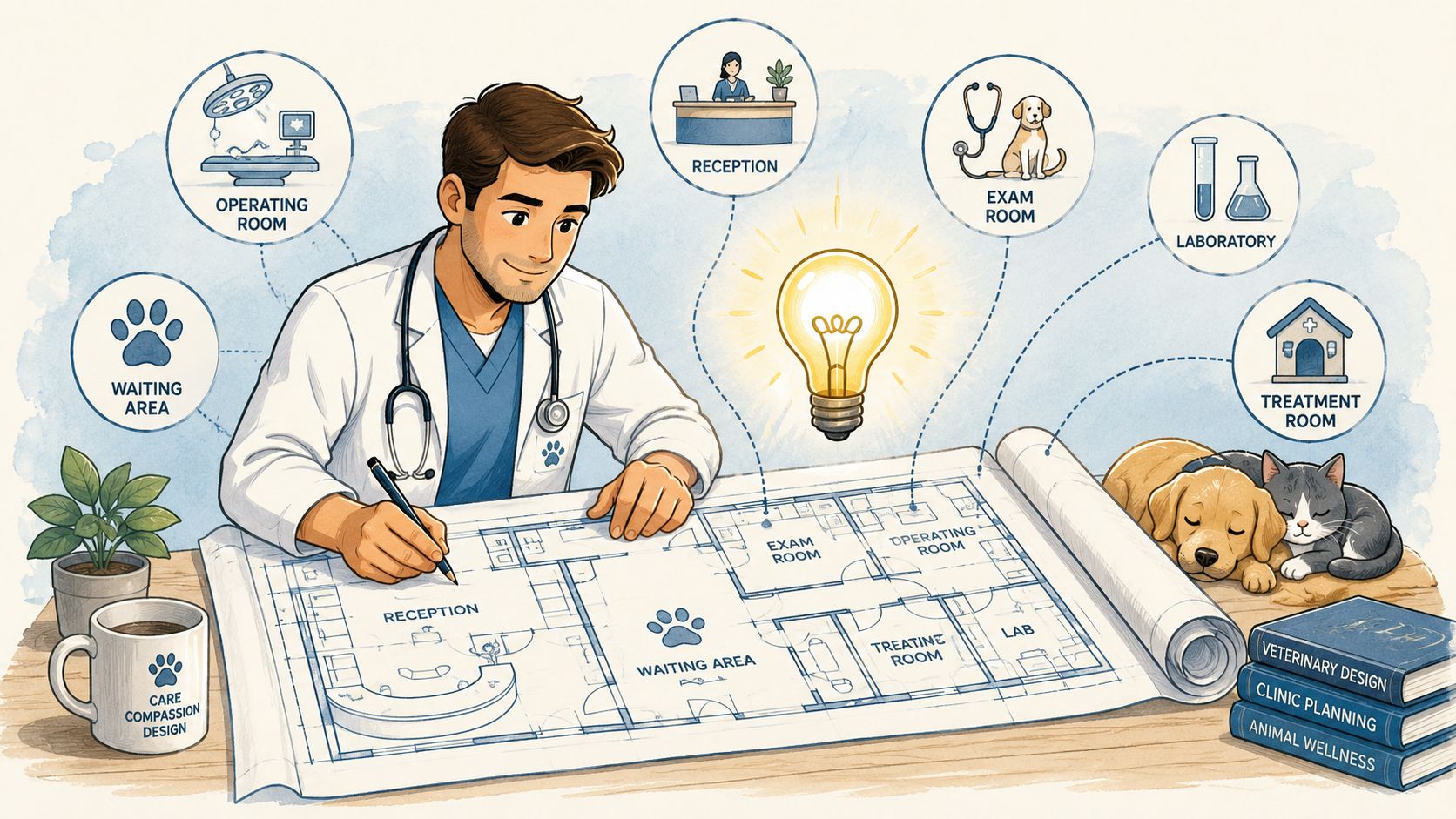
A credible project starts with a pre-deal cost out that includes legal fees, taxes, and the timing impact of retrofit or new build-out work, because leaving those items out creates a high probability of underfunding, as noted in these veterinary renovation financing notes.
Start with workflow, not finishes
Owners often begin with finishes because they're easy to picture. New reception desk. Better lighting. Cleaner treatment area. That's fine, but lenders and project managers need a more practical definition.
Ask harder questions first:
- Capacity pressure: Are you adding exam rooms because demand is constrained?
- Clinical upgrade: Are you expanding surgery, dental, imaging, or in-house lab capability?
- Compliance and layout: Does the current space create bottlenecks, noise, infection-control issues, or poor staff movement?
- Revenue mix: Will the project support services you can't deliver efficiently today?
Those answers determine scope. Scope determines budget. Budget determines whether you should finance the whole project in one structure or break it into separate pieces.
The budget categories owners miss
Contractor pricing is only one line item. Renovation budgets need a wider lens.
- Hard construction costs: Demolition, framing, plumbing, electrical, HVAC, millwork, flooring, lighting, and finish work.
- Soft costs: Architectural fees, engineering, permits, legal review, and related project administration.
- Timing costs: Temporary inefficiency, phased construction complications, delayed occupancy, or extra vendor coordination.
- Operational carry: Cash needed to keep the practice stable while rooms are offline, patient flow slows, or the new service line ramps up.
- Equipment overlap: New imaging, surgery, dental, or lab items that may belong inside the renovation budget or in a separate financing structure.
If the project includes major equipment, it helps to compare whether dedicated veterinary practice equipment loans keep the broader renovation loan cleaner and easier to manage.
Practical rule: If your budget only has a contractor number and a furniture number, it's not ready for underwriting.
Build a lender-ready cost file
A lender doesn't need perfection. They need evidence that you understand the job. That means your cost file should include:
| Budget element | What lenders want to see |
|---|---|
| Construction scope | A clear description of what is being changed and why |
| Third-party pricing | Bids, estimates, or professional assumptions tied to real work |
| Soft cost detail | Architectural, permit, legal, and similar items listed separately |
| Timing assumptions | A realistic sequence for retrofit or build-out work |
| Equipment list | Items financed inside the project versus outside it |
Why experienced project oversight matters
Owners who haven't run a renovation before often assume the contractor will coordinate everything. That's risky. The veterinary renovation notes linked above also stress that owners without prior experience should bring in professional project management help before signing contracts, because unmanaged projects are far more likely to run into delay and cost overrun problems.
That advice matters in lending. A lender can tolerate complexity. They don't like uncertainty that nobody is controlling. If you can show who is managing bids, deadlines, approvals, and draw support, the project becomes easier to finance and easier to execute.
Choosing the Right Veterinary Financing Product
Many articles treat all practice financing as one decision. In real projects, renovation debt needs a different structure than an acquisition loan or a simple equipment note.
That distinction shows up fast once bids start coming in. A pure renovation often includes contractor work, permits, design fees, temporary disruption, and a few equipment items. An acquisition or de novo build-out loan usually has a broader use of proceeds from day one. If you pick the wrong product, the problem is rarely approval. The problem is finding out halfway through the job that soft costs, tenant improvements, or working capital are outside the loan.
The under and over decision line
For renovation planning, $500,000 is a useful dividing line.
Below that level, owners often do better with a simpler structure if the project is mostly equipment or a light remodel. Speed matters. Documentation is usually lighter. The loan can stay tied to a narrow purpose instead of forcing a smaller job into a construction-style package.
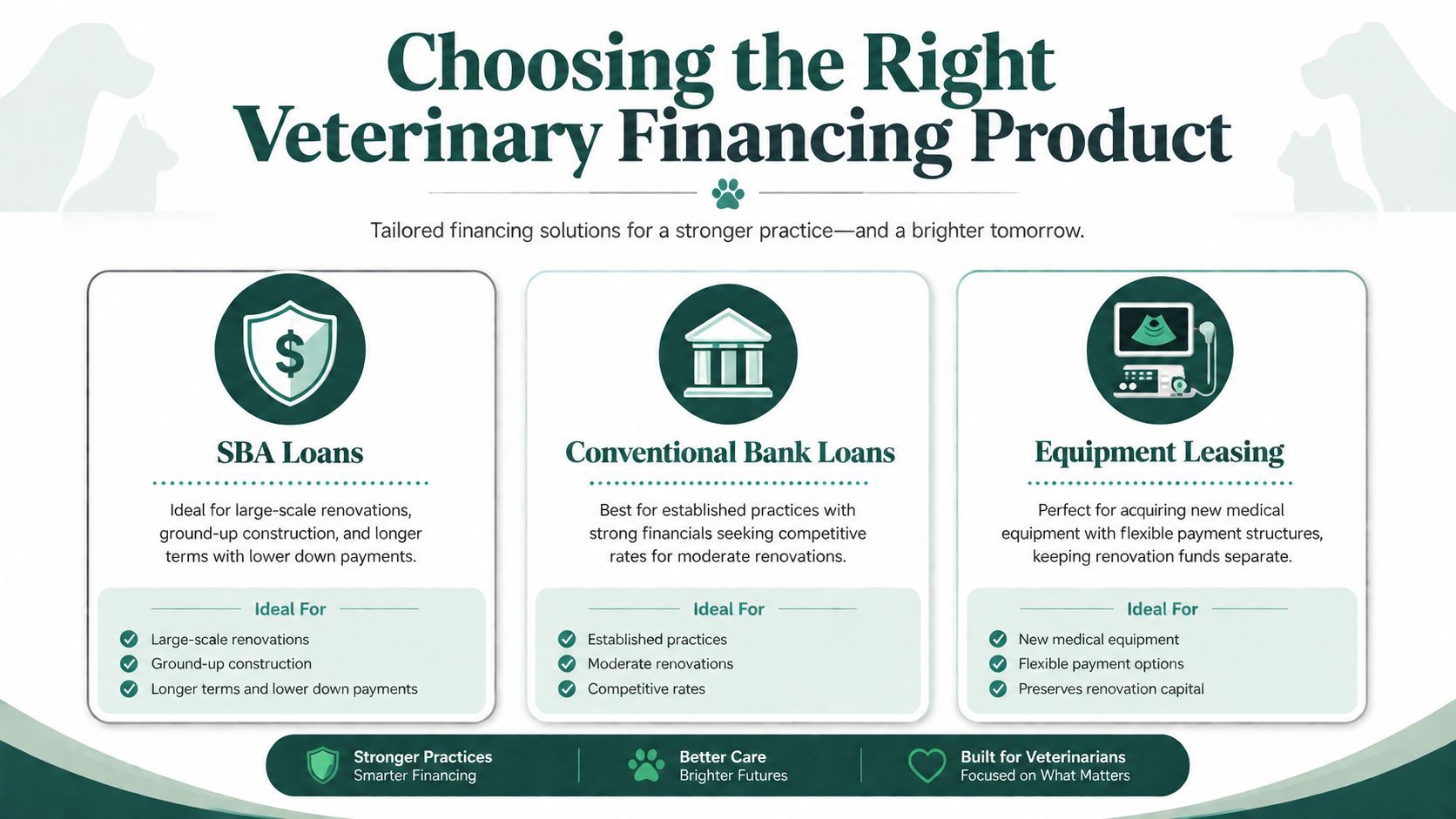
Above that level, especially when the project mixes build-out, equipment, leasehold improvements, and cash needed to absorb disruption, one coordinated loan usually works better than separate pieces. In those cases, SBA loans for veterinary practice financing are often the right starting point because they are built to handle mixed uses of proceeds that conventional structures may carve up or exclude.
When a smaller renovation should stay simple
A lot of owners overfinance modest projects. They ask for one large facility when the actual need is narrower and easier to place.
Smaller structures often fit best when the project looks like this:
- Equipment-led upgrade: Imaging, dental, lab, or treatment equipment with limited construction tied to installation.
- Light interior remodel: Flooring, millwork, paint, lighting, or a room conversion that does not change the practice's operating model.
- Short-term cash buffer: A line or small term loan to protect liquidity during a minor refresh.
In these cases, the trade-off is straightforward. Smaller products can close faster and involve less underwriting, but they usually offer less flexibility if the scope expands after work starts. That matters because small remodels have a habit of turning into larger ones once walls open up.
When a major renovation needs one coordinated loan
Larger projects fail financially when the funding is split in a way that looks neat on paper but does not match how renovation costs impact the practice.
I see the same mistake over and over. The owner finances equipment separately, gets a term loan for construction, and assumes operating cash will take care of the rest. Then the draw schedule runs slower than expected, the clinic loses production during the remodel, and the soft costs pile up outside the financed amount.
A single mixed-use structure usually works better for a major renovation because it can cover the full project picture. That includes build-out, equipment, and the cushion needed to carry the practice through the disruption. This is one of the biggest differences between renovation financing and acquisition financing. Acquisition loans are often built around a purchase price and existing cash flow. Renovation loans have to survive change orders, downtime, and expenses that never become a hard asset.
Conventional loans work best in a narrower lane
Conventional bank debt can still be a strong fit for an established practice with clean financials, strong liquidity, and a project that is well-defined. If the renovation scope is moderate and the bank is comfortable with the collateral and repayment profile, the process may be faster than an SBA structure.
The trade-off is flexibility. Conventional banks are often more selective about what they will finance inside the project budget. That is where owners get caught. The stated rate may look better, but if the bank excludes architecture, permits, landlord-required improvements, interest reserve, or working capital support, the cheaper loan can become the more expensive decision.
Soft costs and leasehold improvement blind spots
This is the part owners miss.
Pure renovation budgets are full of costs that do not look like equipment and do not sit neatly inside a contractor bid. Architectural plans, engineering, permits, legal review, landlord approvals, temporary relocation expense, signage, IT relocation, project management, and payroll drag during downtime all show up in real veterinary remodels. If the loan only covers hard construction and equipment, the practice has to fund the gap from cash.
Leased space makes this even more important. Tenant improvement work is still real project cost, even if you do not own the building. Some loan structures handle leasehold improvements comfortably. Others treat them more cautiously or cap what can be financed.
Ask a lender what the loan excludes. That answer is usually more useful than the rate quote.
A simple product selection view
| Situation | Structure that usually fits best | Main reason |
|---|---|---|
| Equipment-heavy project under the rough threshold | Equipment financing | Fast, asset-based, and cleaner for narrow use of proceeds |
| Minor remodel with temporary cash pressure | Working capital line or small term loan | Protects operating liquidity without building an oversized facility |
| Established practice, moderate renovation, strong banking profile | Conventional loan | Can work well if the bank allows the full scope of costs |
| Larger mixed-use renovation with soft costs and operating cushion needs | SBA 7(a) or similar mixed-use structure | Keeps construction, equipment, and cash-flow support in one loan |
The best financing product is the one that matches the actual scope of the renovation, not the one with the simplest label. If the project is a true renovation, underwrite it like a renovation. That means planning for soft costs, leasehold improvements, and disruption before you choose the debt.
Preparing Your Loan Application Package
A renovation loan package isn't just paperwork. It's your explanation of why this project makes business sense and why the practice can handle the debt without creating strain.
Lenders are trying to answer a few practical questions. Is the scope clear? Is the budget complete? Does the owner understand the disruption risk? Will the renovated clinic support stable repayment? If your package answers those points cleanly, underwriting moves faster and with less friction.

Tell the future story with numbers and documents
A strong package shows where the practice is today and why the renovation improves it. Don't overload the lender with marketing language. Be concrete.
Include these core items:
- Business plan update: Not a long essay. A concise explanation of what's changing in the clinic and why it matters operationally.
- Historical financials: Clean statements showing how the practice has performed and whether it has been managed responsibly.
- Personal financial statement: Lenders still want to understand the owner behind the business.
- Project documents: Floor plans, contractor bids, equipment lists, permits in process, and timing assumptions.
What each document proves
Different documents do different jobs. Owners often submit them as a pile. Underwriters read them as evidence.
| Document | What it proves |
|---|---|
| Updated business narrative | The owner has a strategic reason for the project |
| Historical financial statements | The practice has a track record to support repayment |
| Personal financial statement | The guarantor is financially organized and committed |
| Plans and cost estimates | The requested loan amount is grounded in a real project |
A lender doesn't need you to promise that the renovation will transform the practice. They need to see that you understand what you're building, what it costs, and how the clinic will carry the debt.
Where applications usually weaken
The package gets weaker when projections are vague or detached from operations. If you're adding exam rooms, explain the scheduling bottleneck they solve. If you're expanding dental or surgery, explain the current capacity constraint. If you're modernizing layout, explain the efficiency problem.
Avoid these common errors:
- Round-number budgeting with no support. If every major line is a rough guess, underwriting slows down.
- No operational link to repayment. A nicer clinic is not enough. Lenders want to see the business case.
- Ignoring construction timing. If there's no realistic plan for disruption, the projections won't feel credible.
- Missing owner disclosure. Personal obligations and existing debt will surface anyway. Better to present them clearly upfront.
Make the package easy to underwrite
Presentation matters more than owners think. Separate financials from project documents. Label cost estimates clearly. Tie requested proceeds to actual uses. If part of the budget is still being finalized, say so directly and note what assumptions are preliminary.
That doesn't make the file weaker. It makes it more trustworthy.
Navigating Loan Terms and Managing Construction Draws
The project is approved. The contractor is ready to start. Then the first invoice hits, the lender asks for backup the contractor did not include, and a one-week delay turns into three. I see this part trip up owners more than underwriting.
The loan only works if the structure matches the job.
Read the terms like someone who has to live with them
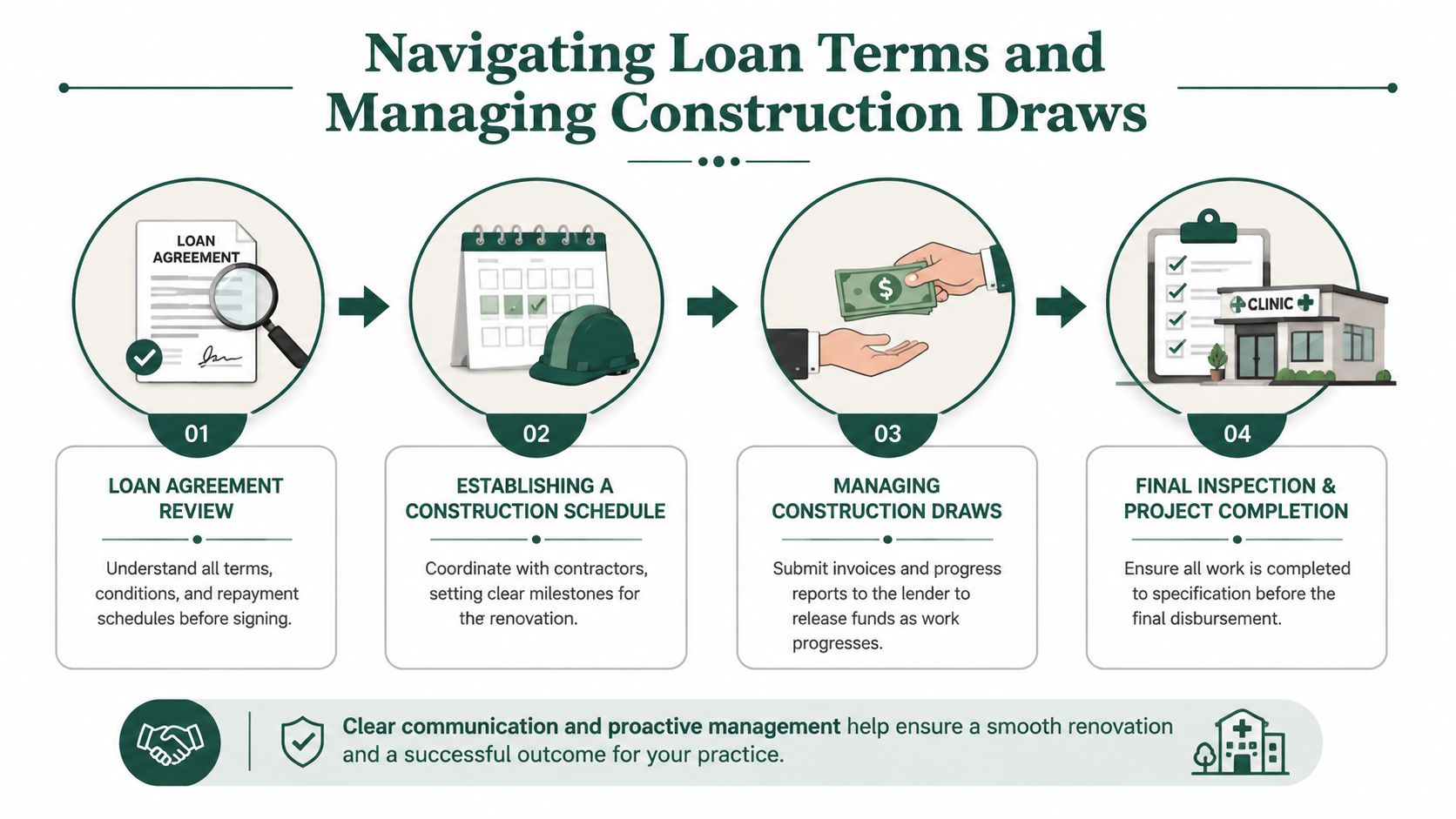
Rate matters, but draw mechanics usually decide whether the project stays on schedule. A small refresh under $500,000 can often fit into a simpler term loan structure if the scope is clear and the contractor billing is straightforward. Once the renovation moves past that range, especially if equipment, major mechanical work, or phased construction is involved, the loan starts to behave more like a build-out facility. That means tighter controls, staged disbursements, and more documentation.
Owners should review five points before closing:
- Rate structure: Fixed gives payment certainty. Variable may start lower, but it adds exposure if rates move while the project is still underway.
- Amortization: A longer term lowers monthly debt service, but it also increases total interest and can hide an oversized project.
- Cash injection timing: Know whether your equity goes in first, alongside each draw, or only toward specific costs.
- Use-of-proceeds rules: Pure renovation financing often excludes some soft costs unless they are listed clearly from the start.
- Draw conditions: Ask what the lender needs for each release, who approves it, and how long review usually takes.
The distinction between renovation financing and acquisition or full build-out financing matters here. A pure renovation loan may be cleaner and faster for cosmetic upgrades, flooring, lighting, millwork, and limited equipment replacement. A larger project with structural work, landlord approvals, HVAC upgrades, temporary treatment space, or a service-line expansion usually needs a structure that can absorb more soft costs and a longer draw period. Owners miss that difference all the time.
Soft costs are where budgets get distorted. Permit fees, architectural revisions, engineering, legal review, temporary signage, IT relocation, storage, and after-hours labor often sit outside the contractor's base bid. If those items are not financed, they come out of practice cash.
How draw management actually breaks down
Construction funds are usually released against completed work, not handed over in a lump sum. On paper, that sounds orderly. In practice, the pressure lands on the owner because contractors want payment quickly and lenders release funds on their own timeline.
A workable process usually follows this order:
- The contractor completes a billing milestone
- The owner collects the invoice, lien waivers if required, and any supporting backup
- The lender or inspector confirms the work
- The draw is approved and funds are released
That lag matters. If the contractor expects same-week payment and the lender needs more time, the owner may have to float part of the draw or push the schedule back.
The problems that cost time and money
Draws get messy for predictable reasons. Nobody sets expectations before demolition starts. The contractor submits an invoice that does not match the schedule of values. The lender asks for revised documentation after materials have already been ordered. Then a change order shows up and nobody knows whether it can be funded from remaining proceeds.
The cleanest projects usually have:
- One owner-side point of contact for invoices, approvals, and lender communication
- A draw calendar that matches the contractor's billing cycle
- A schedule of values detailed enough for the lender to track completed work
- Written handling for change orders before the first one appears
- Cash outside the loan to cover timing gaps and excluded costs
I also tell owners to review current veterinary practice loan rates before finalizing terms, not because rate is the only issue, but because the payment structure and the rate environment together determine how much room the practice keeps during construction.
Protect the budget after closing
Closing is not the finish line. It is the point where bad habits get expensive.
Every change order should answer three questions immediately: Is this work necessary, is there room for it in the remaining budget, and does the lender need to approve the change before funds can be released? If the answer to any one of those is unclear, stop and get it resolved before the work moves ahead.
The owners who handle draws well do one thing consistently. They treat the loan like an operating system for the project, not just a source of money. That discipline keeps the contractor paid, the lender cooperative, and the practice out of a mid-project cash squeeze.
Planning Repayment to Preserve Practice Cash Flow
A completed renovation should improve the practice, not corner it. The debt only works if the monthly obligation fits the way the hospital operates.
That's why repayment planning starts with honesty. Don't build your payment assumptions around a perfect ramp. Build them around likely disruption, slower-than-hoped adoption of new services, and the reality that even a better layout takes time to translate into cleaner financial results.
Use the post-renovation budget, not the old one
Once the project is done, the clinic usually has a different cost structure. Utilities may shift. Staffing may change. Supply usage may rise if new service lines are active. Debt service is now a fixed part of the operating picture.
A practical repayment review should include:
- The new monthly loan obligation
- Any rent or occupancy changes tied to the renovation
- Staffing changes linked to added capacity
- Service lines expected to ramp over time, not overnight
- Cash reserves available if collections lag
This is also the point where owners should review current veterinary practice loan rates and compare them against the structure they chose, not because the deal can always be changed, but because understanding the rate environment helps frame refinancing or future expansion decisions.
Keep the reserve intact long enough to matter
One of the smartest features in a well-structured major renovation loan is a built-in operating cushion. Owners get into trouble when they treat that reserve as extra money instead of protection.
Use it for what it's meant to cover. Temporary softness in production. Delays in room turnover. Slower client adoption. Early operating pressure after reopening. If the reserve is respected, it buys time for the renovation to start paying off.
The best renovation financing doesn't just fund the project. It protects the practice while the project proves itself.
Measure success the right way
Don't judge the project only by whether construction finished. Judge it by whether the renovated hospital can support patient care, staff workflow, and debt service without daily strain.
That's the outcome owners should prioritize. A renovation that improves operations and stays affordable is an asset. A renovation that looks better but weakens cash flow was financed the wrong way.
If you're weighing a clinic remodel, expansion, equipment upgrade, or full build-out, Veterinary Practice Loans offers veterinary-focused financing guidance for acquisitions, renovations, equipment, working capital, and startup projects. The team helps practice owners compare structures, understand trade-offs, and choose financing that fits the way a clinic operates.
